Product Design, Manufacturing & Innovation Resources
家 » 合金鋼における焼き戻し脆化

合金鋼における焼き戻し脆化

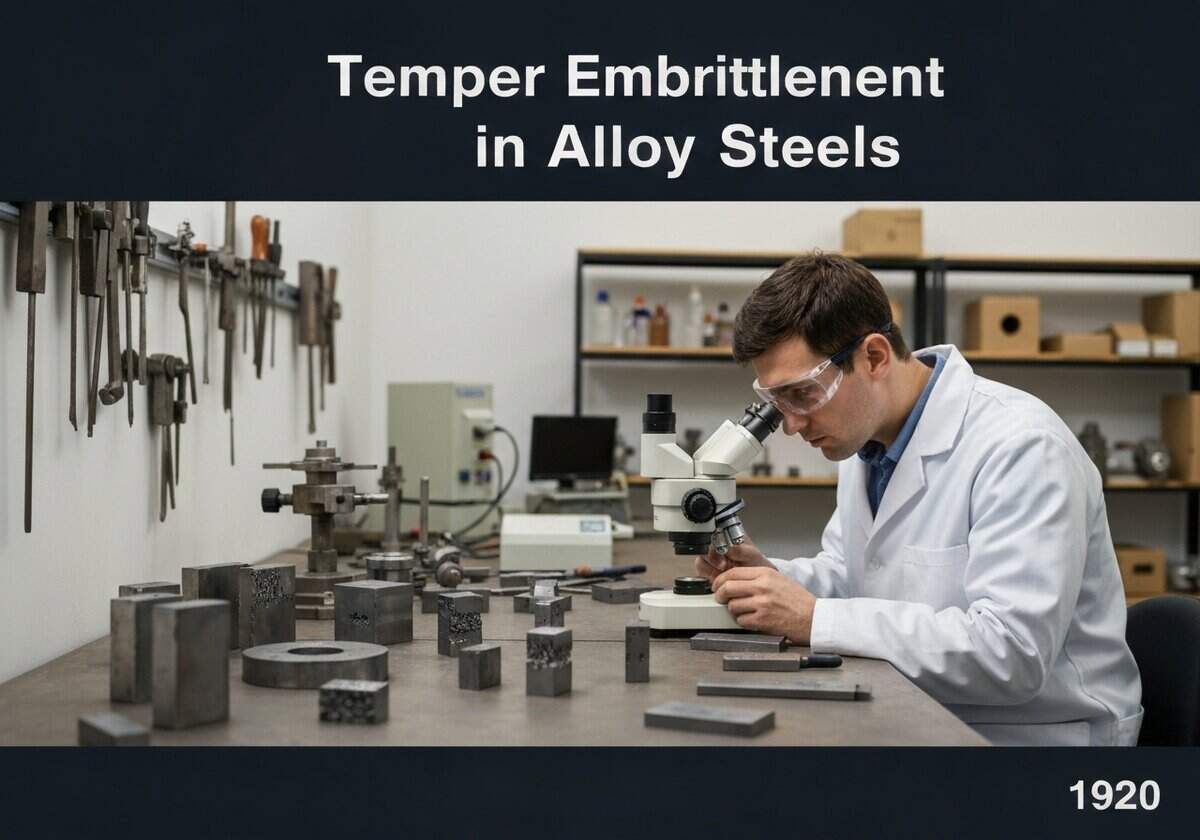
1920
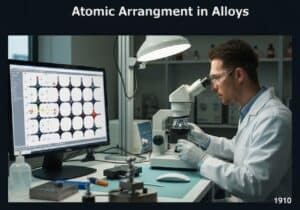
実験室環境における合金鋼の金属組織分析:特に焼戻し脆化に焦点を当てて。

(画像はイメージです)

焼き戻し脆化とは、特定の合金鋼を特定の温度範囲(約375~575℃)に保持したり、その温度範囲をゆっくりと冷却したりすることによって生じる、靭性の低下現象です。この現象は、リン、スズ、アンチモンなどの不純物元素が結晶粒界に偏析することによって、結晶粒間の凝集力が弱まり、粒界破壊が促進されることが原因です。

焼き戻し脆化のメカニズムは、平衡偏析の典型的な例である。高温では、不純物原子は金属粒内に溶解する。鋼が脆化温度域まで冷却されると、これらの不純物の溶解度が低下し、エネルギー的に有利な方向に移動する。 高エネルギー 結晶粒界の領域。マンガンやニッケルなどの特定の合金元素は、不純物と共偏析し、その影響を悪化させる可能性がある。その結果、延性-脆性遷移温度(DBTT)が劇的に上昇し、本来靭性を示すはずの温度で鋼が脆性破壊を起こす可能性がある。

A key characteristic of temper embrittlement is that it is reversible. If an embrittled component is reheated to a temperature above the critical range (e.g., >600 °C) and then cooled rapidly (quenched), the impurities are re-dissolved into the grains, and toughness is restored. This understanding was a crucial novelty in physical metallurgy, demonstrating that 機械的特性 were not static but could be degraded by subtle, time-dependent changes in micro-chemistry at internal interfaces. It led to major changes in steelmaking and heat treatment practices for heavy-section components.
UNESCO Nomenclature: 3308
材料科学

タイプ

物理的プロセス

混乱

実質的な

使用法

広く普及している

前駆物質

  • 開発 合金 steels by adding elements like chromium, nickel, and manganese
  • 金属の微細構造を観察するための金属組織学の進歩
  • 固体中の拡散過程の理解(フィックの法則)
  • 大砲、ボイラー、タービンなどの用途における高強度鋼の産業需要
  • 靭性を定量化するためのシャルピー衝撃試験などの標準化された機械的試験の開発

アプリケーション

  • タービンローターや圧力容器などの大型鋼鍛造品の熱処理手順を厳密に管理する。
  • 重要な用途向けの、リン、スズ、アンチモン、およびヒ素の含有量が低い高純度鋼種の仕様
  • モリブデンやタングステンを含む合金の開発は、不純物を除去し、偏析を軽減するのに役立つ。
  • 脆化温度範囲内で動作する工業部品の故障解析

特許:

NA

潜在的なイノベーションのアイデア

  • ‘grain boundary engineering’ to create specific boundary types that are inherently resistant to impurity segregation
  • nanoparticles designed to actively scavenge and trap impurity elements within the grains
  • computational alloy design platforms (e.g., calphad) to predict temper embrittlement susceptibility from first principles
  • advanced heat treatment cycles that ‘pre-condition’ grain boundaries to make them less favorable for segregation
  • in-situ sensors that monitor changes in electrical resistivity to detect the onset of impurity segregation
  • laser-based surface modification to create a fine-grained, embrittlement-resistant outer layer
  • development of self-healing steels containing microcapsules that release impurity-gettering agents when a crack forms
  • use of high-entropy alloys that lack traditional grain boundaries, thus avoiding the segregation mechanism
  • ‘de-embrittlement’ services using rapid induction heating for life extension of aged components
  • ai-powered microscopy that automatically identifies and quantifies intergranular fracture surfaces
関連キーワード:焼戻し脆化、合金鋼、粒界、偏析、靭性、熱処理、粒界破壊、リン、不純物、冶金。

歴史的背景

合金鋼における焼き戻し脆化

1910
1910
1910
1920
1920
1920
1922
1910
1910
1910
1920
1920
1920
1922
1924

(日付が不明または関連性がない場合、例えば「流体力学」などでは、その注目すべき出現時期の概算値が提示されます。)

10年目 周年

フルサイズの画像とダウンロードは、登録会員のみが100%無料で利用できます。