Product Design, Manufacturing & Innovation Resources
家 » 動圧

動圧

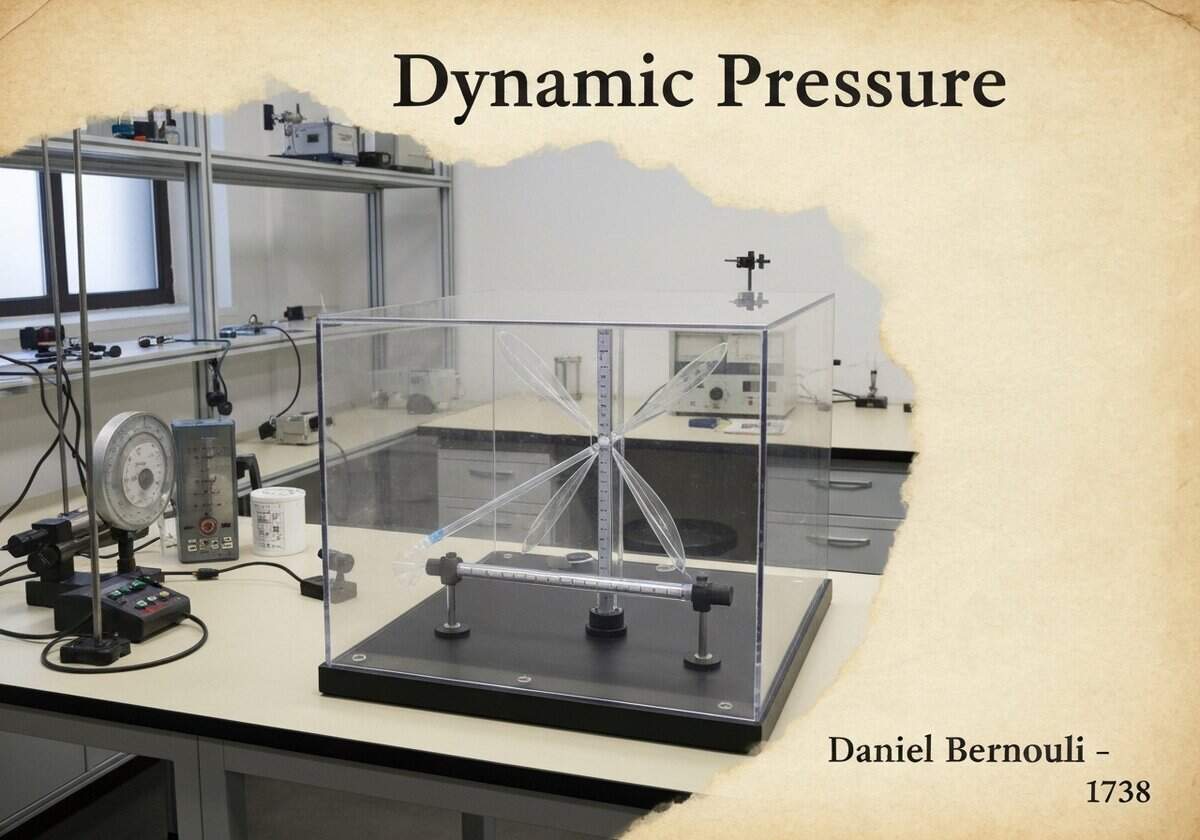
1738
  • Daniel Bernoulli
Wind tunnel setup with Pitot tube for measuring dynamic pressure in fluid mechanics.

(画像はイメージです)

動的 プレッシャー([latex]q[/latex]または[latex]Q[/latex]と表記される)は、流体の単位体積あたりの運動エネルギーです。これは、[latex]q = frac{1}{2} rho u^2[/latex]という式で定義されます。ここで、[latex]rho[/latex]は流体の局所密度、[latex]u[/latex]は流体の速度です。この量は、流体の運動によって生じる圧力を定量化するために、流体力学において基本的なものです。


The concept of dynamic pressure originates from the エネルギー保存の法則 for a moving fluid. It represents the portion of the fluid’s total energy associated with its bulk motion. The formula [latex]q = \frac{1}{2} \rho u^2[/latex] can be derived by considering the kinetic energy ([latex]E_k = \frac{1}{2} m u^2[/latex]) of a small parcel of fluid with mass [latex]m[/latex] and volume [latex]V[/latex]. Since density [latex]\rho[/latex] is mass per unit volume ([latex]\rho = m/V[/latex]), the kinetic energy per unit volume is [latex]E_k/V = (\frac{1}{2} m u^2)/V = \frac{1}{2} (m/V) u^2 = \frac{1}{2} \rho u^2[/latex]. This result shows that dynamic pressure is not a pressure in the conventional sense of a normal force per unit area exerted by molecular collisions (which is static pressure). Instead, it is a scalar quantity with units of pressure (Pascals in SI units) that conveniently represents the kinetic energy density of the flow. This distinction is crucial; dynamic pressure cannot be measured directly by a standard pressure gauge oriented parallel to the flow. It can only be measured by bringing the fluid to a stop isentropically, converting its kinetic energy into a measurable pressure increase.

Historically, the groundwork was laid by Daniel Bernoulli in his 1738 work *Hydrodynamica*. While he formulated the overarching principle of energy conservation in fluids, the explicit isolation and naming of “dynamic pressure” as a distinct term became more common with the development of modern fluid dynamics and aerodynamics in the late 19th and early 20th centuries. Its utility lies in simplifying complex fluid dynamics equations. For instance, in many aerodynamic calculations, the forces are non-dimensionalized using dynamic pressure, which allows for the comparison of aerodynamic performance of different-sized objects at different speeds and in different fluids, as long as other parameters like the レイノルズ数 一致する。そのため、風洞試験や計算流体力学(CFD)における基礎となる量となっている。

UNESCO Nomenclature: 2210
機械工学

タイプ

抽象システム

混乱

基礎

使用法

広く普及している

前駆物質

  • アイザック・ニュートンの運動法則
  • 運動エネルギーの概念([latex]E_k = frac{1}{2}mv^2[/latex])
  • 圧力と密度の初期の概念
  • Conservation of energy principles

アプリケーション

  • 航空機の設計(揚力と抗力の計算)
  • 流量測定用ベンチュリ流量計の設計
  • 対気速度測定のためのピトー管の動作
  • 気象予報(構造物にかかる風荷重の分析)
  • 自動車設計(空力最適化)
  • 土木工学(橋梁や建物への風荷重)

特許:

NA

潜在的なイノベーションのアイデア

  • adaptive building facades that change shape to minimize wind load based on real-time dynamic pressure sensor data
  • smart athletic apparel with integrated sensors to measure dynamic pressure of air or water, providing feedback to optimize form and reduce drag
  • ドローン flight controllers that use dynamic pressure calculations for more accurate energy consumption estimates and extended flight times
  • advanced weather models that use dynamic pressure fields to better predict structural damage potential from storms and hurricanes
  • implantable medical devices that monitor blood flow by calculating dynamic pressure to detect stenosis or aneurysms
  • dynamic pressure-based control systems for underwater autonomous vehicles (auvs) to maintain optimal cruising efficiency in varying currents
  • agricultural spraying systems that adjust nozzle pressure and droplet size based on ambient wind dynamic pressure to minimize drift
  • high-efficiency hvac systems that modulate fan speed based on dynamic pressure measurements within ducts to save energy
  • safety systems in high-speed trains that use dynamic pressure to predict and counteract crosswind-induced instability
  • interactive museum exhibits that allow users to visualize dynamic pressure fields around objects in a virtual wind tunnel
関連: 動圧、流体力学、運動エネルギー、流体密度、流体速度、ベルヌーイの原理、圧力、空気力学、非圧縮性流れ、 流体力学.

歴史的背景

動圧

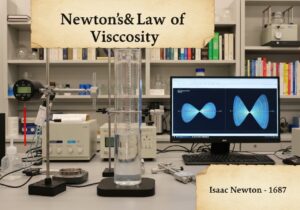
1678
1687
1687
1738
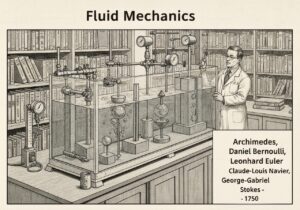
1750
1785
1788
1672
1687
1687
1738
1750
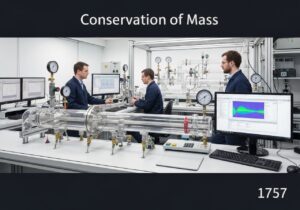
1757
1788
1800

(日付が不明または関連性がない場合、例えば「流体力学」などでは、その注目すべき出現時期の概算値が提示されます。)

10年目 周年

フルサイズの画像とダウンロードは、登録会員のみが100%無料で利用できます。