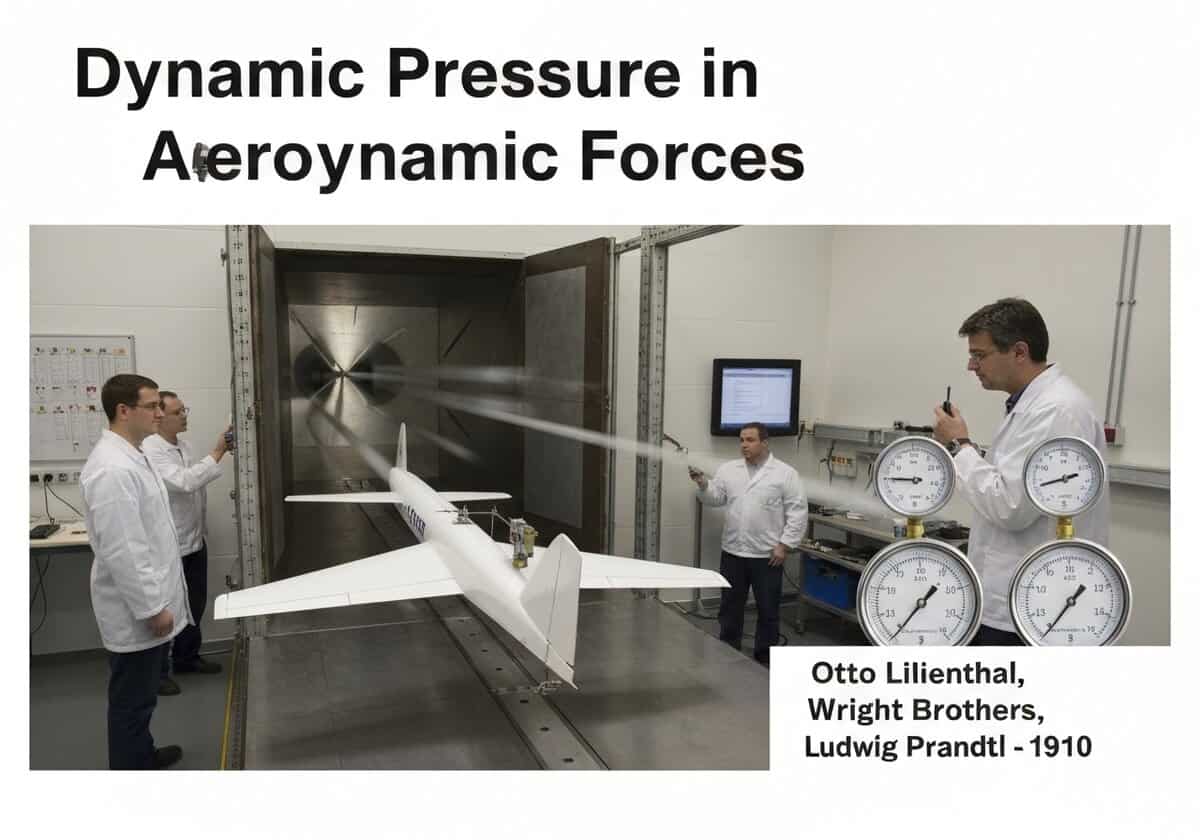
物体上的空气动力,如升力和阻力,与周围流体的动压力成正比。公式为 [latex]L = C_L \cdot q \cdot A[/latex] 和 [latex]D = C_D \cdot q \cdot A[/latex],其中 [latex]C_L[/latex] 和 [latex]C_D[/latex] 为无量纲升力和阻力系数,[latex]q[/latex] 为动压,[latex]A[/latex] 为参考面积。.


(图片仅供参考)
物体上的空气动力,如升力和阻力,与周围流体的动压力成正比。公式为 [latex]L = C_L \cdot q \cdot A[/latex] 和 [latex]D = C_D \cdot q \cdot A[/latex],其中 [latex]C_L[/latex] 和 [latex]C_D[/latex] 为无量纲升力和阻力系数,[latex]q[/latex] 为动压,[latex]A[/latex] 为参考面积。.

使用 动态压力 to define aerodynamic forces is a cornerstone of aeronautical engineering, enabling a powerful method of analysis called dimensional analysis. By expressing lift and drag in terms of dynamic pressure ([latex]q[/latex]), a reference area ([latex]A[/latex]), and a dimensionless coefficient ([latex]C_L[/latex] or [latex]C_D[/latex]), engineers can separate the effects of fluid properties and speed from the effects of the object’s shape. The coefficients [latex]C_L[/latex] and [latex]C_D[/latex] depend primarily on the shape of the body, its orientation to the flow (angle of attack), and the 雷诺数 和 马赫数这种分离非常有用。例如,可以在风洞中测试飞机的比例模型,并利用测得的升力和阻力系数来准确预测全尺寸飞机在不同飞行条件(不同高度,因此密度不同,以及不同速度)下所受的力。
这一概念在航空航天领域的一个重要应用是 “最大 Q 值 ”的概念,它指的是航天器在大气上升过程中经历最大动压的点。当火箭加速时,其速度([latex]u[/latex])会增加,导致 [latex]q[/latex] 上升。与此同时,随着高度的增加,大气密度([latex]\rho[/latex] )降低,导致 [latex]q[/latex] 下降。这两种对立效应的结合导致了动压的峰值。这是车辆机械应力最大的时刻,其结构设计必须能够承受这些负载。在最大 Q 值附近降低发动机转速是减少这些应力并确保车辆结构完整性的常用策略。.
气动力中的动压力
(如果日期未知或不相关,例如“流体力学”,则提供其显著出现的近似估计)

只有注册会员才能免费获取完整尺寸的图片和下载内容。
> 登录 <