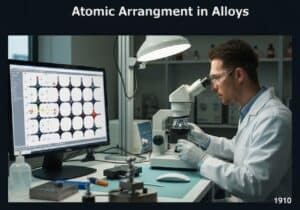
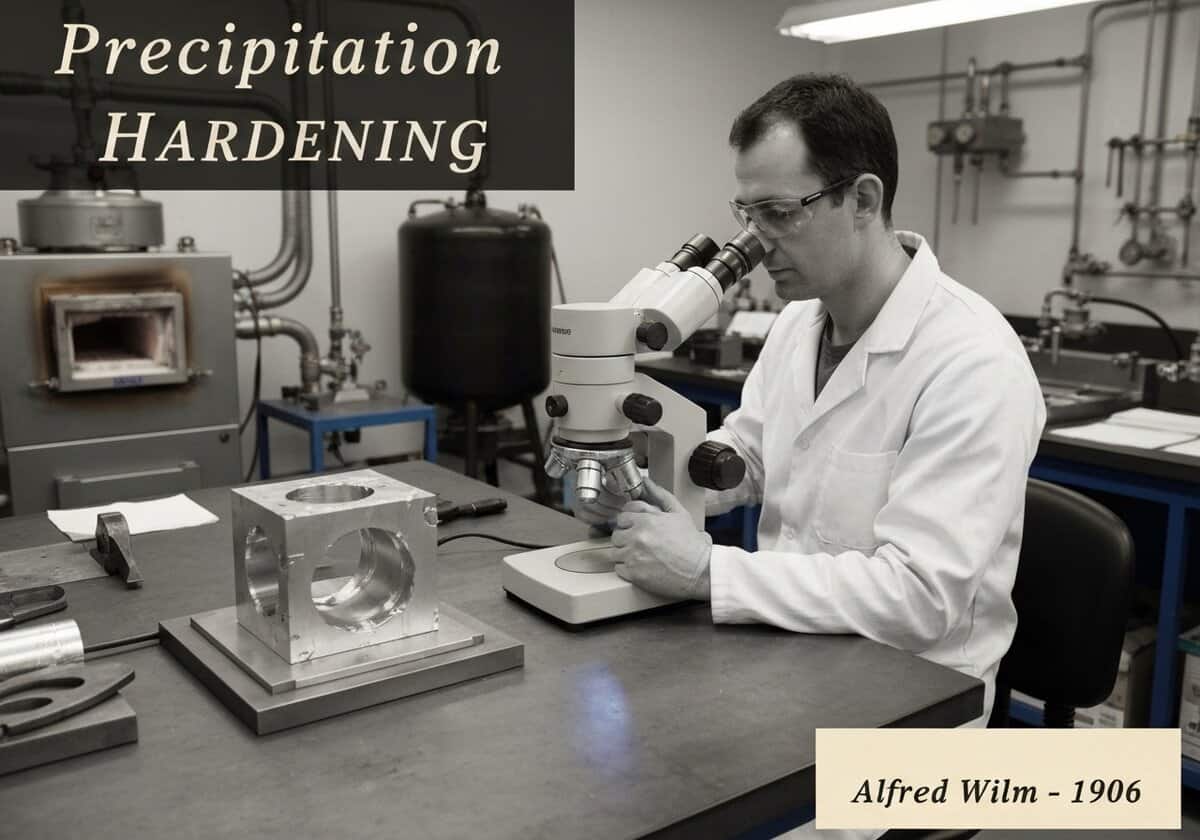
The discovery of precipitation hardening by Alfred Wilm was accidental. While studying an aluminum 合金 containing copper, magnesium, and manganese (later named Duralumin), he noticed its hardness increased over several days after quenching, even at room temperature. This phenomenon is now understood as a three-step process. First, in solution treatment, the alloy is heated to a temperature high enough to dissolve all the solute atoms into a single-phase solid solution. Second, the alloy is rapidly quenched in a medium like water, which freezes the atoms in place, creating a supersaturated solid solution. This state is thermodynamically unstable. Third, during aging (either at room temperature or an elevated temperature), the supersaturated solute atoms diffuse and cluster together to form extremely small, coherent particles of a new phase called precipitates.
These precipitates act as powerful obstacles to the movement of dislocations, which are the primary carriers of plastic deformation in crystalline materials. The effectiveness of the strengthening depends on the size, shape, and distribution of these precipitates. Initially, as precipitates form and grow, the strength increases. However, if the aging process continues for too long (over-aging), the precipitates become too large and lose coherency with the matrix, allowing dislocations to bypass them more easily, which leads to a decrease in strength. This process allows for the precise tailoring of an alloy’s 機械的特性.
Related to: precipitation hardening, age hardening, heat treatment,
降伏強度, dislocation, precipitate, duralumin, superalloy, metallurgy, strengthening mechanism.