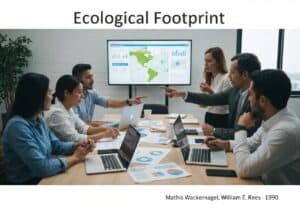
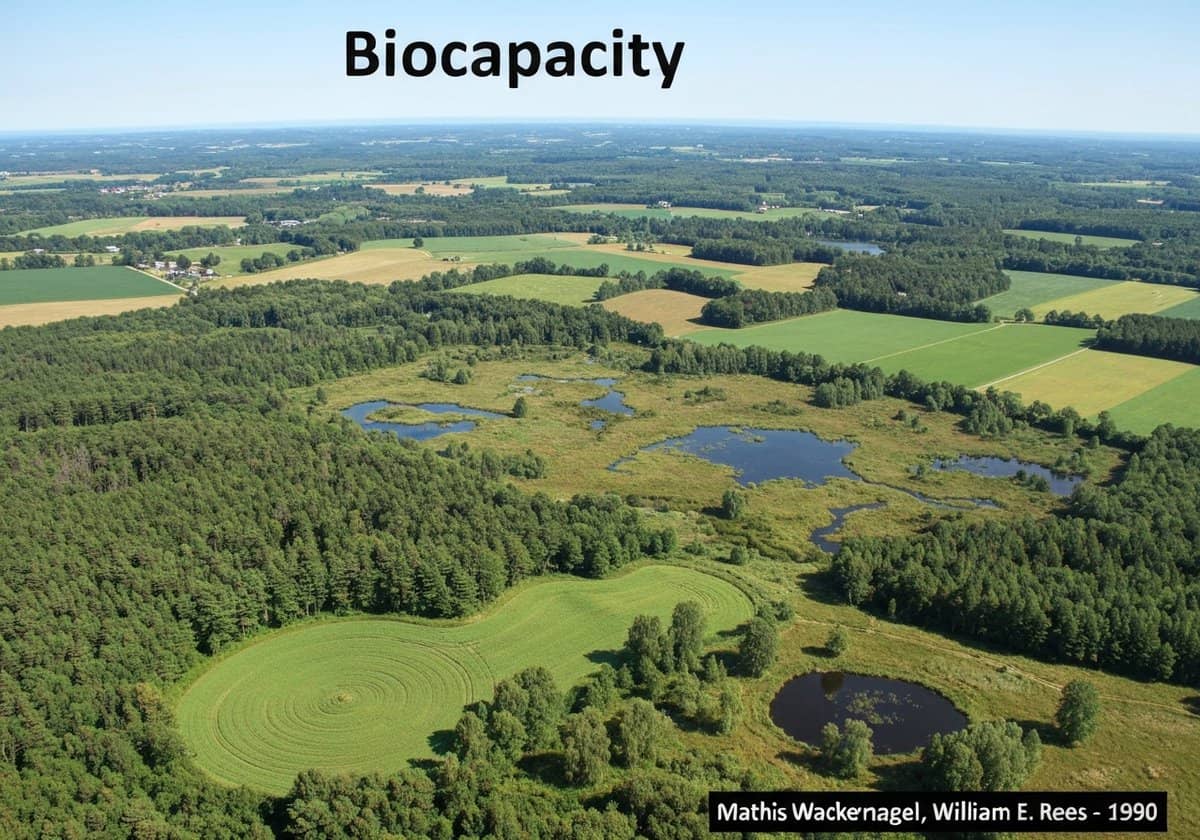
Biocapacity is the crucial counterpart to the Ecological Footprint. It quantifies the planet’s or a region’s ability to regenerate what humans demand. The calculation of biocapacity involves summing the productive areas of cropland, grazing land, forest land, and fishing grounds. These areas are then weighted by their biological productivity using equivalence factors, which compare their productivity to the world average, and yield factors, which compare local yields to world average yields. This process converts physical hectares into the standardized ‘global hectares’ unit, allowing for a direct comparison with the Ecological Footprint. Biocapacity is not a static figure; it can be influenced by technology, agricultural practices (e.g., irrigation, fertilizer use), ecosystem degradation, and 気候変動例えば、土壌浸食は農地の生物生産能力を低下させる一方、持続可能な林業慣行は森林の生物生産能力を維持または向上させることができます。国の生態学的フットプリントが自国の生物生産能力を上回る場合、その国は生態学的赤字を抱えていることになります。これは、他国から生物生産能力を輸入しているか、自国の生態学的資産を処分しているか、あるいは二酸化炭素などの廃棄物で地球規模の共有資源を汚染しているかのいずれかを意味します。