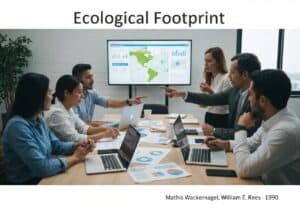
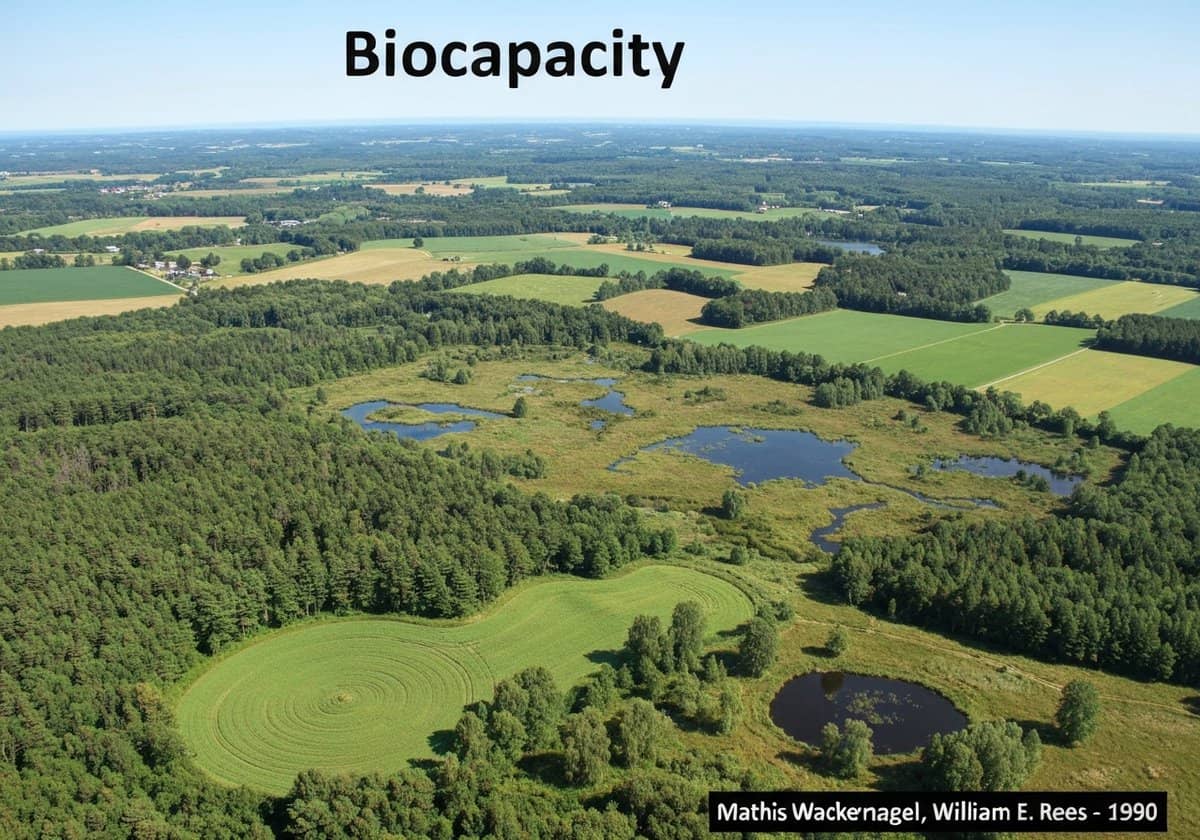
Biocapacity is the crucial counterpart to the Ecological Footprint. It quantifies the planet’s or a region’s ability to regenerate what humans demand. The calculation of biocapacity involves summing the productive areas of cropland, grazing land, forest land, and fishing grounds. These areas are then weighted by their biological productivity using equivalence factors, which compare their productivity to the world average, and yield factors, which compare local yields to world average yields. This process converts physical hectares into the standardized ‘global hectares’ unit, allowing for a direct comparison with the Ecological Footprint. Biocapacity is not a static figure; it can be influenced by technology, agricultural practices (e.g., irrigation, fertilizer use), ecosystem degradation, and 气候变化例如,土壤侵蚀会降低耕地的生物承载力,而可持续的林业实践则可以维持或提高森林的生物承载力。如果一个国家的生态足迹超过其自身的生物承载力,则该国可能存在生态赤字,这意味着它要么从其他国家进口生物承载力,要么消耗自身的生态资产,要么用二氧化碳等废物污染全球公共资源。