Product Design, Manufacturing & Innovation Resources
家 » 海洋炭素隔離

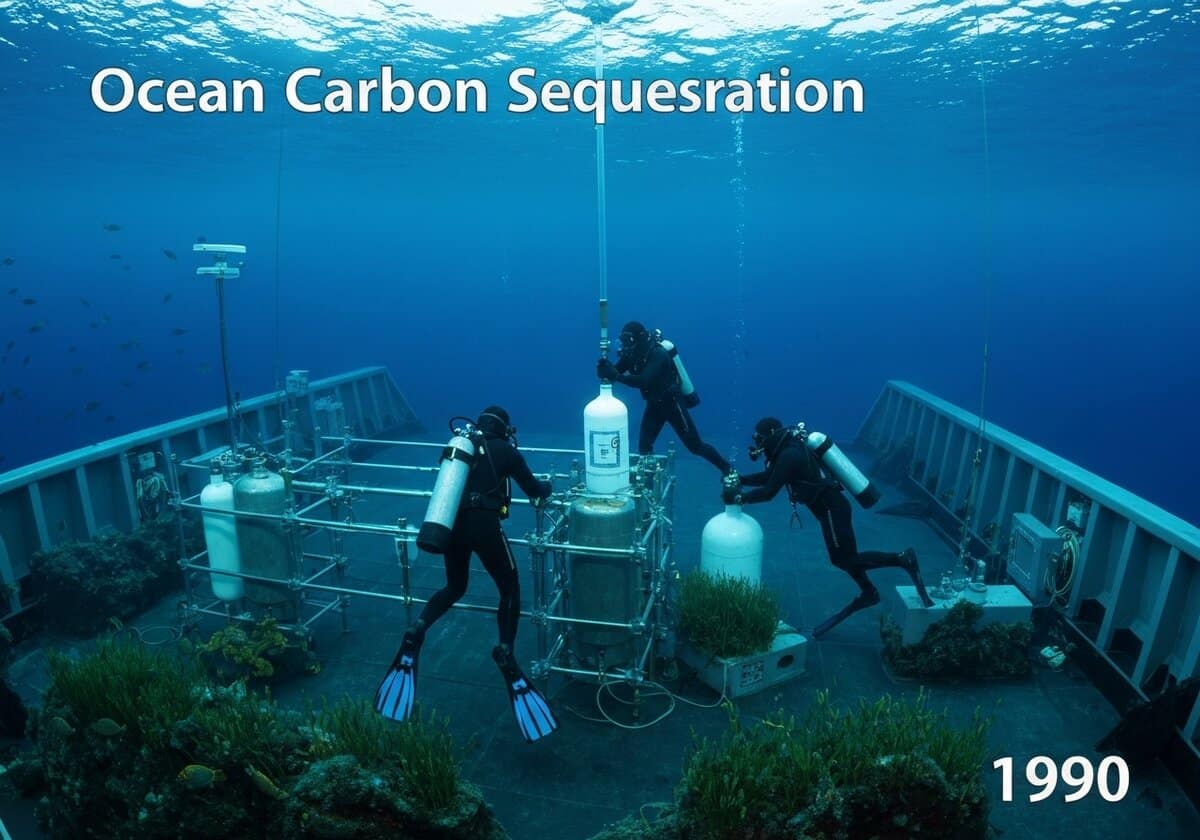
海洋炭素隔離

1990
Deep-sea research vessel conducting ocean carbon sequestration experiments in oceanography.

(画像はイメージです)

Involves capturing CO2 and storing it in the deep ocean, which is the planet’s largest carbon sink. Methods include direct injection of liquid CO2 into the water column or onto the deep seafloor, and ocean fertilization to stimulate phytoplankton growth, which absorbs CO2 via 光合成. Both approaches have significant environmental concerns, primarily ocean acidification and unpredictable impacts on marine ecosystems.

海洋は、主に2つのメカニズム、すなわち「溶解ポンプ」と「生物ポンプ」を通して、大気中の膨大な量のCO2を自然に吸収します。 ポンプ involves CO2 dissolving in cold, dense surface water at high latitudes, which then sinks and circulates in the deep ocean for centuries. The biological pump involves marine organisms, primarily phytoplankton, converting CO2 into organic matter through 光合成. When these organisms die, a fraction of their carbon sinks to the deep ocean.

海洋隔離計画は、これらのプロセスを加速させることを目的としている。直接注入方式では、圧縮した二酸化炭素を水深1,000~3,000メートルまで注入する。この深さでは、高圧によって二酸化炭素は海水よりも密度の高い液体となり、理論的には海底に安定した貯留層を形成する。しかし、この方法では極度の酸性度の高い領域が形成され、ほとんどの海洋生物にとって致命的となる。

海洋施肥、特に鉄施肥は、鉄などの微量栄養素を海洋の一部に添加して、大規模な植物プランクトンの増殖を引き起こすものです。これは生物ポンプの働きを強化するという仮説に基づいています。しかし、実際に深海に到達する炭素量については実験結果がまちまちであり、海洋食物連鎖の基盤を変化させ、無酸素状態の「デッドゾーン」を生み出す可能性について大きな懸念があります。こうした深刻な環境リスクと、ロンドン条約/議定書などの国際条約に基づく法的不確実性のため、大規模な海洋隔離は現在行われていません。

UNESCO Nomenclature: 2508
海洋学

タイプ

環境工学プロセス

混乱

増分

使用法

概念的/理論的

前駆物質

  • 海洋が主要な炭素吸収源としての役割を担っていることの発見
  • 海洋生物ポンプと溶解ポンプの理解
  • 深海潜水艇および遠隔操作型無人探査機(ROV)の開発
  • 海洋生産性における微量栄養素(鉄など)の制限的役割に関する研究
  • advances in chemical oceanography and carbon cycle モデリング

アプリケーション

  • 深海環境における二酸化炭素の運命を研究するための実験
  • 地球規模の炭素循環と海洋化学を理解するためのモデル
  • 地球工学に関する提案は、国際協定によって大部分が禁止されているものの、

特許:

NA

潜在的なイノベーションのアイデア

  • cultivating and sinking macroalgae like kelp in the deep ocean (biomass sinking)
  • enhancing ocean alkalinity by adding crushed silicate minerals to seawater to counteract acidification
  • using electrochemical systems to remove CO2 from seawater, allowing the ocean to absorb more from the atmosphere
  • developing autonomous underwater vehicles to monitor the long-term ecological impact of localized alkalinity enhancement
  • creating artificial downwelling systems to accelerate the transport of carbon-rich surface water to the deep ocean
  • engineering phytoplankton to have denser shells, increasing their sinking efficiency
  • 使用 音響 fields to non-invasively monitor deep-sea CO2 plumes
  • developing biodegradable polymers that release micronutrients slowly to avoid harmful algal blooms
  • creating a global sensor network to precisely track the ocean carbon cycle in real-time
  • farming shellfish on a massive scale and burying the carbon-rich shells in anoxic environments
関連キーワード:海洋隔離、直接注入、海洋施肥、生物ポンプ、溶解ポンプ、海洋酸性化、海洋生態系、鉄施肥、炭素循環、地球工学。

歴史的背景

海洋炭素隔離

1982
1990
1990
1990
1990
2000
2006
1980
1982
1990
1990
1990
1993
2001-09-01

(日付が不明または関連性がない場合、例えば「流体力学」などでは、その注目すべき出現時期の概算値が提示されます。)

10年目 周年

フルサイズの画像とダウンロードは、登録会員のみが100%無料で利用できます。