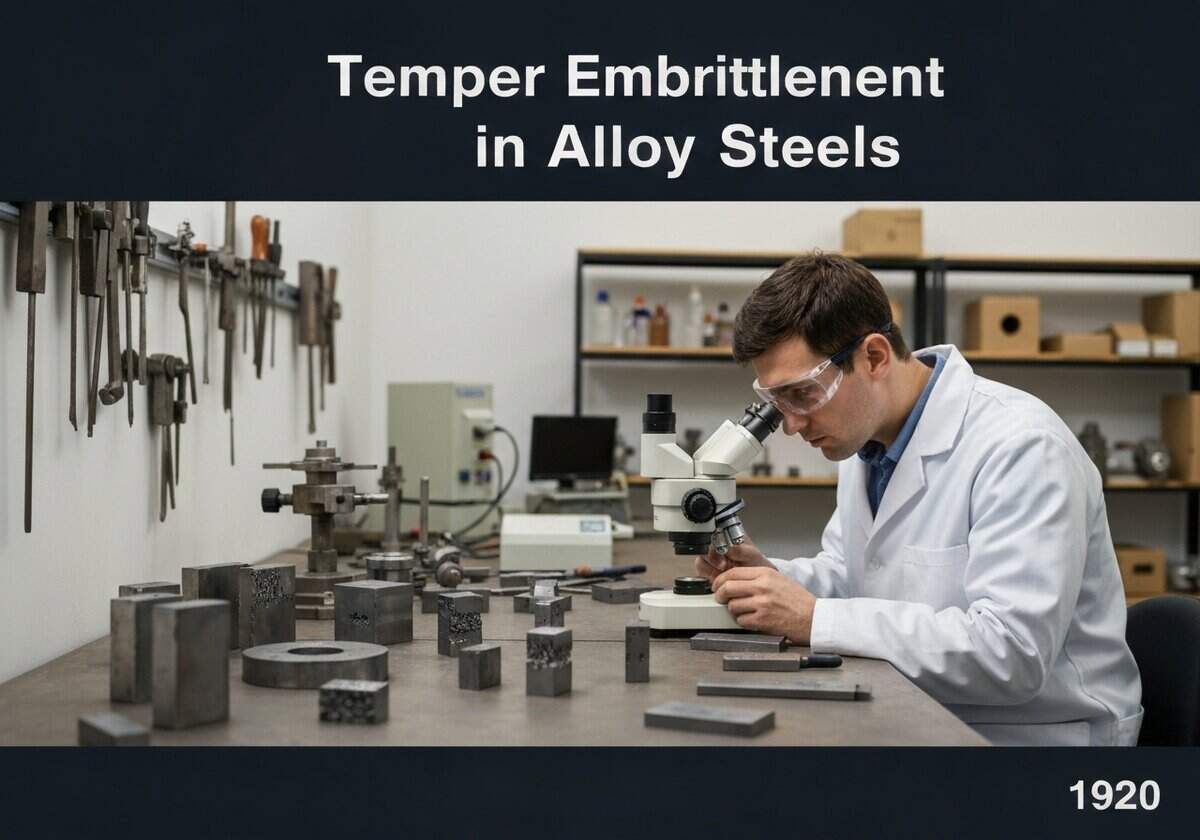
The mechanism of temper embrittlement is a classic example of equilibrium segregation. At elevated temperatures, impurity atoms are dissolved within the metal grains. As the steel cools into the embrittling range, these impurities become less soluble and find it energetically favorable to migrate to the 高能 regions of the grain boundaries. Certain alloying elements, like manganese and nickel, can co-segregate with the impurities, exacerbating the effect. The result is a dramatic increase in the ductile-to-brittle transition temperature (DBTT), meaning the steel can fracture in a brittle way at temperatures where it should be tough.
A key characteristic of temper embrittlement is that it is reversible. If an embrittled component is reheated to a temperature above the critical range (e.g., >600 °C) and then cooled rapidly (quenched), the impurities are re-dissolved into the grains, and toughness is restored. This understanding was a crucial novelty in physical metallurgy, demonstrating that 机械性能 were not static but could be degraded by subtle, time-dependent changes in micro-chemistry at internal interfaces. It led to major changes in steelmaking and heat treatment practices for heavy-section components.