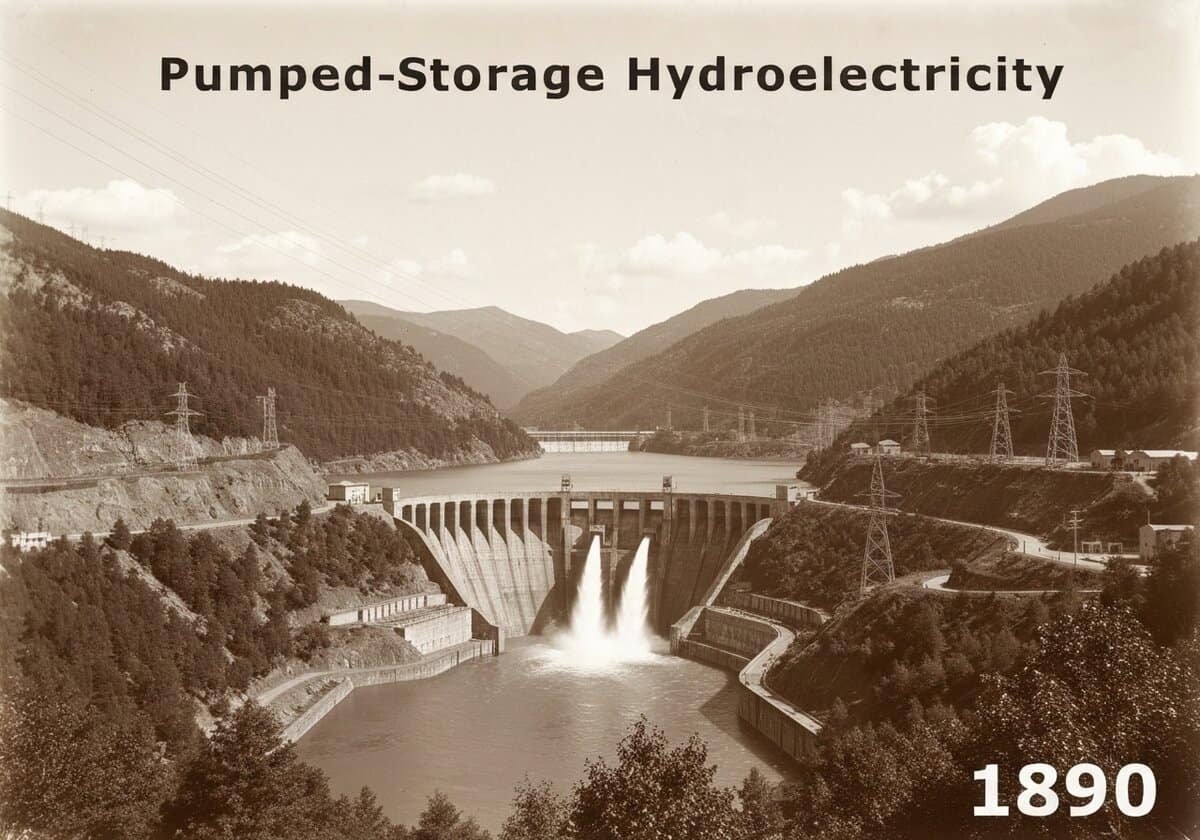
揚水式水力発電 (PSH) is a type of hydroelectric energy storage used by electric power systems for load balancing. The 方法 低地の貯水池から高地の貯水池へ汲み上げた水を、水の重力ポテンシャルエネルギーの形で蓄える。電力需要が高い時期には、蓄えられた水を放出してタービンを回し、発電を行う。
(画像はイメージです)
揚水式水力発電 (PSH) is a type of hydroelectric energy storage used by electric power systems for load balancing. The 方法 低地の貯水池から高地の貯水池へ汲み上げた水を、水の重力ポテンシャルエネルギーの形で蓄える。電力需要が高い時期には、蓄えられた水を放出してタービンを回し、発電を行う。

PSHシステムは現在、グリッド規模のエネルギー貯蔵の最も一般的な形態であり、世界の設置済み貯蔵容量の94%以上を占めています。典型的なPSHプラントは、異なる標高にある2つの貯水池で構成されています。電力が安価で豊富なオフピーク時間帯(例えば、夜間や風力/太陽光発電量が多い時)には、余剰電力が利用され、 ポンプ water from the lower reservoir to the upper one. This process converts electrical energy into gravitational potential energy. When electricity demand is high, water is released from the upper reservoir, flowing down through turbines to generate electricity, similar to a conventional hydroelectric plant. The round-trip efficiency of PSH systems is typically between 70% and 80%. The main advantages are their long 寿命 (often over 50 years), large storage capacity, and ability to provide ancillary services to the grid. However, their deployment is geographically constrained, requiring specific topography with significant height differences and access to water.
揚水式水力発電
(日付が不明または関連性がない場合、例えば「流体力学」などでは、その注目すべき出現時期の概算値が提示されます。)

フルサイズの画像とダウンロードは、登録会員のみが100%無料で利用できます。
> ログイン <