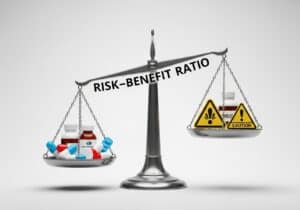
リスク評価におけるリスク・ベネフィット比
In the domains of product design, engineering, manufacturing, and innovation, the evaluation of the risk-benefit ratio in risk assessment plays
Principles are easy to state. Practices are what a team does on Monday: which material is specified, how a joint is made, what happens to offcuts, how long spare parts stay available.
 This page stays at that level. It compares recycling with upcycling and life cycle assessment with product carbon footprint, two pairs that are often confused. A logic tree identifies an unknown plastic with simple tests, the first step before any sorting. An article on microplastics lists origins and technical countermeasures.
Reverse engineering for repair and reuse, a tire manufacturing tour and the risk-benefit ratio complete the reading. Digests track PFAS, biodiversity and circular economy research. For material choices specifically, go to 持続可能な素材. For production, see eco-friendly manufacturing.
In the domains of product design, engineering, manufacturing, and innovation, the evaluation of the risk-benefit ratio in risk assessment plays

The most complete table to identify simple plastics. Identifying the exact composition of an unknown plastic sample can seem daunting,

保守、リサイクル、アップサイクルにおけるリバースエンジニアリングを活用し、持続可能なソリューションを解き明かすことで、製品ライフサイクルを向上させ、循環型経済を促進します。

This week: fluoropolymer, secondary batteries, monomer, polymer composition, PFAS-free, non-crosslinked, heat shrink tubing, blend composition, silanes, synthesis, acryloyloxy, polymerization, PFAS

This week: personalized audio, user feedback, frequency analysis, biometric data, authentication, biometric, cryptography, zero-knowledge proof, data aggregation, sentiment analysis, user

This week: cryogenic discharge, lithium-ion batteries, recycling process, inert environment, carbon-neutral process, fused alumina, electric arc furnace, aluminothermic reactions, decarbonisation,

Did you know electric vehicles over their lifetime emit over 60% less than gas-powered cars? This fact highlights the need

An amazing 75% of aluminum made in the USA is still being used today. This is thanks to recycling. This
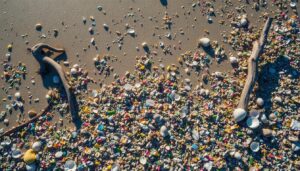
Did you know that plastic makes up 60% to 80% of marine waste? Shockingly, 90% of floating waste in seas

文化、リサイクル、そして歌:ピート・シーガーはフォーク音楽の伝説であり、社会正義の象徴だった。彼は自分の音楽を