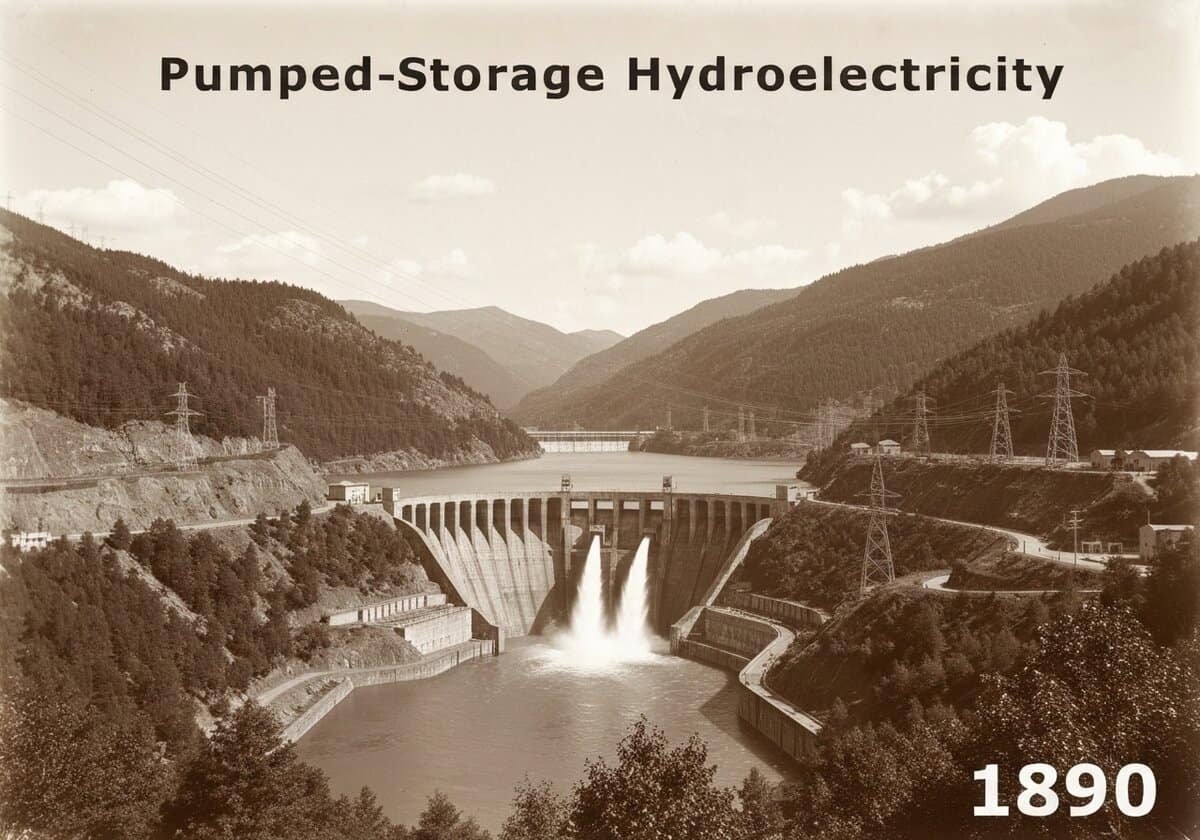
PSH systems are currently the most dominant form of grid-scale energy storage, accounting for over 94% of the world’s installed storage capacity. A typical PSH plant consists of two water reservoirs at different elevations. During off-peak hours, when electricity is cheap and abundant (e.g., at night or during high wind/solar generation), excess power is used to 泵 water from the lower reservoir to the upper one. This process converts electrical energy into gravitational potential energy. When electricity demand is high, water is released from the upper reservoir, flowing down through turbines to generate electricity, similar to a conventional hydroelectric plant. The round-trip efficiency of PSH systems is typically between 70% and 80%. The main advantages are their long 寿命 (often over 50 years), large storage capacity, and ability to provide ancillary services to the grid. However, their deployment is geographically constrained, requiring specific topography with significant height differences and access to water.