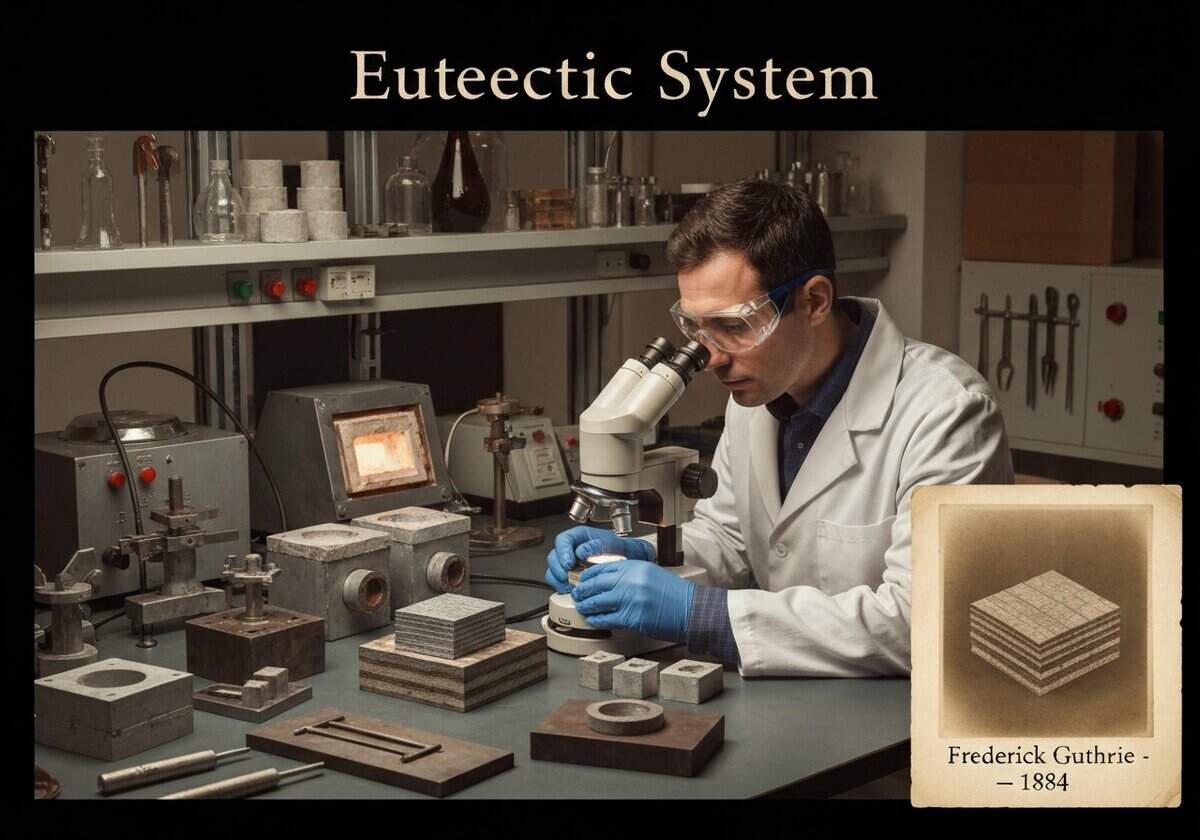
The low melting point of eutectic alloys is highly advantageous for casting, as it reduces the energy required and minimizes thermal stress on molds. The microstructure formed during eutectic solidification is typically a fine, intimate mixture of the solid phases, such as alternating layers (lamellae) of [latex]\alpha[/latex] and [latex]\beta[/latex]. This fine microstructure can impart unique 機械的特性, such as high strength and wear resistance, as seen in cast iron where the eutectic structure consists of ferrite and cementite. Compositions other than the eutectic are termed hypoeutectic or hypereutectic, and they begin to solidify by precipitating one of the primary solid phases before reaching the eutectic temperature, where the remaining liquid then undergoes the eutectic transformation.