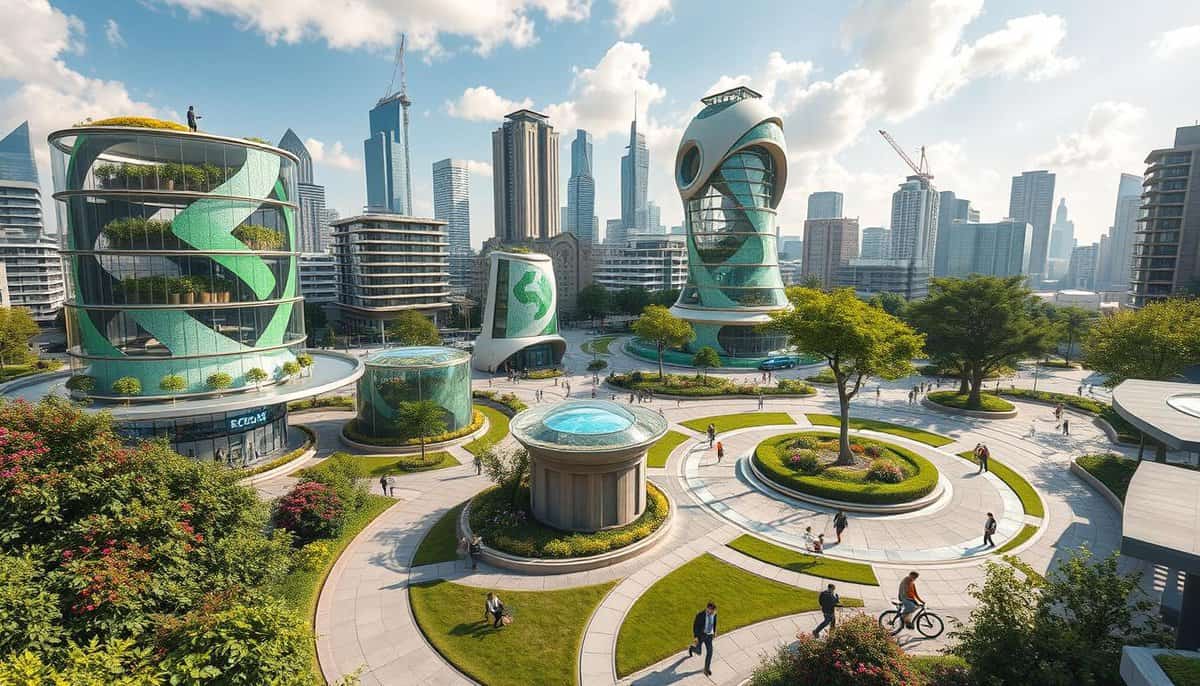
毎年、約2兆6000億ドル相当の資源が廃棄されていることをご存知ですか?これは、私たちがすぐに使い切って捨ててしまう製品から発生するものです。この莫大な数字は、環境に配慮した製品の製造・設計方法を見つける必要があることを示しています。循環型経済の考え方を取り入れることで、ヨーロッパは2030年までに1兆8000億ユーロの収入増が見込めるでしょう。
A circular economy tries to get rid of waste and pollution. It aims to keep products and materials being used longer. It also helps nature renew itself. These goals help lessen the harm to our environment and boost the economy. This comes from promoting the use of products for a longer time and リサイクル.
ご紹介します 円形のデザイン 原則 製品製造の初期段階から循環型生産方式を取り入れることが鍵となります。これは、従来の直線的な生産方式から、より長く持続可能な新しい循環型生産方式への移行を促進します。製品製造の初期段階で廃棄物や汚染の根本原因を突き止めることが不可欠です。設計と開発の段階で協力することで、価値ある新しいソリューションを生み出すことができます。これにより、循環型生産方式がすべての製品のライフサイクルに組み込まれることが保証されます。
主なポイント
- 毎年、2兆6000億ドル相当の使い捨て商品が廃棄されている。
- 循環型経済の考え方を活用すれば、2030年までにヨーロッパだけで年間1兆8000億ユーロもの莫大な経済的利益が得られる可能性がある。
- デザイン思考は、地球環境に良いものを作ることに焦点を当てている。
- 循環型デザインは、廃棄物や汚染が発生する前にそれを阻止しようとするものです。
- 製品設計において協力することで、循環型経済における新たな収益性の高い道が開かれる可能性がある。
循環型経済とは何ですか?
循環型経済を理解することは、より環境に優しく持続可能な選択をする上で不可欠です。それは、従来の「採取・製造・廃棄」というサイクルから脱却し、製品をより長く使い続けるシステムへと移行するものです。製品の設計と使用方法を見直すことで、資源を無駄なく有効活用することができます。
定義と概要
The circular economy helps businesses, people, and the planet. It grows the economy without using up all our resources. This approach makes products that last longer, can be fixed, reused, and リサイクル.
循環型経済の重要性
循環型経済の考え方を取り入れることは、非常に大きなメリットをもたらします。企業にとっては、コスト削減、顧客満足度の向上、そして資源消費量の削減につながります。さらに、廃棄物の削減や自然環境への負荷軽減にもなり、地球環境の回復に貢献します。
主な原則
循環型経済は、次の3つの大きなアイデアに基づいています。
- 廃棄物と汚染をなくす設計: 私たちは、最初から廃棄物や汚染物質を排除することから始めます。スマートな設計と省エネ対策を通して、私たちは変化をもたらします。
- 製品や材料は使用状況に応じて適切に保管してください。 この考え方は、長く使えるものを作ることを奨励する。耐久性と修理のしやすさに重点を置くことで、一部の企業はより長く使える製品の製造に注力している。
- 自然システムを再生する: この原則は、自然環境を修復し、改善することを目的としています。企業は事業のやり方を変えることで、環境の回復に貢献します。
| 原理 | 重点分野 |
|---|---|
| 廃棄物と汚染を設計から排除する | ライフサイクル 思考、エネルギー効率 |
| 製品や材料は使用中のままにしておく | Durability, Modularity, 修理可能性 |
| 自然システムを再生する | 閉ループ サプライチェーン |
したがって、循環型経済は、環境に優しい設計と将来に向けた持続可能なビジネスにとって重要な要素となる。
循環型デザインの原則:概要
循環型デザインの原則 これらは持続可能な未来にとって不可欠です。イノベーションを推進し、私たちの生活様式を変革します。これらの原則は、世界全体で約1兆ドルという莫大な価値を持っています。
廃棄物と汚染をなくす
廃棄物と汚染の削減は、循環型デザインの主要な目標です。企業は、廃棄物を減らすために、耐久性があり修理可能な製品を開発しています。デジタルツールを活用して資源をより効率的に利用し、材料をリサイクルすることは、環境保護に大きく貢献します。こうした取り組みは、企業の競争力向上にもつながります。
製品と材料の流通
製品や材料を継続的に使用することは、循環型デザインの中心となる考え方です。
分解や組み立てが容易になるように設計することで、製品をより長く使えるようにする。
企業は使い捨ての考え方から脱却し、再利用とリサイクルを積極的に取り入れるようになっている。Zipcarやスマートビルディング技術は、資源を有効活用することで廃棄物を削減できることを示している。これは循環型経済の目標にも合致する。
自然を再生する
The third principle is to help nature heal. Using materials that can be fully recycled or アップサイクル is good for products and the planet. Working together, companies and schools are focusing on making nature better. This makes regeneration a key aim in circular economy efforts.
Understanding Sustainable Product Design
持続可能な製品デザイン is key in today’s manufacturing. It focuses on being kind to the environment and useful. Understanding the differences between sustainable, エコデザイン, and circular design helps us see how they each help keep products green.
Sustainable vs. Ecodesign vs. Circular Design
持続可能なデザイン aims to reduce harm to the environment during production. Ecodesign improves efficiency and lessens negative impacts throughout a product’s life. Circular design, meanwhile, seeks to eliminate waste. It does this by making products recyclable and reusable. This keeps products in use longer.
The debate isn’t about which concept is best. It’s about finding the right approach for each product.
Attributes of Sustainable Product Design
持続可能な製品デザイン has many important features. デザイン 分解 (DfD) is one. It makes recycling parts easier. Techniques that make products lighter can also enhance fuel efficiency in cars, showing the value of sustainable manufacturing.
Design for Modularity allows products to be built in different ways from small parts.
使用 製品ライフサイクル Management (PLM) systems helps designers create greener designs. They can simulate designs, create them and make them lighter in real time. Early visibility into the supply chain helps find sustainable parts. This speed up the development of new, eco-friendly products through better teamwork.
Product Design for Circular Economy Strategies
Creating products for a circular economy is key to a sustainable future. This means thinking ahead and designing in a way that makes products last longer.
Designing for sustainability focuses on making products modular, adaptable, and upgradable. Modularity lets products be easily fixed or improved.
It’s also important to focus on sharing, reusing, remaking, and refurbishing products. These steps help both the planet and the products’ 寿命.

To design for a circular economy, you need to understand the lifecycle of a product. This includes planning, making, and releasing it. Choosing safe and circular materials is crucial.
There’s a shift from owning things to accessing them. Rental, subscription, sharing, and leasing are becoming more popular. This change affects how businesses operate and what consumers want.
Product life extension is vital for sustainability. Designers aim to create products that last longer emotionally and functionally. Dematerialization reduces resource use, leading to greener products.
These strategies are vital for circular economy design and sustainability. By focusing on them, designers can lessen environmental harm and encourage a greener future.
Design for Recycling and Upcycling
Making products with recycling in mind is key for a sustainable future. This part talks about recycling and upcycling, important for a circular economy. When we design for recyclability, we pick materials and ways to put things together. This helps recover and reuse parts when the product’s life ends.
Introduction to Design for Recycling
The start of a product’s green journey is its design. Designing with recycling in focus is a must. The European Ecodesign Directive, from 2005, pushes for products that last and are green. It suggests using one type of material and designs that are easy to take apart.
Sustainable Manufacturing Techniques
It’s vital for modern manufacturers to use sustainable production methods. A whopping 73% of firms see more profits after adopting such practices. They cut down on energy, waste less, and use recyclable or biodegradable stuff.
Thanks to new tech like digital twins, green manufacturing processes are getting a boost. These tools help firms design better, manage risks, and boost their profits. They also reduce the environmental impact by saving water and energy and using better production methods.
Sustainable products should be produced from renewable, organic, or 持続可能な素材 to ensure they can be repurposed, recycled, or composted at the end of their lifecycle.
Improving how things get to us is key for the planet. It makes customers happier too. Top firms show that the right design choices make products that last longer, recycle easier, and have a smaller eco-footprint.
Recycling aluminum is a game changer in sustainable manufacturing. It uses up to 95% less energy than making new aluminum. It also cuts down CO2 by about 9 tonnes per tonne of aluminum recycled. This means a yearly drop of over 100 million tonnes of CO2.
| 側面 | 利点 |
|---|---|
| Energy Consumption Reduction | 95% savings with recycled aluminum |
| CO2 Emission Reduction | 100 million tonnes annually |
| Profit and Revenue Increase | 73% of firms reported growth |
| Lifecycle Management | Producing recyclable and biodegradable materials |
The shift to sustainable production methods そして green manufacturing processes shows a true step towards a greener future.
Eco-friendly Materials and Their Role in Circular Design
As we move towards a circular economy, choosing eco-friendly materials is key. Using 持続可能な素材 cuts down on environmental harm and improves product life.

Sustainable materials come from renewable sources and are gentle on our planet. They don’t just become trash. Instead, they’re recycled at the end of their life. This makes products lasting and better for the environment.
Circular design focuses on keeping products in use longer. It helps avoid new material extraction and reduces waste.
Businesses, NGOs, and governments are teaming up for a circular economy. Adopting sustainable materials leads to innovative, waste-reducing solutions. It paves the way for a greener future.
Steps to Implement Circular Economy Principles in Your Product Design
For businesses wanting to cut down on waste, using circular principles in product design is key. They must integrate these principles from the start to the end of creating a product. This means making products that last longer, are easy to fix, and can be taken apart for recycling or reuse.
Tools like ライフサイクルアセスメント (LCA) show how a product impacts the environment during its life. This helps companies see where they can make less waste and be more eco-friendly.
よくある質問
循環型経済とは何ですか?
循環型経済とは、モノの生産と使用方法について考える新しい方法です。これは、企業、社会、そして地球など、すべての人に利益をもたらします。従来の「採取→製造→廃棄」という方法ではなく、廃棄物をなくし、製品を使い続け、自然の繁栄を促進することを目指しています。
循環型経済が重要な理由とは?
循環型経済が重要なのは、廃棄物の削減と資源のより賢明な利用につながるからです。製品の寿命を延ばし、地球への負荷を軽減します。このようにして、天然資源を使い果たすことなく経済成長を遂げることができるのです。
循環型経済の主な原則は何ですか?
その主な理念は、廃棄物と汚染を削減し、物を長く使い続け、自然環境を改善することです。これらの理念は、地球を癒す経済システムへと私たちを導くのに役立ちます。
循環型デザインの原則とは何ですか?
循環型デザインは、廃棄物と汚染をなくし、モノの循環を維持し、自然を癒すことに重点を置いています。これらの重要なポイントは、より良い未来のための製品づくりにおいて、私たちを導いてくれます。
サーキュラーデザインは、サステナブルデザインやエコデザインとどのように異なるのでしょうか?
持続可能なデザインは環境へのダメージを軽減し、エコデザインは製品の効率性と環境負荷の低減を目指します。循環型デザインはさらに高い目標を掲げ、材料を完全に再利用することで廃棄物のない未来の実現を目指します。
持続可能な製品デザインの特徴とは何ですか?
持続可能なデザインとは、再生可能な素材を使用し、エネルギーを節約するものです。また、製品の寿命を延ばすことにもつながります。これらの取り組みは、製品のライフサイクル全体を通して地球環境の健全性を維持するのに役立ちます。
デザイナーは循環型経済における製品開発のためにどのような戦略を用いることができるでしょうか?
デザイナーは、製品をモジュール式で適応性があり、アップサイクルに適したものにすることができる。こうすることで、製品は私たちの生活をより豊かにし、より環境に優しい経済を支えることになる。
リサイクルを考慮したデザインとは何ですか?
リサイクルを考慮した設計とは、素材選びや製品の分解のしやすさを重視することです。そうすることで、部品を再利用し、ゴミを減らすことができます。
製品デザインにおけるアップサイクルの例にはどのようなものがありますか?
アップサイクルとは、古い素材を新しい価値のあるアイテムに生まれ変わらせることです。例えば、廃材から作られたテーブルや、リサイクルプラスチックから作られたジュエリーなどが挙げられます。この手法は、素材に新たな命を吹き込むのです。
持続可能な製造技術とは何ですか?
持続可能な製造とは、エネルギー消費量を削減し、再生可能エネルギー源を選択し、廃棄物を最小限に抑えることを指します。技術の進歩により、生産はよりクリーンで地球環境に優しいものになっています。
循環型製品設計の導入に成功した事例をいくつかご紹介いただけますか?
はい、素晴らしい事例はたくさんあります。パタゴニアは衣料品に素材を再利用していますし、フィリップスはリサイクルしやすい家電製品を製造しています。これらの成功事例は、循環型デザインの実践例を示しています。
環境に優しい素材は、循環型デザインにおいてどのような役割を果たすのでしょうか?
環境に優しい素材は、製品の環境負荷を低減します。持続可能であり、製造過程での環境負荷が少なく、製品の寿命が尽きた後もリサイクル可能です。
循環型経済における製品開発の現状の課題は何ですか?
今日の課題としては、技術的な限界、市場の準備状況、そして規制などが挙げられる。これらの問題は、循環型デザインの普及を遅らせる可能性がある。
循環型経済におけるイノベーションにはどのような機会が存在するのか?
循環型経済は、創造的なソリューションとビジネス成長の可能性を広げます。これを取り入れる企業は、グリーンイノベーションをリードし、環境意識の高い顧客を引き付け、長期的な利益を得ることができます。
企業はどのようにして製品設計に循環型経済の原則を取り入れることができるのか?
企業は、全体的な視点を持ち、幅広い分野と連携し、常に革新を続けることで、循環型経済の原則を実践できる。最初から最後まで、モジュール化、リサイクル可能、そして環境に優しい製品づくりに注力すべきである。
循環型経済に関する外部リンク
国際規格
(リンクにカーソルを合わせると、コンテンツの説明が表示されます)
用語集
Design for Disassembly (DfD): 製品のライフサイクル終了時に部品や材料を容易に分離できる設計アプローチであり、リサイクル、再利用、効率的な廃棄物管理を促進します。モジュール性とアクセシビリティを重視することで、持続可能性を高め、環境負荷を低減します。
Life Cycle Assessment (LCA): 原材料の採取から生産、使用、廃棄に至るまで、製品のライフサイクルのあらゆる段階に関連する環境影響を体系的に分析し、改善の機会を特定し、意思決定に役立てることを目的とする。
Product Lifecycle Management (PLM): 製品のライフサイクルを、構想段階からエンジニアリング設計、製造、サービス、廃棄に至るまで体系的に管理するアプローチであり、人材、プロセス、データ、テクノロジーを統合することで、製品品質の向上、市場投入までの時間の短縮、関係者間の連携強化を図る。
Upcycle: 廃棄物や不要品を、創造的な再利用や用途変更などを通じて、より高品質または価値の高い新しい製品へと転換することで、環境への影響を軽減し、持続可能性を促進する。