
テクノロジーが急速に変化する世界では、AI用語を理解することが成功の鍵となります。近年、AIに関する議論は大きく広がり、仕事や日常会話にまで影響を与えています。そのため、誰もがこれらの用語を理解することが重要です。機械学習からニューラルネットワークまで、様々な用語を知ることは非常に重要です。それは、未来を形作る上で役立ちます。これらの重要なAI用語を知ることで、仕事や日常生活に影響を与える事柄について、よりスマートに議論できるようになります。これらの用語をよく理解していないと、専門家同士が円滑に協力することが難しくなり、新しいアイデア、製品設計、製品開発プロジェクトにおけるチームワークが停滞してしまいます。ここでは、AI用語を簡潔に解説します。 用語集 ここ。
人工知能
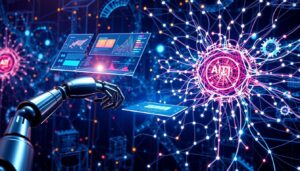 人工知能(AI)は最先端の技術です。AIによって、人間の知能を必要とするタスクをシステムが実行できるようになります。これには、音声認識、意思決定、言語翻訳などが含まれます。AIは複雑なアルゴリズムを用いて大規模なデータセットを分析します。これにより、多くの分野でタスクが自動化され、効率が向上します。
定義と概要: 「AIの定義」には、幅広い技術と手法が含まれます。それらは人間の思考を模倣することを目的としています。これには、機械学習から深層学習モデルまでが含まれ、これらは今日のAIシステムにとって不可欠です。
日常生活における応用例: AIは今や日常生活の一部となり、テクノロジーとの関わり方を変えつつあります。Netflixのおすすめ機能や、SiriやAlexaといったスマートアシスタントなど、様々なものにAIが活用されています。AIはユーザーを新たな、そして有益な方法でサポートします。企業はAIを活用して業務を改善し、顧客満足度を高めています。これは、AIが様々な業界で大きな役割を果たしていることを証明しています。
機械学習
Machine learning is a big step forward in artificial intelligence. It lets computers learn from data. This can change how we analyze info and make choices. It helps machines find patterns and get better over time. Machine learning is used in many areas, like predicting future events and making digital services better.
 機械学習とは何か? 機械学習は、アルゴリズムの作成に取り組む人工知能(AI)の一部です。これらのアルゴリズムは、システムがデータ内のパターンを認識するのに役立ちます。従来のプログラミングとは異なり、経験から学習します。これは、通常のプログラミングではうまく機能しない場合に非常に役立ちます。教師あり学習、教師なし学習、強化学習があり、それぞれ異なる問題を解決するのに適しています。
AI開発における重要性: Machine learning is very important in making AI better. It helps businesses make AI that can predict things. This prediction is key for making smart business choices. It’s useful in health, finance, and marketing. By improving algorithms and analyzing data better, machine learning leads to more innovation and efficiency in AI.
ディープラーニング
Deep learning is a complex part of machine learning. It uses many layers of algorithms to spot complex patterns. These models act like the human brain’s neural networks. They let machines learn from huge amounts of data. Deep learning shines in fields like コンピュータビジョン. Here, machines have to understand and make sense of visual data.
 Understanding deep learning: deep learning works with something called neural networks to handle data. These networks have layers of nodes connected together. This lets the system learn better from the data it gets. This way of learning is great for complex tasks that are tough for simpler algorithms. Deep learning helps companies find important insights in their data. This can lead to better results in many areas.
Real-world use cases: deep learning has changed many industries for the better. Some key uses are:
- Facial recognition systems that make places safer.
- Self-driving cars that understand what they see and navigate on their own.
- Helping doctors diagnose diseases by analyzing X-rays and MRIs.
- Improving how things are made by checking their quality through visual inspection.
These examples show deep learning’s impact on making things more efficient and driving innovation. Companies using deep learning can make faster, more accurate decisions based on data.
Large Language Models
Large Language Models (LLMs hereafter) are a major step forward in understanding and creating text like humans. They read tons of text and get really good at figuring out what it means. Because they’re built on smart tech, they can catch fine details in language.
 Overview of Large Language Models: these models learn from a wide range of information. This lets them give responses that make sense. They use a special design called transformers to get better at understanding and making sentences. This makes them super helpful in today’s smart tools.
Applications of LLMs: many industries benefit from large language models. They power chatbots that talk smoothly with people. They also help create new content quickly, which is great for businesses. Plus, they’re used for summarizing texts and helping with coding, making work easier and more creative.
Generative AI
Generative AI is a huge step forward in the world of artificial intelligence. It lets systems create content on their own. This tech looks at patterns and makes new things like texts, pictures, and music. With its smart algorithms, generative AI gives creators new ways to make stuff, helping them come up with ideas while worrying less about the small details.
 What is Generative AI: simply put, generative AI makes new content, not just copies of old stuff. It can create art, poetry, or even full articles. It learns from lots of data to understand different styles and structures. Often, it comes up with things that surprise us, showing how AI can change the creative world.
The impact of generative AI: generative AI’s effects are huge, especially in making content. Companies can make unique marketing materials or social media posts faster and cheaper. Artists get to try things they never thought possible. But, there are questions about ownership and if it’s really “art.” These discussions keep going as we figure out AI’s place in creativity.
Responsible AI
 Responsible AI means being ethical when we create and use AI technologies. It ensures AI systems are safe, fair, and easy to understand. An important part of responsible AI is fixing 完了すると、友人のプレイヤー B に起因する報酬を含む電子メールまたはプッシュ通知がプレイヤー A に送信されます。 from imperfect data. By handling these issues, AI can make better decisions in areas like healthcare and finance. In these fields, being fair and correct matters a lot.
Defining responsible AI: responsible AI stresses the need for AI solutions to be ethical. Organizations should act in ways that build trust with users and stakeholders. They must regularly check AI systems and use diverse data to reduce bias.
This approach helps lessen the risks tied to AI problems.
Challenges and solutions: even with AI advancements, problems like ensuring ethical use and responsibility are still there. Solving these problems means keeping a close watch. Using varied data and regular checks can help make AI use more ethical.
Organizations should work hard to include everyone and be clear about how AI works.
| 課題 | Potential solutions in product design and R&D projects |
|---|---|
| Bias in Datasets | Regular audits and incorporation of diverse datasets & double check sources and accuracy |
| Lack of Accountability | Establish clear guidelines and ethical standards in the company (ex.: MIT has completely forbidden the usage of AI in its website publications) |
| 変化への抵抗 | 従事する stakeholders and provide education on responsible AI |
| Transparency Issues | Enhance communication about AI data source, if any, & AI decision-making processes |
Natural Language Processing
Natural Language Processing (NLP) is a major step forward in artificial intelligence. It lets computers understand and work with human languages. This makes it easier for us to talk to machines, like getting help from a smart assistant. The use of NLP is growing fast. Many industries use it to improve how we communicate and to work more efficiently.
Introduction to Natural Language Processing: NLP uses different methods to help machines understand our language. This includes breaking down sentences and figuring out what words mean. Techniques like tokenization and semantic analysis are part of this. They help turn messy data into something computers can use. This bridges the gap between humans and machines, making our interactions smoother.
Importance of NLP in AI: natural language processing is huge in AI for many reasons. Today, there’s a lot of data from customer chats and online talk. NLP helps make sense of all that data. Companies use it to figure out what customers want. This boosts customer service, streamlines replies, and checks how people feel about things.
With NLP, businesses can offer services that exactly fit what you like. This makes customers happier and more likely to come back. It’s all about creating a better experience for everyone.
Neural Networks
Neural networks are key in today’s AI technologies. They mimic how the human brain works, processing information in layers. This structure allows for intricate data interactions. They are great at pattern recognition, making them important in AI across many fields.
Overview of neural networks: ニューラルネットワーク designs include various layers like input, hidden, and output. Each layer has nodes or “artificial neurons.” These neurons create specific interpretations of data. By training with large datasets, they recognize patterns and make decisions on their own. This makes them smarter and more efficient over time, enhancing their skills in tasks such as image or voice analysis.
Applications in AI: neural networks find use in many innovative areas. In healthcare, they help diagnose diseases through image analysis. Financial companies use them to detect fraud by spotting odd patterns. They also enable predictive analytics for businesses, leading to smarter decisions based on data.
プロンプトエンジニアリング
Prompt engineering is key to improving how we talk to AI, especially with big language models. It’s about crafting the right questions or commands we ask the AI. This makes the AI give back better, more useful answers.
This skill is becoming more important as AI gets smarter. How we ask AI things really affects how well it works. It makes sure AI does what we need, from helping customers to making healthcare better.
Knowing how to engineer prompts helps us get the most out of AI. We learn to ask in ways that bring out great answers. This is crucial as AI becomes a bigger part of our work life.
External Links on Artificial Intelligence
国際規格
- ISO/IEC 2382:2015 - Information technology -- Vocabulary
- ISO/IEC TR 24028:2020 - Information technology -- Artificial intelligence -- Overview of trustworthiness in artificial intelligence
- ISO/IEC 27001:2013 - Information technology -- Security techniques -- Information security management systems -- Requirements
(リンクにカーソルを合わせると、コンテンツの説明が表示されます)
用語集
Large Language Model (LLM): 膨大なテキストデータセットで学習させた統計モデルを用いて、人間のような言語を理解・生成する。ディープラーニング技術、特にニューラルネットワークを活用し、単語の並びを予測したり、様々な自然言語処理タスクを実行したりする。
Magnetic Resonance Imaging (MRI): a medical imaging technique that uses strong magnetic fields and radio waves to generate detailed images of internal body structures, particularly soft tissues, by detecting the signals emitted from hydrogen nuclei in the presence of a magnetic field.
Natural Language Processing (NLP): 人工知能の一分野であり、コンピュータと人間の言語との相互作用に焦点を当て、機械が自然言語のテキストや音声を理解、解釈、生成することを可能にする。言語翻訳、感情分析、音声認識などのタスクが含まれる。