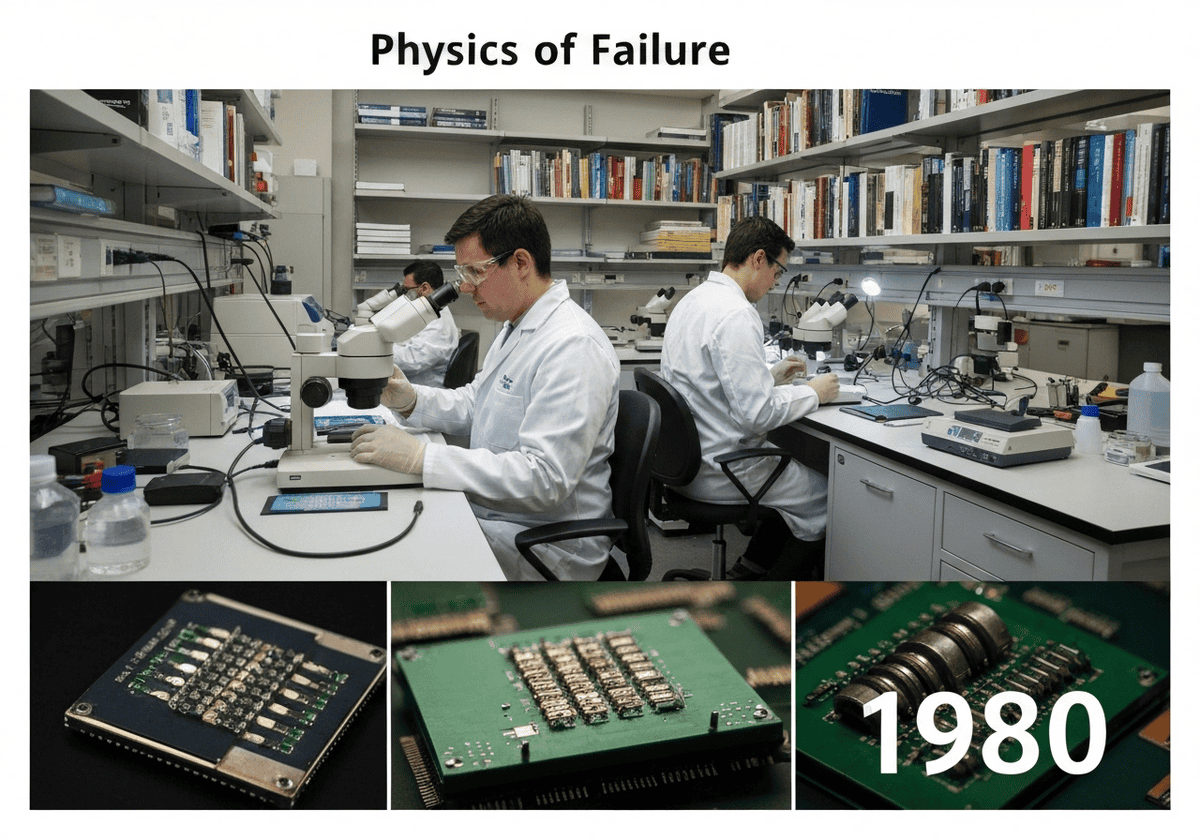
The Physics of Failure approach represents a shift from the empirical, statistical methods (like relying on MTBF from handbooks) to a more science-based, deterministic methodology. The core idea is to prevent failures at the design stage by understanding how the stresses of manufacturing, shipping, and operation interact with the materials and geometry of a component to initiate and propagate failure mechanisms.
This approach is particularly valuable for new テクノロジー or applications where historical failure data is unavailable. By focusing on the fundamental science, engineers can design for reliability, select appropriate materials, and define realistic testing protocols that target specific failure mechanisms, leading to more robust and durable products without the need for extensive trial-and-error testing.