False claims spread six times faster than the truth, according to a 2023 MIT study. This imbalance makes debunking 誤報 an exhausting battle. A concept known as Brandolini Law explains why.
「でたらめを反駁するのに必要なエネルギーは、でたらめを生み出すのに必要なエネルギーよりも桁違いに大きい。」
2013年、プログラマーのアルベルト・ブランドリーニは、ナンセンスを否定するには、ナンセンスを作り出すよりもはるかに多くのエネルギーが必要だと述べた。この原則は「デマ非対称性の原則」とも呼ばれ、日々誤情報と闘う専門家たちに影響を与えている。
エンジニア、デザイナー、ファクトチェッカーは、この課題に直面している。虚偽の主張を反駁するには時間と労力がかかる一方、誤った情報は容易に拡散する。デジタル世界は、この問題をさらに深刻化させている。
この法律を理解することで、専門家はより効果的な戦略を立てることができます。次のセクションでは、誤情報に効率的に対抗するための実践的な方法を探ります。
Understanding Brandolini Law
虚偽の主張を暴くには、それを作り出すよりも10倍もの労力が必要となる。これは多くの専門家が日々直面する現実だ。この不均衡は「デマの非対称性原理」として知られ、誤情報が蔓延する理由を浮き彫りにしている。エンジニア、科学者、ジャーナリストは、わずか数分でなされた主張を何時間もかけて論破することが多い。
でたらめ非対称性の原理を解説
Alberto Brandolini’s metaphor captures the struggle: “Arguing with a misinformation spreader is like playing chess with a pigeon. It knocks over pieces, struts around, and declares victory.” The energy needed to refute nonsense dwarfs the effort to create it.
2013年、プログラマーのアルベルト・ブランドリーニは、オンライン上の議論を観察している際にこの用語を作り出した。立証責任を主張者に転嫁するヒッチェンズの剃刀とは異なり、彼の法則は虚偽を正すために必要なエネルギーを強調する。
2024年のエデルマン・トラスト・レポートによると、エンジニアの68%が毎週のように誤った情報に遭遇している。非専門家が技術的な話題について意見を述べる「超権威主義」が、この傾向を助長している。
超信頼性主義: ウルトラクレピダリアンとは、ウルトラ(超)とクレピダリアン(靴に関すること)を組み合わせた造語で、この助言を無視し、何も知らないことについて意見を述べていると見なされる人物のことである。この言葉は、イギリスのエッセイスト、ウィリアム・ハズリットが1819年に『クォータリー・レビュー』の編集者ウィリアム・ギフォードに宛てた公開書簡の中で初めて確認されている。「あなたはウルトラクレピダリアン批評家とよく呼ばれています。」しかし、ハズリットの著作の編集者は、この言葉はチャールズ・ラムによって造語された可能性もあると述べている。この言葉は4年後、ハズリットの友人であるリー・ハントの1823年の風刺小説『ウルトラ・クレピダリウス:ウィリアム・ギフォードへの風刺』で取り上げられた。その後、時折「ウルトラクレピダリアニズム」(自分の知識を超えたことを話す行為または一般的な慣習)という言葉が同様の意味で使われるようになった。(出典:Wikipedia)
なぜ偽情報は真実よりも速く広まるのか
 神経科学の研究により、人々が事実確認されていない主張を、事実に基づいた訂正よりも速く共有する理由が明らかになった。脳は認知的な容易さを好むため、複雑な真実よりも、感情に訴えかけるような簡潔なコンテンツを好むのだ。ソーシャルメディアはこのバイアスを利用し、誤情報を瞬く間に拡散させている。
虚偽の主張を捏造するのは容易だが、それを暴くには徹底的な調査が必要となる。ボーイング787の複合材料は安全ではないというデマは、連邦航空局(FAA)がそれを否定するのに数週間を要した一方で、その噂はわずか数時間で世界中に広まった。
- 74% of retweets happen without link verification.
- Facebookユーザーは、共有する前に事実確認に平均3秒を費やしている。
ソーシャルメディアが誤情報の拡散に果たす役割: アルゴリズムは正確さよりもエンゲージメントを優先する。センセーショナルな主張はクリック数を稼ぎ、微妙な訂正はかき消される。注目経済がこの悪循環を助長する。エンジニアやデザイナーは、仕様と拡散する虚偽情報との間で戦いを強いられる。そこでは、でたらめは軽々と広まり、真実は重荷を背負うことになる。
Recognizing Fake Data in Engineering and Design

Fake data in engineering can lead to costly recalls, as seen in high-profile product failures.
Professionals need tools to spot misleading claims before they escalate. Rigorous validation standards and peer reviews act as the first line of defense.
Common Red Flags in Technical Claims
Seven warning signs often signal fabricated data:
- Missing error margins. Reliable studies include statistical uncertainty ranges
- Non-peer-reviewed sources
- Overly simplistic metrics
- Inconsistent documentation
- Unverified prototypes
- Piles of unverified arguments rather than 1 or 2 confirmed facts. Quantity > quality
- Assertions presented as global rules (“it is well known that” … )
Tools to Identify Misinformation
Misinformation thrives when critical thinking tools are absent. Engineers and designers face fabricated data daily, making structured verification methods essential. Two principles—Hitchens’ Razor and Occam’s Razor—offer practical ways to assess claims efficiently.
 Hitchens’ Razor: The Burden of Proof
This principle states: “Extraordinary claims require extraordinary evidence.” It shifts the burden of proof to the claimant, saving time on unsupported arguments.
SAE International’s FMEA framework applies this idea. Teams analyze failure modes before accepting design specs.
Occam’s Razor for Simplifying Complex Claims
The simplest explanation is often correct. NTSB’s root cause analysis uses this to pinpoint technical failures. Contrast FDA’s 510(k) process with CE mark’s self-certification (used for simplest less-regulated product) – fewer verification steps 導かれた to more recalls.
TRIZ’s contradiction matrix solves engineering problems by eliminating unnecessary complexity. Canadian climate claims about “natural cycles” collapsed when tested against ice core data. Structured tools turn chaotic arguments into actionable insights.
Debunking Strategies for Professionals
Professionals need structured approaches to dismantle false claims efficiently. Reactive corrections drain resources, while proactive frameworks save time and credibility. The key lies in shifting the workload back to misinformation creators.
Pushing the Burden of Proof Back
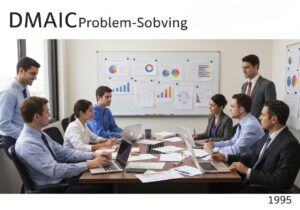
Requiring claimants to validate their arguments prevents wasted effort. For instance, Six Sigma’s DMAIC framework forces rigorous validation before accepting design specs. Or ISO 17025 checklists standardize verification, ensuring all evidence meets lab-grade criteria.
An “unbreakable” mobile phone protective glass claims faced scrutiny when consumers replicated drop tests. By demanding third-party data, engineers exposed overstated marketing claims.
Using Hypothesis Testing to Challenge Claims
Treat dubious claims as hypotheses needing falsification. ASME’s V&V 40 framework assesses risk by testing assumptions against real-world data. JIRA tracking systems log unverified claims as “technical debt,” prioritizing high-impact debunks.
“Hypothesis testing turns opinions into measurable variables.”
The Cost of Engaging With Bad Faith Arguments
Time spent correcting deliberate falsehoods is time stolen from real work. Professionals face a paradox: engaging with nonsense legitimizes it, while ignoring it risks unchecked spread.
When to Walk Away: The Chess vs. Pigeon Dilemma
Alberto Brandolini’s chess analogy holds: bad actors “knock over pieces and declare victory.”
The lesson? Calculating the Time/Gain Trade-Off and let data, not egos, decide when to disengage.
“Never wrestle with pigs. You both get dirty, and the pig likes it.”
Epistemic exhaustion is real. Allocate effort where it moves needles—not where pigeons strut.
External Links on Fake Information, Fact Checking & Laws
国際規格
(リンクにカーソルを合わせると、コンテンツの説明が表示されます)
用語集
American Society for Metals (ASM): 材料科学・工学に特化した専門家団体であり、出版物、会議、教育プログラムを通じて冶金学および材料分野における知識とイノベーションを促進しています。この分野の専門家が専門知識を深め、人脈を広げるための情報源としての役割を果たしています。
American Society of Mechanical Engineers (ASME): 機械工学の基準を設定し、教育と研究を促進し、会議、出版物、技術委員会などを通じて技術者間の知識交換を促進する専門組織。また、工学実務における安全性と性能に関する規格や基準も策定する。
Define Measure Analyze Improve Control (DMAIC): シックスシグマで用いられる、プロセス改善のためのデータ駆動型品質戦略であり、問題の特定、現状のパフォーマンスの測定、原因特定のためのデータ分析、分析結果に基づくプロセスの改善、そして改善を持続させるための将来のパフォーマンス管理という5つの段階から構成される。
Define, Measure, Analyze, Improve, Control (DMAIC): a data-driven quality strategy used in Six Sigma for process improvement, consisting of five phases: defining the problem, measuring current performance, analyzing data to identify causes, improving processes based on findings, and controlling future performance to sustain improvements.
Failure Mode and Effects Analysis (FMEA): a systematic method for evaluating potential failure modes within a system, process, or product, assessing their effects on performance, and prioritizing risks to improve reliability and safety through corrective actions.
Food and Drug Administration (FDA): a federal agency of the United States Department of Health and Human Services responsible for regulating food safety, pharmaceuticals, medical devices, cosmetics, and tobacco products to ensure public health and safety through scientific evaluation and enforcement of compliance standards.
International Organization for Standardization (ISO): a non-governmental international body that develops and publishes standards to ensure quality, safety, efficiency, and interoperability across various industries and sectors, facilitating global trade and cooperation. Established in 1947, it comprises national standardization organizations from member countries.
Root Cause Analysis (RCA): 問題や失敗につながる根本的な要因を特定するための体系的なプロセスであり、単に症状を治療するのではなく、根本的な問題に対処し、排除することを目的としている。