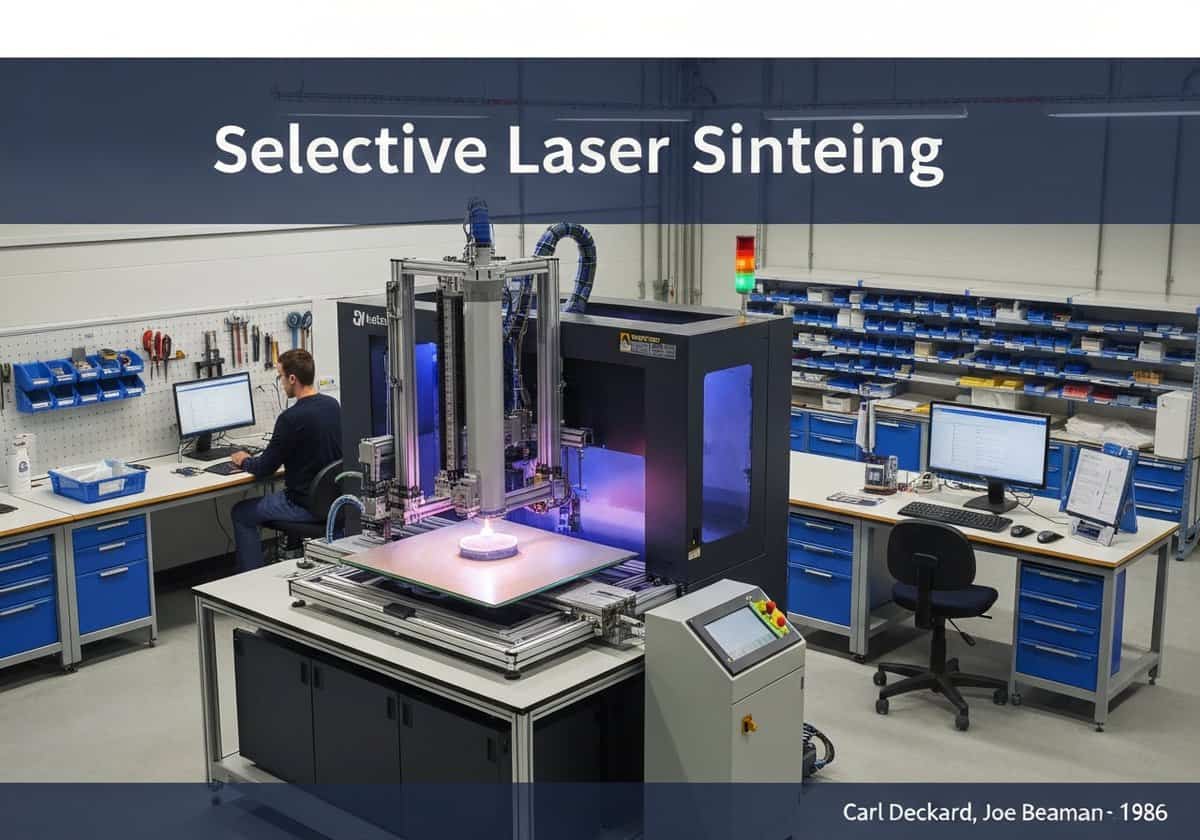
A key advantage of SLS is that the unsintered powder in the build chamber acts as a natural support for the part being printed. This eliminates the need for separate support structures that must be removed in post-processing, allowing for the creation of highly complex, free-form geometries, including parts-within-parts or interlocking mechanisms printed in a single run. The process takes place in a tightly controlled chamber, heated to just below the polymer’s melting point, which helps to reduce thermal distortion and improve layer fusion. After the build is complete, the entire powder bed and the embedded parts must cool down slowly to prevent warping. The parts are then excavated from the powder bed in a ‘breakout’ process. Unused powder can be collected, sieved, and mixed with fresh powder for subsequent builds, making the process relatively material-efficient. The most common materials are nylons, such as PA11 and PA12, prized for their good 機械的特性. The resulting parts typically have a slightly grainy surface finish but are strong and functional.