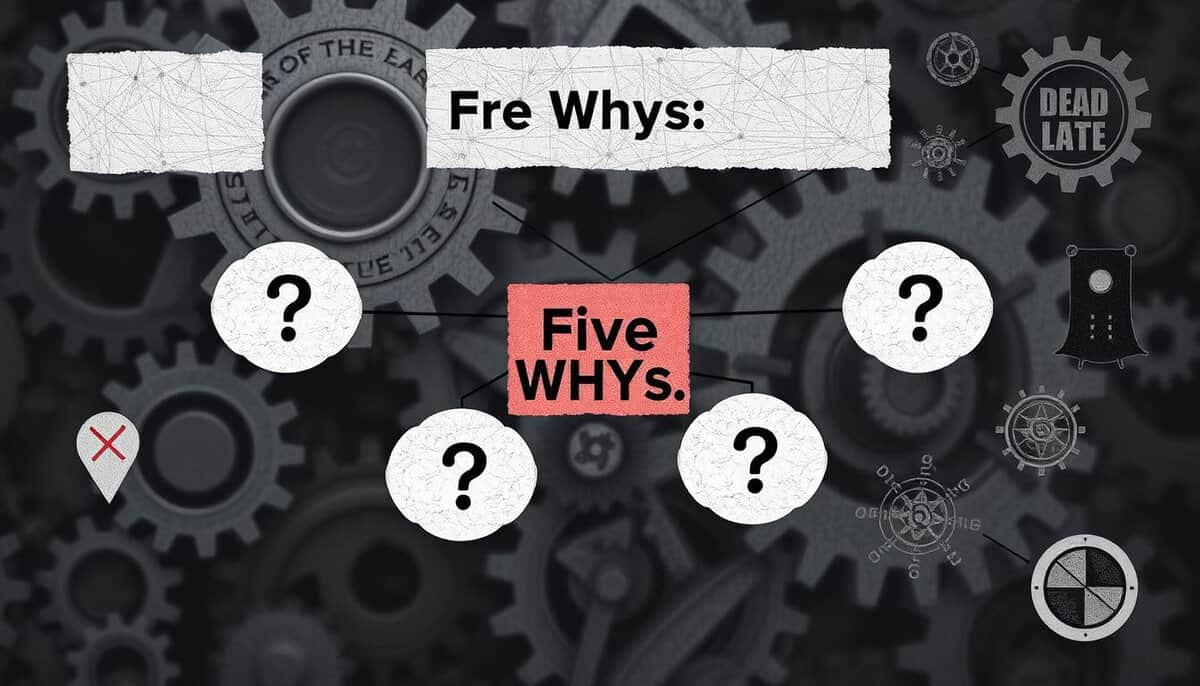
Is the Five Whys technique enough to find the true causes of complex problems?
फाइव व्हाईज़ आसान समस्याओं को हल करने का एक सरल और लोकप्रिय तरीका है। इसे इनके द्वारा बनाया गया था। टोयोटाकिसी समस्या की तह तक पहुंचने के लिए आप बार-बार 'क्यों' पूछते हैं। लेकिन, जॉन ऑलस्पॉ जैसे विशेषज्ञ और एआरएमएस रिलायबिलिटी जैसे समूह इस बात पर संदेह करते हैं कि यह जटिल समस्याओं के लिए कारगर है या नहीं।
फाइव व्हाईज़ की एक बड़ी समस्या यह है कि यह केवल एक मुख्य कारण की तलाश करती है। यह दृष्टिकोण जटिल समस्याओं के मूल तक नहीं पहुंच पाता। जब आप चीजों को लगातार बेहतर बनाने की कोशिश कर रहे हों तो यह एक महत्वपूर्ण मुद्दा बन जाता है।
एक और समस्या यह है कि यह इस बात पर निर्भर करता है कि कौन जांच कर रहा है। उन्हें सही सवाल पूछने होंगे, जो मुश्किल हो सकता है। इसका मतलब है कि परिणाम बहुत भिन्न हो सकते हैं, जो विश्वसनीय उत्तरों की आवश्यकता होने पर जोखिम भरा होता है।
मुख्य बातें
- The Five Whys is good for simple problems but struggles with complex ones.
- It often misses the deeper causes, focusing just on the surface.
- यह कितना कारगर होगा, यह जांचकर्ता के कौशल और प्रश्नों पर निर्भर करता है।
- Different people might get different results, impacting its reliability.
- Its straightforward approach might not fit problems that are more complex.
Introduction to the Five Whys Technique
फाइव व्हाईज़ तकनीक टोयोटा इंडस्ट्रीज के संस्थापक साकिची टोयोडा की देन है। 1900 के दशक की शुरुआत में स्थापित, टोयोटा मोटर कंपनी ने इसे अपनाया। यह छिपी हुई समस्याओं को खोजने में सरल लेकिन प्रभावी होने के लिए जानी जाती है।
So, what is the Five Whys Root Cause Analysis Techniqueइसका अर्थ है किसी समस्या की जड़ तक पहुँचने के लिए पाँच बार "क्यों?" पूछना। "क्यों?" की वास्तविक संख्या समस्या के आकार के आधार पर बदल सकती है। यह दृष्टिकोण हमें यह समझने में मदद करता है कि विभिन्न कारण आपस में कैसे जुड़े हुए हैं।
फाइव व्हाईज़ का मुख्य लाभ समस्या के मूल कारण का पता लगाना है। इससे टीमों को केवल लक्षणों को नहीं, बल्कि वास्तविक समस्या को हल करने में मदद मिलती है। इसे करने का तरीका यहाँ दिया गया है:
- Identify the problem.
- “क्यों?” पूछें और उसका उत्तर दें।
- पिछले उत्तर का हवाला देते हुए दोबारा पूछें "क्यों?"
- इसे तब तक दोहराएं जब तक आप पांच बार "क्यों?" न पूछ लें।
For example, a business might discover that weird water pressure levels come from ignored control valves. Asking why they were overlooked can reveal bigger issues. This way, teams can solve deep-rooted problems.
Also, the Five Whys can team up with tools like the Ishikawa diagram for a thorough analysis. This mix helps map out cause and effect clearly, boosting analysis quality.
Simplicity and Ease of Use
The Five Whys technique is known for being simple and easy to use. It comes from Toyota and is a big part of अनुत्पादक निर्माण. All you have to do is ask “Why?” five times or more to find the main issue. This method lets teams tackle problems quickly without complex tools.
Its main strength lies in quickly figuring out the root cause of a problem. But, the person leading the investigation needs to be skilled. Training is vital to dig deeper into problems and get better at solving them.

यह तकनीक कई अलग-अलग उद्योगों में कारगर साबित होती है। यह विभिन्न समस्याओं से निपटने में भी लचीली है। मौके पर जाकर निरीक्षण करने से समस्या को बेहतर ढंग से समझने में मदद मिलती है। EasyRCA जैसे उपकरण पारंपरिक विधियों के साथ तकनीक को मिलाकर प्रक्रिया को और भी सटीक बना सकते हैं।
The simplicity of the Five Whys is a big plus in finding solutions. Yet, the outcome can vary based on who is using it. This shows the need for proper training and experience. Adding जोखिम आकलन makes the method even more effective, as it helps deal with potential risks fully.
Potential for Missing the Root Cause
The Five Whys root cause analysis technique is a key part of Six Sigma’s DMAIC methodology. It’s great at identifying the main factors behind issues. But, it sometimes doesn’t do well with complex vs simple problems.
The 5 Whys technique asks “Why?” over and over to find the root cause. It works well for issues with human factors without needing complex stats. But its simple approach might miss deeper causes in complex problems. These problems can have many layers that the Five Whys doesn’t catch.
The Five Whys needs few resources, so it’s easy and cheap to use. You usually ask “Why?” three to five times to find the cause. But complex issues might need more questions. For complicated problems, using a broader tool like the fishbone diagram helps find hidden causes.
Albert Einstein once said, “If I had an hour to solve a problem, I’d spend 55 minutes defining it and 5 minutes solving it.”
Einstein’s advice shows why understanding problems fully is crucial. Just asking “Why?” may not be enough for complicated issues. We might have to use other tools with the Five Whys. This helps us get a complete picture and solve the problem well. Knowing the Five Whys’ limits helps us pick the best tool for the नौकरी.
Oversimplification Risks
The Five Whys technique is simple and easy to use but it can have downsides. Its design to dig deep into problems can sometimes oversimplify complex issues. Using the Five Whys alone might lead to shallow solutions that don’t fix the real problem.
One major issue is that it can focus on quick fixes instead of thorough analysis. This is risky in situations where deep review is vital. For example, blaming an equipment failure solely on maintenance mistakes might miss bigger issues, leading to more failures later.
To avoid oversimplification, critical thinking is key. It’s important to look beyond the Five Whys and use other methods for a full picture. Adding techniques like Failure Mode and Effects Analysis (FMEA) or Root Cause Failure Analysis (RCFA) helps support and strengthen your findings.
Bringing together a diverse team can help counteract oversimplification. This approach ensures different viewpoints are considered in tackling the problem. Using a mix of analytical tools with the Five Whys can make root cause analysis more effective and sustainable, addressing deep-rooted issues effectively over time.
Related Readings & Methodologies
- Root Cause Analysis (RCA): a systematic process for identifying the root causes of problems or events and an approach for responding to them.
- Fishbone Diagram (Ishikawa Diagram): a visual tool used to systematically identify and present possible causes of a problem, categorized into various factors.
- Failure Mode and Effects Analysis (FMEA): a proactive method for evaluating a process to identify where and how it might fail and assessing the relative impact of different failures.
- Pareto Analysis: a statistical technique that applies the Pareto Principle (80/20 rule) to identify the most significant factors in a dataset.
- त्रुटि रहित विश्लेषण (एफटीए): a top-down, deductive failure analysis that maps the pathways within a system that can lead to a potential failure.
- 8D (आठ विषयों समस्या समाधान): a problem-solving methodology primarily used in the automotive industry, focusing on product and process improvement.
- पीडीसीए Cycle (Plan-Do-Check-Act): an iterative four-step management method used for the control and continuous improvement of processes and products.
अक्सर पूछे जाने वाले प्रश्न
What is the Five Whys Root Cause Analysis Technique?
फाइव व्हाईज़ तकनीक सरल है लेकिन इसका व्यापक रूप से उपयोग किया जाता है, खासकर टोयोटा जैसी लीन मैन्युफैक्चरिंग कंपनियों में। यह किसी समस्या के मूल कारण का शीघ्र पता लगाने के लिए कई बार "क्यों" प्रश्न पूछती है।
What are the advantages of the Five Whys method?
फाइव व्हाईज़ विधि का उपयोग करना आसान है और इससे समस्याओं के कारणों का पता जल्दी लग जाता है। यह निरंतर सुधार के लिए बेहतरीन है और इसे लागू करने के लिए उन्नत कौशल की आवश्यकता नहीं होती है।
What are the limitations of the Five Whys technique?
यह तकनीक जटिल प्रणालियों में शायद कारगर न हो। इससे सरल उत्तर मिल सकते हैं जो गहन समस्याओं का समाधान नहीं करते। इसलिए, इसके लिए अधिक व्यापक उपकरणों की आवश्यकता हो सकती है।
How can the Five Whys technique lead to oversimplification?
केवल फाइव व्हाईज़ का उपयोग करने से समस्याएँ बहुत सरल हो सकती हैं। इससे अस्थायी समाधान हो सकते हैं जो मूल समस्या का समाधान नहीं करते, जिससे समस्याएँ बार-बार उत्पन्न हो सकती हैं।
Why is it important to use broader analytical techniques along with the Five Whys?
Combining the Five Whys with other methods is key in complex situations. This ensures problems are fully resolved. It helps tackle complex issues more effectively.
Can the Five Whys method be useful for both simple and complex problem-solving?
फाइव व्हाईज़ (Five Whys) सरल समस्याओं और उनके त्वरित समाधानों के लिए कारगर है। लेकिन, यह जटिल समस्याओं के लिए पर्याप्त नहीं है। इन स्थितियों में वास्तविक कारणों का पता लगाने के लिए गहन विश्लेषण की आवश्यकता होती है।
मूल कारण विश्लेषण पर बाहरी लिंक
अंतर्राष्ट्रीय मानक
(सामग्री का हमारा विवरण देखने के लिए लिंक पर होवर करें)
प्रयुक्त शब्दों की शब्दावली
Define Measure Analyze Improve Control (DMAIC): सिक्स सिग्मा में प्रक्रिया सुधार के लिए उपयोग की जाने वाली एक डेटा-संचालित गुणवत्ता रणनीति, जिसमें पाँच चरण होते हैं: समस्या की पहचान करना, वर्तमान प्रदर्शन को मापना, कारणों की पहचान करने के लिए डेटा का विश्लेषण करना, निष्कर्षों के आधार पर प्रक्रियाओं में सुधार करना और सुधारों को बनाए रखने के लिए भविष्य के प्रदर्शन को नियंत्रित करना।
Define, Measure, Analyze, Improve, Control (DMAIC): a data-driven quality strategy used in Six Sigma for process improvement, consisting of five phases: defining the problem, measuring current performance, analyzing data to identify causes, improving processes based on findings, and controlling future performance to sustain improvements.
Eight Disciplines Problem Solving (8D): एक संरचित समस्या-समाधान पद्धति जिसका उपयोग आवर्ती मुद्दों की पहचान करने, उन्हें ठीक करने और समाप्त करने के लिए किया जाता है, जिसमें आठ चरण होते हैं: टीम का गठन, समस्या का वर्णन, रोकथाम संबंधी कार्यवाहियां, मूल कारण विश्लेषण, सुधारात्मक कार्यवाहियां, कार्यान्वयन, रोकथाम और टीम के प्रयासों की मान्यता।
Failure Mode and Effects Analysis (FMEA): एक प्रणाली, प्रक्रिया या उत्पाद के भीतर संभावित विफलता मोड का मूल्यांकन करने, प्रदर्शन पर उनके प्रभावों का आकलन करने और सुधारात्मक कार्यों के माध्यम से विश्वसनीयता और सुरक्षा में सुधार के लिए जोखिमों को प्राथमिकता देने की एक व्यवस्थित विधि।
Fault Tree Analysis (FTA): सिस्टम विफलताओं के कारणों की पहचान और विश्लेषण के लिए एक व्यवस्थित, ग्राफिकल विधि, जिसे ट्री संरचना के रूप में दर्शाया जाता है। यह घटनाओं को जोड़ने और अवांछित परिणामों की संभावना का आकलन करने के लिए बूलियन लॉजिक का उपयोग करती है, जिससे जोखिम प्रबंधन और सुरक्षा आकलन में सहायता मिलती है।
Plan Do Check Act (PDCA): एक सतत सुधार मॉडल जिसमें चार पुनरावृत्ति चरण शामिल हैं: एक उद्देश्य की योजना बनाना, योजना को क्रियान्वित करना, अपेक्षाओं के विरुद्ध परिणामों का मूल्यांकन करना और प्रदर्शन और प्रक्रियाओं को बढ़ाने के लिए सुधारात्मक कार्रवाई करना।
Root Cause Analysis (RCA): किसी समस्या या विफलता के मूल कारणों की पहचान करने की एक व्यवस्थित प्रक्रिया, जिसका उद्देश्य केवल लक्षणों का उपचार करने के बजाय अंतर्निहित मुद्दों को संबोधित करना और समाप्त करना है।
Root Mean Square (RMS): एक सांख्यिकीय माप जिसका उपयोग मूल्यों के एक समूह के वर्गों के औसत के वर्गमूल की गणना करने के लिए किया जाता है, जिसे अक्सर सिग्नल प्रोसेसिंग और इलेक्ट्रिकल इंजीनियरिंग में परिवर्तनशील मात्राओं के प्रभावी मूल्य को निर्धारित करने के लिए लागू किया जाता है।