太陽光パネルの経年劣化を知ることで投資を最大化できるとしたらどうでしょうか?その効率は、 太陽光発電 システムのパフォーマンスと費用対効果は重要です。しかし、多くの要因によってシステムは老朽化し、長期的な価値と有効性に影響を及ぼします。
環境条件、技術の進歩、設置方法などのさまざまな要素が、 寿命これらのことを知っておくと、賢明な選択をするのに役立ちます。単結晶型や多結晶型などの太陽光発電モジュールは、太陽光をエネルギーに変換する効率がそれぞれ異なります。そのため、太陽光パネルを最大限に活用するには、継続的なメンテナンスと最新技術の導入が不可欠です。
主なポイント
- 太陽光パネルの劣化速度には、環境条件が決定的な役割を果たす。
- 高温になると、半導体の特性が変化し、パネルの効率が低下する可能性がある。
- 最適なパネルの向き、特に南向きに設置することで、太陽エネルギーの捕捉効率が向上します。
- パネルの効率を長年にわたって維持するためには、清掃や監視を含む定期的なメンテナンスが不可欠です。
- 技術の進歩により、太陽光パネルの効率と寿命は向上し続けている。
太陽光パネルの劣化に関する入門
太陽光パネルは、太陽光から電気を生成する能力を徐々に失っていきます。この過程は太陽光パネルの劣化と呼ばれ、大規模な太陽光発電プロジェクトの収益に大きな影響を与える可能性があります。場合によっては、性能料の支払いで数百万ドルもの損失が発生することもあります。そのため、この現象がどのように起こるのかを理解することが非常に重要です。この知識は、太陽光発電システムの寿命と収益性を向上させるのに役立ちます。
環境要因は太陽光パネルの効率低下に大きく影響します。砂漠や熱帯地域での研究では、年間劣化率は1.2%から1.8%の間であることが示されています。しかし、2020年時点での平均劣化率は年間約0.5%と推定されていました。これは、20年後には発電量が10%低下する可能性があることを意味します。最新の高効率パネルは、年間最大2%と、より速いペースで効率が低下する可能性があります。これは、20年間で発電量が40%減少することを意味します。
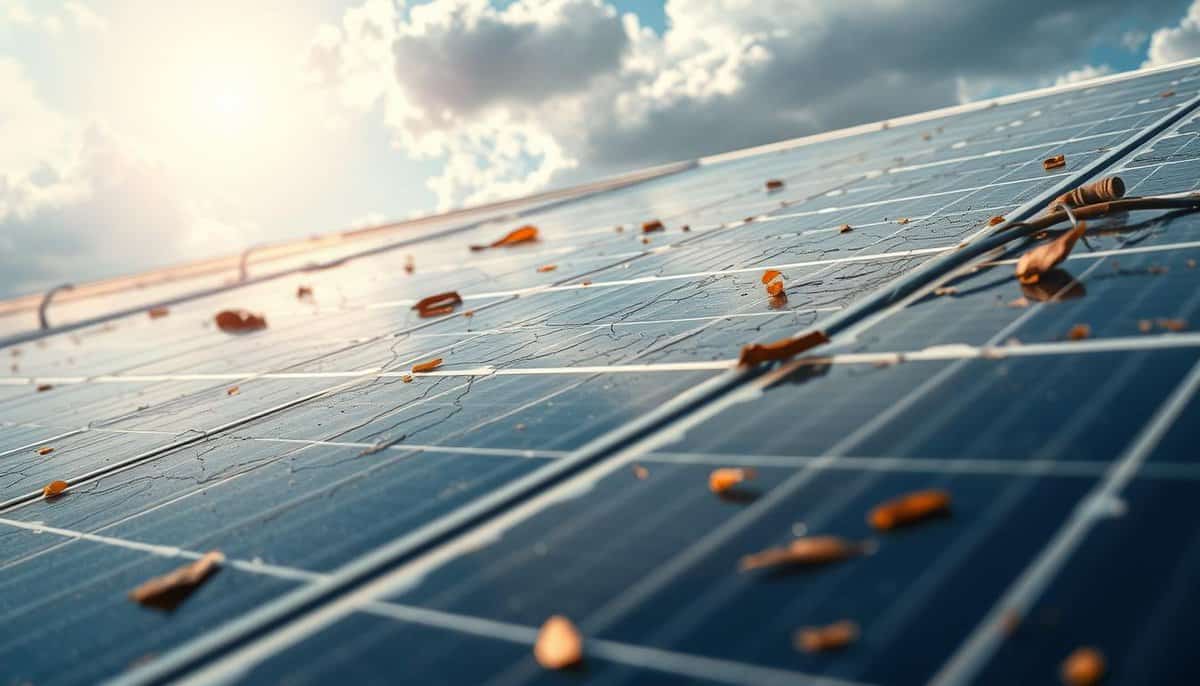
設置不良や機械的ストレスは状況を悪化させる可能性があります。ひび割れ、スネイルトレイル(パネル表面の凹凸)、汚れなどを引き起こすことがあります。強風もパネルの効率と強度を損なう可能性があります。これらの要因はすべて、劣化を早める原因となります。
ソーラーパネルには25~30年の保証が付いていますが、通常は年間1%ずつ劣化します。これは発電量に影響します。光誘起劣化(LID)により、最初の1ヶ月で発電量が最大10%低下します。潜在誘起劣化(PID)は、放置すると初期段階で発電量を20%低下させる可能性があります。
こうした課題にもかかわらず、太陽光発電はより手頃な価格になってきています。過去10年間で、太陽光発電による発電コストは14%低下しました。これは、太陽光パネルの価格が下がったおかげです。太陽光発電は今や、企業のエネルギー供給において重要な役割を担っています。2017年から2022年にかけて、企業による太陽光発電の契約は142ギガワットを超えました。これらの契約の半分は北米で行われており、太陽光発電への移行が急速に進んでいることを示しています。
関係者にとって、太陽光発電システムの弱点を理解し、解決することが重要です。これには、インバーターやスイッチなどの問題が含まれます。設計段階、設置段階、あるいは設置後に問題を発見することが鍵となります。これにより、太陽光パネルの寿命を延ばすことができます。
最高級の太陽光パネルは劣化率が低く、年間約0.4%です。これは、25~30年間で発電量が約12~15%低下することを意味します。BO-LIDによる初期の発電量低下は2~3%ですが、その後は年間0.3~0.5%と、より緩やかな劣化が続きます。
以下は、さまざまな種類のソーラーパネルの経年劣化の影響を示す表です。
| 劣化の種類 | 初期の影響 | 長期的な影響 | 中央値劣化率 |
|---|---|---|---|
| LID(光誘起劣化) | 初月は最大10% | 減速により安定化する | 年率0.5% |
| PID(潜在的誘発劣化) | 最初の数ヶ月は最大20% | 対処しないと、パフォーマンスが著しく低下する。 | 年率0.67% |
| BO-LID安定化 | 初期削減率2~3% | 年間0.3%~0.5%に引き下げられた | – |
| 高効率太陽光発電モジュール | 当初は年間最大2% | 20年間で40%削減 | 年率1~2% |
| プレミアムソーラーパネル | 年率0.4% | 25~30年間で12~15% | 年率0.4% |
太陽光パネルの寿命に影響を与える環境要因
太陽光パネルの寿命と効率は、環境要因に大きく左右されます。これらの要因を理解することで、太陽光パネルの保証についてより賢明な選択をし、この技術を最大限に活用することができます。
気候および環境条件
太陽光パネルの設置場所は、パネルの寿命に大きく影響します。高温は内部の太陽電池を損傷させ、発電量の低下につながります。一方、涼しい場所では太陽光パネルの性能が向上します。
樹木や建物などによる日陰も、太陽光パネルの効率を低下させる可能性があります。多くの太陽光パネルメーカーは25年以上の保証期間を謳っていますが、こうした環境要因を考慮すると、保証期間については慎重に検討する必要があります。
沿岸地域の状況
沿岸地域に太陽光パネルを設置する場合、塩分を含んだ空気の影響で、特別な課題が生じます。塩分は錆びやすく、特に金属部品の錆びを加速させ、太陽光パネルの寿命を縮めます。定期的なメンテナンスや防錆性の高い部品を選ぶことは有効ですが、沿岸地域では特別な保証制度を検討することが重要です。
季節の変化、強風、そして強い日差しも、ソーラーパネルの劣化速度に影響を与えます。通常、ソーラーパネルは毎年約0.5%ずつ性能が低下します。性能の良いパネルはそれよりも低下が少なく、毎年約0.3%程度です。
| 環境条件 | 太陽光パネルの寿命への影響 | 劣化速度 |
|---|---|---|
| 高温 | 効率低下 | 年率最大0.5% |
| オブジェクトからの陰影 | 著しい効率損失 | 該当なし |
| 沿岸の状況 | 加速腐食 | 年平均0.5% |
| 冷涼な気候 | 効率性の向上 | 劣化の低減 |
Temperature Impacts on Solar Panels
Temperature greatly influences how well solar panels perform. It even affects their lifespan. Knowing this can guide the optimal setup of solar systems. This helps cut down on losses and prolongs their life.
Temperature Coefficient
The temperature coefficient is vital for understanding these impacts. Generally, solar panels work less efficiently as it gets hotter. For every degree Celsius over 25°C, their efficiency drops by 0.3% to 0.5%. So, if the temperature rises by 1°C above 25°C, a panel with a -0.3%/°C rating loses 0.3% efficiency.
- Efficiency of consumer solar panels varies between 15% and 23%.
- EcoFlow solar panels are among the best, with a 23% efficiency rate.
- Polycrystalline panels are on the lower end, with about 15% efficiency.
Under lab conditions, solar panels have reached over 40% efficiency. But real-world conditions, mainly due to temperature, make this hard to maintain. Surprisingly, colder conditions can actually boost how well they work. This shows how complex temperature effects on solar panel efficiency are.
Real-World Examples
In hot places like Arizona or Saudi Arabia, it can get above 40°C. Here, solar panels can lose over 6% efficiency at 45°C. This serious drop in power highlights the need for managing temperatures.
| 温度(℃) | Efficiency Loss (%) |
|---|---|
| 25 | 0 |
| 35 | 2.5 |
| 45 | 5.0 |
| 55 | 7.5 |
To lessen damage from heat, proper ventilation and smart placement are key. Choosing panels with low temperature coefficients is critical in hot areas. Also, making sure panels have room for air to flow around them helps a lot.
Higher temperatures speed up the aging of solar panels, reducing efficiency. Hence, it’s crucial to pick the right panels and set them up carefully. This ensures long-term, sustainable energy production.
Role of Angle and Installation Methods
Solar panels work best when they’re set up correctly. The right angle helps them catch as much sunlight as possible. This boosts how much power they produce.
Optimal Panel Orientation
In the U.S., facing panels south is usually best. This direction gets them light all day, helping to create more energy. Depending on where you are and the time of year, changing the panel’s direction helps too.
Influence of Tilt Angle
The tilt of solar panels is super important too. The best tilt usually matches the place’s latitude. This setup grabs the most sun over the year, making energy use better.
Yet, tilting them more can cause issues with wind. This means we need to think about wind direction and speed when setting them up. Studies help us find ways to install panels that stand strong and work efficiently.
Technological Advancements in Solar Cells
The solar industry is growing fast, and the improved tech in solar cells is key. Monocrystalline and polycrystalline cells are the main types. Each has its own pros and cons.
Monocrystalline vs. Polycrystalline
Monocrystalline solar cells are more efficient and last longer than polycrystalline cells. This is because they use purer silicon. This high-quality silicon means less internal resistance, so these panels work better.
Studies by the National Renewable Energy Laboratory (NREL) show these panels degrade slower, losing only 0.4% efficiency each year. Manufacturers often promise these panels will keep 90% of their efficiency for the first ten years and 80% for 15 to 20 years after that.
Advanced Technologies
New technologies are making solar energy even better. Anti-reflective coatings and maximum power point tracking (MPPT) are important. They help convert more sunlight into electricity. Anti-reflective coatings cut down on light reflection, and MPPT gets the most power from the panels.
Thanks to these advancements, solar panels can hold onto about 80% of their initial efficiency even after 25 years. This is a big deal for performance and 長寿.
| 特徴 | 利点 |
|---|---|
| Monocrystalline Panels | Higher efficiency, reduced internal resistance, slower degradation rate |
| Polycrystalline Panels | Cost-effective, easier manufacturing process |
| Anti-Reflective Coatings | Increased light absorption, reduced reflection |
| Maximum Power Point Tracking (MPPT) | Optimized electrical output, improved energy conversion rates |
Advanced solar technologies are making solar panels last longer and work better. These new approaches help solar power stay a top renewable energy source for the future.
Voltage and Current Factors for Ageing
Understanding voltage and current factors for ageing is crucial for solar panel longevity. Mismanagement can cause them to wear out faster. This impacts their performance.
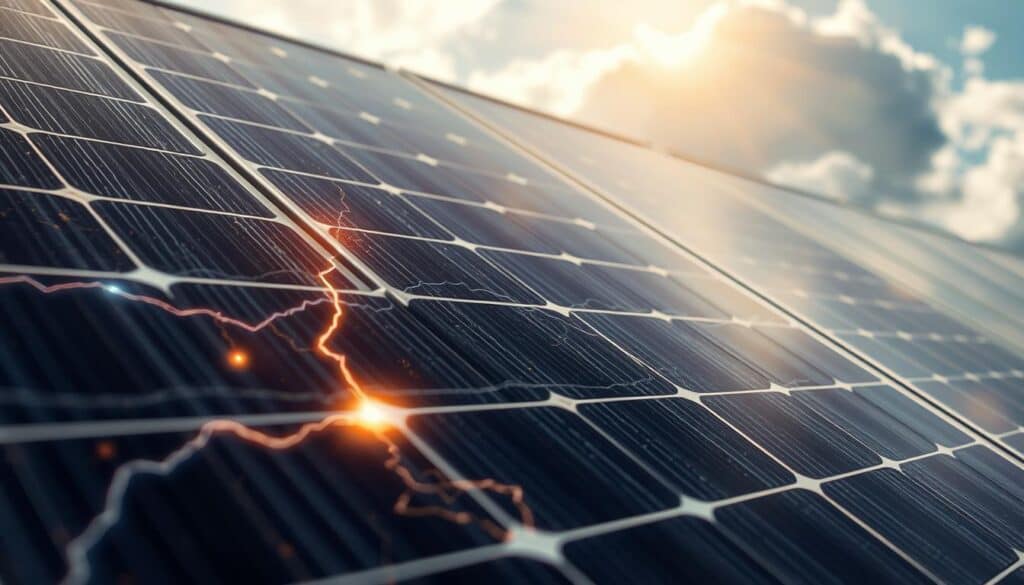
Inadequate wiring in a solar array can stress the cells if too much voltage or current. This leads to quicker ageing.
Likewise, high temperatures in summer can cut power output in half. Likewise, rainy weather can cause degradation rates to range widely. Regular maintenance is key to avoiding these issues. Checking wiring and using quality components helps. This approach can lower yearly degradation rates to between 0.6% and 0.7%.
Below is a comparative analysis highlighting degradation rates and performance metrics:
| Season | Output Power Reduction Rate |
|---|---|
| Winter 2020 | 20.01% |
| Fall 2020 | 5.23% |
| Summer 2020 | 50.53% |
| Spring 2020 | 28.25% |
| Rainy Summer 2020 | 10.39% – 62.75% |
The average yearly degradation rate for aged PV modules is 1.55%. Hence, managing voltage and current is vital. Proper solar panel maintenance tips maintain efficiency and prevent sudden drops in performance.
Impact of Shading and Debris Accumulation
Shading and debris affect solar energy harvesting a lot. They can badly impact how well solar panels work and how long they last. Knowing the role of managing shading and debris helps keep solar panels working their best. This ensures they produce the most energy and last longer.
Partial Shading Effects
Even a little bit of shading on a solar panel can reduce its energy output. A shaded cell can lower the performance of many cells because they are wired together. This can cause a loss of about 14% in short-circuit current in these systems.
If solar panels are not cleaned regularly, they will not work as efficiently. Installing them at a 30° angle is best. But if they are not cleaned for 30 days, the power they produce can drop by nearly 50%. This shows why keeping panels clean is crucial.
Debris Management
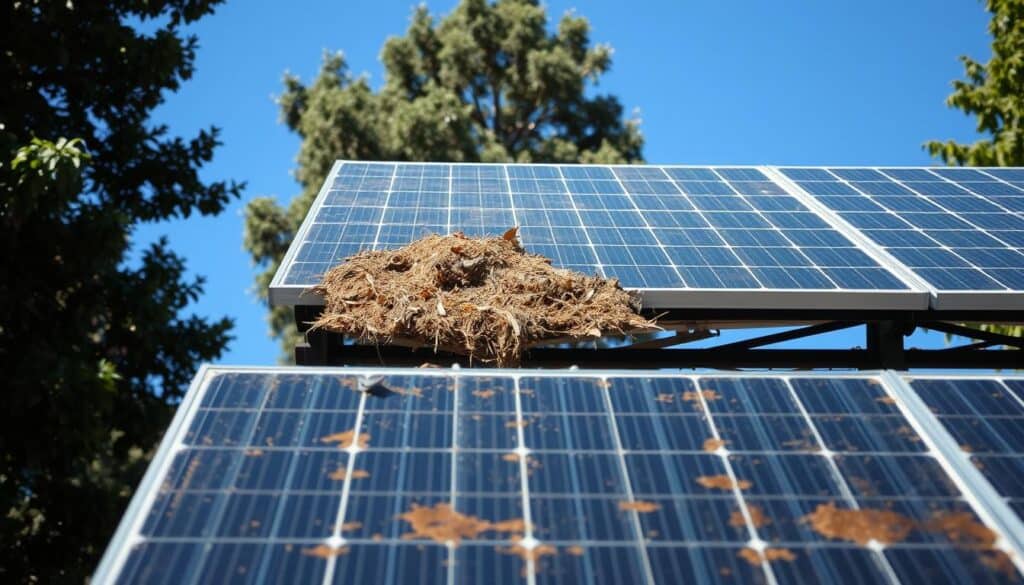
Keeping solar panels free from debris is key to their efficiency and lifespan. Dust and other particles can reduce power output by 8.80% and efficiency by 11.86%. Worse, this contamination can cut down energy output by over 60% in some cases.
In deserts, dust reduces solar efficiency by around 40%. Since dust is considered to be particles smaller than 500 µm, frequent cleaning is a must. If panels are not cleaned, they could produce about 6.5% less energy after two months outside.
Having a good cleaning routine helps reduce the negative effects on solar panels as they age. Using automated cleaning systems and placing panels carefully can help them last longer and work better. By focusing on these areas, solar panels can stay effective and support sustainable energy.
Importance of Regular Maintenance
For your solar panels to work well and last long, you need to maintain them regularly. Taking good care of them increases energy production and protects your investment. We’ll look at why cleaning often and using advanced monitoring systems are key.
Routine Cleaning
Keeping solar panels clean is crucial. Dirt, dust, and bird droppings can block sunlight, making panels less efficient. Experts suggest cleaning them at least twice a year to avoid big buildups. If you ignore cleaning, your panels might work poorly, need expensive fixes, or fail too soon.
The need for maintenance varies by weather, location, and system size. Panels in dusty or polluted areas need cleaning more often. Regular checks help spot problems early on. Always prioritize safety during maintenance to keep in line with warranty terms and protect your investment.
監視システム
Solar panel monitoring systems are vital for keeping your panels in good shape. They allow you to see how well your panels are working and find problems quickly. With new tech for remote monitoring and predictive analytics, it’s easier to keep panels running well. These tools warn you of faults and help plan repairs, making your panels last longer and work better.
Regular upkeep and checks not only make your solar panels more efficient and longer-lasting. They also give you peace of mind by keeping your investment safe. Following these solar panel maintenance tips will greatly improve your system’s performance and longevity.
| Maintenance Task | Recommended Frequency | Average Cost |
|---|---|---|
| Cleaning | Twice a year | $150 – $300 per visit |
| 検査 | Annually | $150 – $300 per visit |
| 監視システム | Continuous | 様々 |
Solar Panels Ageing Factors
It’s important to know how solar panel longevity is impacted. Solar panels lose efficiency over time, lowering energy output. They degrade by about 1% each year on average. High-quality panels often degrade slower than low-quality ones. This affects energy production and financial returns.
Solar panel degradation varies, usually between 0.5 to 3% yearly. Voltage imbalances can reduce performance by up to 30%. Also, light-induced degradation can decrease efficiency by 1-3% in the first 1,000 hours. This early loss is crucial for long-term performance.
Certain environmental factors speed up solar panel efficiency loss. For example, saltwater exposure in coastal areas can damage panels quickly. Also, extreme temperatures can lead to faster efficiency loss.
- Environmental Exposure: panels in harsh conditions degrade quicker.
- Installation Quality: good installation helps avoid early degradation.
- Technological Type: panels like monocrystalline have less degradation.
- Maintenance Frequency: keeping panels clean and checked helps them last longer.
Quality solar panels, like those from ShopSolar.com, deal better with degradation. They usually have warranties for a 20% efficiency drop after 25 years. But, many panels work well even longer. Using quality materials and good upkeep can keep efficiency loss low.
Replacing a damaged solar system can be expensive, from $400 to $600, not including labor. So, it’s vital to invest in quality and maintenance early. This investment balance is key for anyone wanting the most from their solar installation.
結論
Knowing how solar panels age is key to keeping them running well and investing wisely in solar energy. Elements like weather and shade impact how quickly they wear down. When solar panels first face the sun, they lose 1 to 3% efficiency due to light-induced degradation. On average, modern panels get less efficient by 0.5% each year. This means they keep about 88% of their power after 25 years.
New technology has made big improvements in solar panels. Their power has gone up from 295 Wp to 600 Wp in ten years. Top-tier panels, like Jinko Solar’s JKM545 module, are really good at resisting damage and can stay 21.13% efficient. They also only get a bit less efficient – by 0.55% – every year for 25 years.
It’s important to take good care of solar panels and put them up the right way. Cleaning them often and using high-tech monitoring helps them last longer. Also, long warranties of 25 years show a commitment to long-lasting, sustainable solar power. By using the latest technology and taking care of the panels, we can keep them working well for many years.
関連文献および方法論
- Lifecycle management: techniques for extending product lifespan through proactive maintenance and upgrades.
- Material degradation analysis: methods for assessing how different materials deteriorate over time and under various conditions.
- Environmental impact on products: study of how environmental factors like humidity, temperature, and UV exposure affect product longevity.
- Predictive maintenance: use of data analytics to predict when a product will require maintenance before failure occurs.
- Consumer behavior and product lifespan: analysis of how consumer use patterns influence the ageing and lifespan of products.
- リサイクル そして upcycling テクニック: methods for repurposing aged products to extend their useful life or transform them into new products.
よくある質問
太陽光パネルの劣化に影響を与える主な要因は何ですか?
太陽光パネルの寿命と効率は、いくつかの要因によって左右されます。これには、気候、設置品質、そしてメンテナンスの程度などが含まれます。技術の進歩も重要な役割を果たします。
太陽光パネルの劣化は性能にどのような影響を与えるのか?
太陽光パネルは、時間の経過とともに太陽光を電気に変換する能力を徐々に失っていきます。その主な原因は、環境への影響、材料の摩耗、そして効率の低下です。
太陽光パネルの寿命に影響を与える環境要因は何ですか?
設置場所、気温変動、海からの距離は重要です。例えば、高温はソーラーパネルの性能を低下させる可能性があります。海に近い場所では、塩分を含んだ空気も損傷の原因となることがあります。
温度は太陽光パネルの効率にどのように影響しますか?
太陽光パネルは、温度が高くなるにつれて効率が低下します。これは温度係数と呼ばれる原理によるものです。温暖な地域では、この効率低下はより顕著になります。
太陽光パネルの最適な設置方向は?
太陽光パネルは南向きに設置すると最も効率よく発電します。南向きは年間を通して最も日照量が多く、発電性能を高める上で非常に重要です。
太陽光パネルの傾斜角度は、その性能にどのような影響を与えるのでしょうか?
太陽光パネルの角度は、設置場所の緯度に合わせる必要があります。これにより、太陽光の捕捉効率が最大化されます。適切な角度に調整することで、発電量を増やすことができます。
単結晶太陽電池と多結晶太陽電池の違いは何ですか?
単結晶シリコン電池は効率が良く、寿命も長い。これは、単結晶シリコン電池の方が純度が高いシリコンを使用しているためである。多結晶シリコン電池は安価だが、性能面では単結晶シリコン電池に劣る。
太陽光パネルの効率を向上させる先進技術とは?
反射防止コーティングやMPPT(最大電力点追従制御)といった新技術は、太陽光パネルのエネルギー変換効率を高めます。これは、より多くの光を捉え、損失を低減することによって実現されます。
電圧と電流の不均衡は、太陽光パネルにどのような影響を与えるのでしょうか?
電圧と電流のバランスが崩れると、太陽電池が損傷する可能性があります。高品質の部品を使用し、適切な配線を行うことで、これを防ぎ、パネルの性能をより長く維持することができます。
部分的な日陰が太陽光パネルに及ぼす影響は何ですか?
パネル1枚に影がかかるだけでも、グループ全体の発電量が低下する可能性があります。つまり、わずかな影でも大きな影響を与えるのです。
太陽光パネルのメンテナンスにおいて、ゴミ処理はどれほど重要ですか?
パネルを汚れやゴミから清潔に保つことは非常に重要です。パネルを清潔に保つことで、太陽光をより効率的に電気に変換できます。効率の低下を防ぐことができるのです。
太陽光パネルの定期的な清掃が必要なのはなぜですか?
パネルを定期的に清掃することで、遮られることなく太陽光を吸収できます。これにより、パネルの効率が高く保たれ、寿命も延びます。
高度な監視システムは、太陽光パネルのメンテナンスにどのようなメリットをもたらしますか?
監視システムは、パネルの稼働状況をリアルタイムで追跡します。これにより、問題を早期に発見できます。つまり、迅速な修理が可能になり、パネルの寿命を延ばすことができます。
太陽光パネルの劣化要因を理解することの主な利点は何ですか?
Knowing what shortens a panel’s life can help keep it running well. This ensures a good return on investment. It also supports clean energy.
用語集
Conversion Rate (CR): ウェブサイトやランディングページへの訪問者のうち、購入やニュースレターへの登録など、目的の行動を完了した人の割合。コンバージョン数を総訪問者数で割って算出する。
Maximum Power Point Tracking (MPPT): 太陽光発電システムにおいて、モジュールの電気的動作点を調整することでエネルギー抽出を最適化し、様々な環境条件下で最大の電力出力を確保する技術。
Non-Recurring Engineering (NRE): 製品またはシステムの設計、開発、テストに関連して、量産開始前に発生する一時的な費用。これらの費用は、研究、試作、工具製作などの活動を対象とし、その後の量産では繰り返されません。
Proportional-Integral-Derivative (PID): 比例、積分、微分動作を組み合わせて、目標設定値と測定されたプロセス変数との間の誤差を最小化することにより、システム出力を調整する制御ループ機構。
Return on Investment (ROI): 投資の収益性を評価するために使用される財務指標で、投資による純利益を初期費用で割って算出され、パーセンテージで表されます。