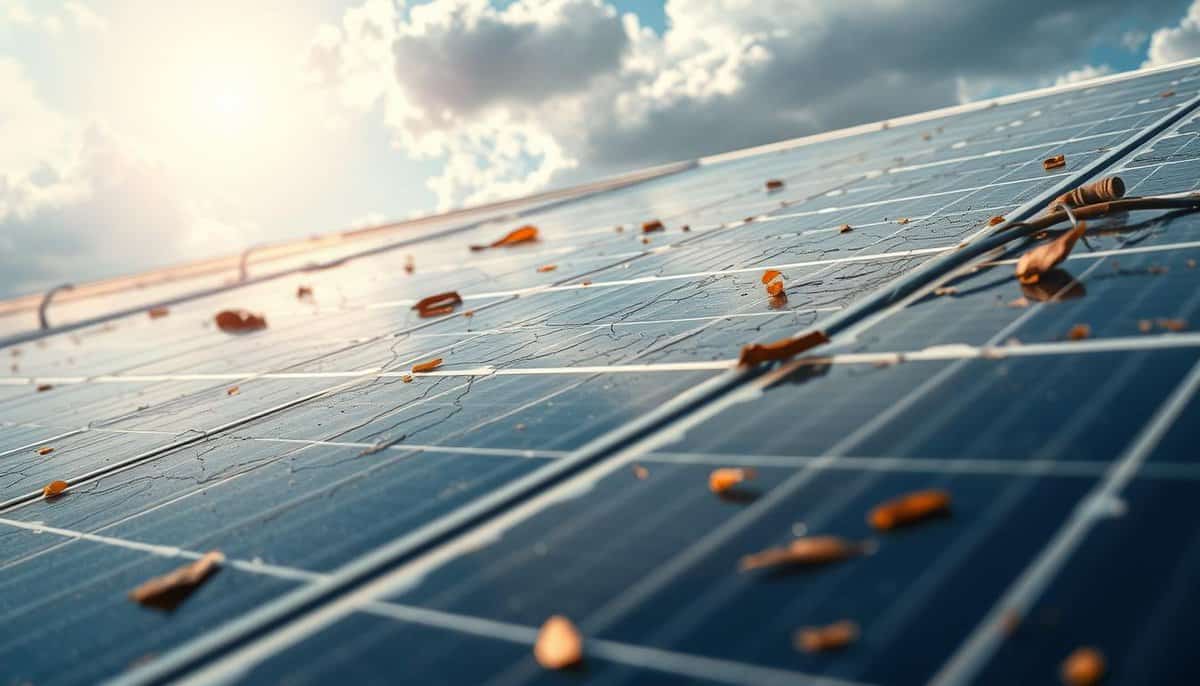
태양광 패널의 노화 과정을 알면 투자 효율을 극대화할 수 있다면 어떨까요? 패널의 효율성은 투자에 있어 매우 중요합니다. solar power 시스템의 성능과 비용 효율성은 뛰어납니다. 하지만 여러 요인으로 인해 시스템이 노후화되어 장기적인 가치와 효율성에 영향을 미칩니다.
환경 조건, 기술 발전, 설치 방식 등 다양한 요소들이 그들에게 영향을 미칩니다. 수명이러한 사항들을 아는 것은 현명한 선택을 하는 데 도움이 됩니다. 단결정 및 다결정 태양광 모듈은 햇빛을 에너지로 전환하는 비율이 각기 다릅니다. 따라서 태양광 패널을 최대한 활용하려면 지속적인 관리와 새로운 기술의 도입이 필요합니다.
핵심 요약
- 환경 조건은 태양광 패널의 성능 저하 속도에 결정적인 역할을 합니다.
- 고온은 반도체 특성을 변화시켜 패널의 효율을 떨어뜨릴 수 있습니다.
- 패널을 최적의 방향, 특히 남쪽 방향으로 배치하면 태양 에너지 포착 효율이 향상됩니다.
- 패널 효율을 오랫동안 유지하려면 청소 및 모니터링을 포함한 정기적인 유지 관리가 필수적입니다.
- 기술 발전으로 태양광 패널의 효율성과 수명이 지속적으로 향상되고 있습니다.
태양광 패널 열화 소개
태양광 패널은 햇빛을 전기로 변환하는 능력이 서서히 저하됩니다. 이러한 과정을 태양광 패널 열화라고 합니다. 이는 대규모 태양 에너지 프로젝트의 수익에 큰 영향을 미칠 수 있으며, 심지어 수백만 달러의 손해배상금 지급 손실로 이어질 수도 있습니다. 따라서 이러한 열화 현상이 어떻게 발생하는지 이해하는 것이 매우 중요합니다. 이러한 지식은 태양광 시스템의 수명과 경제성을 향상시키는 데 도움이 됩니다.
환경적 요인은 태양광 패널 효율 저하에 큰 영향을 미칩니다. 사막과 열대 지역에서 진행된 연구에 따르면 연간 효율 저하율은 1.2%에서 1.8% 사이입니다. 하지만 2020년 기준 평균 저하율은 연간 약 0.5%로 추산됩니다. 이는 20년 후 발전량이 최대 10%까지 감소할 수 있음을 의미합니다. 새로운 고효율 패널조차도 연간 최대 2%까지 더 빠르게 효율이 떨어질 수 있습니다. 따라서 20년 동안 발전량이 최대 40%까지 감소할 수 있습니다.
잘못된 설치와 기계적 스트레스는 상황을 더욱 악화시킬 수 있습니다. 패널에 균열, '스네일 트레일' 현상, 오염 등이 발생할 수 있습니다. 강풍 또한 패널의 효율성과 강도를 저하시킬 수 있습니다. 이러한 모든 요인들이 패널의 빠른 노후화에 기여합니다.
태양광 패널은 25~30년 보증 기간이 제공되지만, 일반적으로 매년 1%씩 성능이 저하됩니다. 이는 패널이 생산할 수 있는 전력량에 영향을 미칩니다. 광유도 열화(LID)로 인해 첫 달에는 전력 생산량이 최대 10%까지 감소할 수 있습니다. 전위유도 열화(PID)는 무시할 경우 초기 성능을 최대 20%까지 저하시킬 수 있습니다.
이러한 어려움에도 불구하고 태양 에너지는 점점 더 저렴해지고 있습니다. 지난 10년 동안 태양광 발전 비용은 14% 하락했는데, 이는 태양광 패널 가격 인하 덕분입니다. 이제 태양광 발전은 기업 에너지 시장에서 중요한 역할을 차지하고 있습니다. 2017년부터 2022년까지 142기가와트(GW) 이상의 기업 태양광 발전 계약이 체결되었으며, 이 중 절반이 북미 지역에서 이루어져 태양광 에너지로의 전환이 활발하게 진행되고 있음을 보여줍니다.
이해관계자들이 태양광 발전 시스템의 약점을 이해하고 해결하는 것은 매우 중요합니다. 여기에는 인버터, 스위치 등의 문제가 포함됩니다. 설계, 설치 또는 설치 후 초기 단계에서 문제를 발견하는 것이 핵심입니다. 이를 통해 태양광 패널의 수명을 연장할 수 있습니다.
최고급 태양광 패널은 열화율이 낮아 연간 약 0.4% 정도입니다. 이는 25~30년 동안 전력 생산량이 약 12~15% 감소한다는 의미입니다. BO-LID로 인한 초기 감소율은 2~3%이지만, 이후에는 열화 속도가 연간 0.3~0.5%로 더 느려집니다.
아래 표는 시간이 지남에 따라 다양한 유형의 태양광 패널에서 발생하는 성능 저하의 영향을 보여줍니다.
| 분해 유형 | 초기 충격 | 장기적인 영향 | 중간 분해 속도 |
|---|---|---|---|
| LID(광유도 분해) | 첫 달 최대 10% | 감소된 속도로 안정화됩니다 | 연 0.5% |
| PID(잠재적 유도 분해) | 초기 몇 개월 동안 최대 20% | 해결하지 않으면 성능 저하가 심각해집니다. | 연간 0.67% |
| BO-LID 안정화 | 초기 감소율 2-3% | 연간 0.3%~0.5%로 감소 | – |
| 고효율 태양광 모듈 | 초기에는 연간 최대 2% | 20년 동안 40% 감소 | 연간 1~2% |
| 프리미엄 태양광 패널 | 연 0.4% | 25~30년에 걸쳐 12~15% | 연 0.4% |
태양광 패널 수명에 영향을 미치는 환경적 요인
태양광 패널의 수명과 효율은 환경의 영향을 크게 받습니다. 이러한 요인들을 이해하면 태양광 패널 보증에 대해 더 현명한 선택을 하고 이 기술을 최대한 활용할 수 있습니다.
기후 및 환경 조건
태양광 패널을 설치하는 장소는 패널의 수명에 큰 영향을 미칩니다. 높은 온도는 패널 내부의 태양 전지를 손상시켜 발전량을 감소시킬 수 있습니다. 반대로 서늘한 장소는 태양광 패널의 성능을 향상시켜 줍니다.
나무, 건물 또는 기타 물체로 인한 그늘 또한 태양광 패널의 효율을 떨어뜨릴 수 있습니다. 많은 태양광 패널 제조업체가 25년 이상의 보증 기간을 약속하지만, 이러한 환경적 요인 때문에 보증 기간을 신중하게 고려해야 합니다.
해안 지역 상황
해안 지역에 태양광 패널을 설치하면 염분 때문에 여러 가지 어려움이 따릅니다. 염분은 특히 금속 부품의 녹 발생을 가속화하고 태양광 패널의 수명을 단축시킵니다. 정기적인 유지 보수와 녹 방지 부품을 선택하는 것이 도움이 되지만, 이러한 지역에서는 특별 보증을 고려하는 것이 중요합니다.
계절 변화, 강풍, 강한 햇빛 또한 태양광 패널의 수명에 영향을 미칩니다. 일반적으로 태양광 패널은 매년 약 0.5%의 성능 저하를 겪습니다. 최고급 패널은 그보다 낮은 약 0.3%의 성능 저하를 보입니다.
| 환경 조건 | 태양광 패널 수명에 미치는 영향 | 분해 속도 |
|---|---|---|
| 고온 | 효율성 감소 | 연 최대 0.5% |
| 물체에 의한 음영 | 상당한 효율성 손실 | 해당 없음 |
| 해안 조건 | 가속 부식 | 연평균 0.5% |
| 서늘한 기후 | 향상된 효율성 | 분해율 감소 |
Temperature Impacts on Solar Panels
Temperature greatly influences how well solar panels perform. It even affects their lifespan. Knowing this can guide the optimal setup of solar systems. This helps cut down on losses and prolongs their life.
Temperature Coefficient
The temperature coefficient is vital for understanding these impacts. Generally, solar panels work less efficiently as it gets hotter. For every degree Celsius over 25°C, their efficiency drops by 0.3% to 0.5%. So, if the temperature rises by 1°C above 25°C, a panel with a -0.3%/°C rating loses 0.3% efficiency.
- Efficiency of consumer solar panels varies between 15% and 23%.
- EcoFlow solar panels are among the best, with a 23% efficiency rate.
- Polycrystalline panels are on the lower end, with about 15% efficiency.
Under lab conditions, solar panels have reached over 40% efficiency. But real-world conditions, mainly due to temperature, make this hard to maintain. Surprisingly, colder conditions can actually boost how well they work. This shows how complex temperature effects on solar panel efficiency are.
Real-World Examples
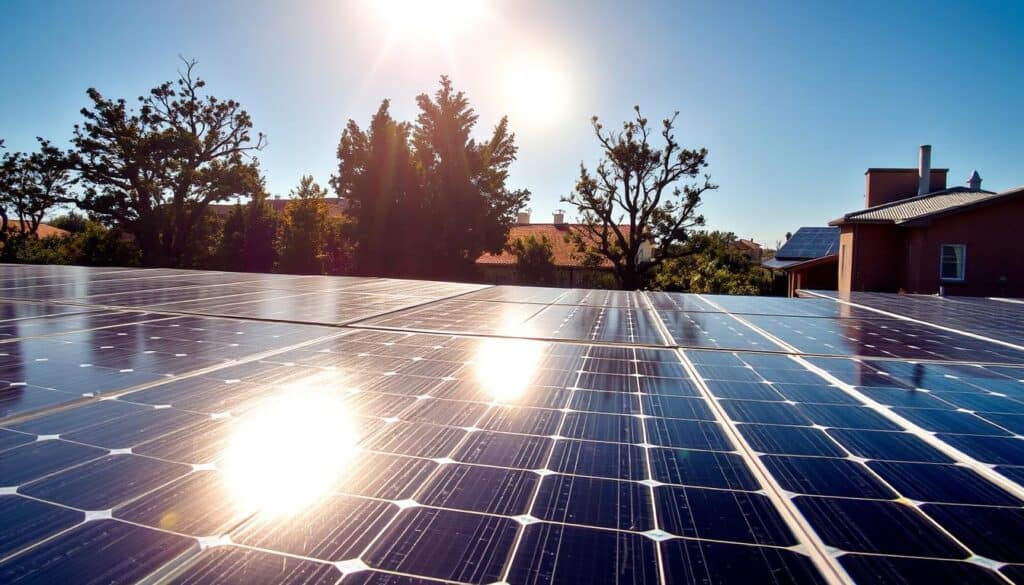
In hot places like Arizona or Saudi Arabia, it can get above 40°C. Here, solar panels can lose over 6% efficiency at 45°C. This serious drop in power highlights the need for managing temperatures.
| 온도 (°C) | Efficiency Loss (%) |
|---|---|
| 25 | 0 |
| 35 | 2.5 |
| 45 | 5.0 |
| 55 | 7.5 |
To lessen damage from heat, proper ventilation and smart placement are key. Choosing panels with low temperature coefficients is critical in hot areas. Also, making sure panels have room for air to flow around them helps a lot.
Higher temperatures speed up the aging of solar panels, reducing efficiency. Hence, it’s crucial to pick the right panels and set them up carefully. This ensures long-term, sustainable energy production.
Role of Angle and Installation Methods
Solar panels work best when they’re set up correctly. The right angle helps them catch as much sunlight as possible. This boosts how much power they produce.
Optimal Panel Orientation
In the U.S., facing panels south is usually best. This direction gets them light all day, helping to create more energy. Depending on where you are and the time of year, changing the panel’s direction helps too.
Influence of Tilt Angle
The tilt of solar panels is super important too. The best tilt usually matches the place’s latitude. This setup grabs the most sun over the year, making energy use better.
Yet, tilting them more can cause issues with wind. This means we need to think about wind direction and speed when setting them up. Studies help us find ways to install panels that stand strong and work efficiently.
Technological Advancements in Solar Cells
The solar industry is growing fast, and the improved tech in solar cells is key. Monocrystalline and polycrystalline cells are the main types. Each has its own pros and cons.
Monocrystalline vs. Polycrystalline
Monocrystalline solar cells are more efficient and last longer than polycrystalline cells. This is because they use purer silicon. This high-quality silicon means less internal resistance, so these panels work better.
Studies by the National Renewable Energy Laboratory (NREL) show these panels degrade slower, losing only 0.4% efficiency each year. Manufacturers often promise these panels will keep 90% of their efficiency for the first ten years and 80% for 15 to 20 years after that.
Advanced Technologies
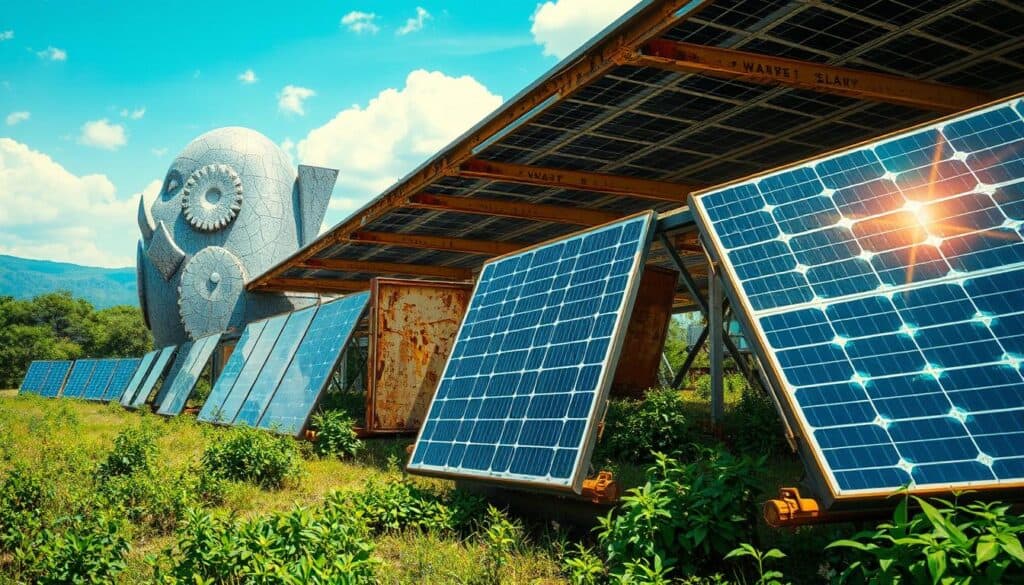
New technologies are making solar energy even better. Anti-reflective coatings and maximum power point tracking (MPPT) are important. They help convert more sunlight into electricity. Anti-reflective coatings cut down on light reflection, and MPPT gets the most power from the panels.
Thanks to these advancements, solar panels can hold onto about 80% of their initial efficiency even after 25 years. This is a big deal for performance and 장수.
| 특징 | 이익 |
|---|---|
| Monocrystalline Panels | Higher efficiency, reduced internal resistance, slower degradation rate |
| Polycrystalline Panels | Cost-effective, easier manufacturing process |
| Anti-Reflective Coatings | Increased light absorption, reduced reflection |
| Maximum Power Point Tracking (MPPT) | Optimized electrical output, improved energy conversion rates |
Advanced solar technologies are making solar panels last longer and work better. These new approaches help solar power stay a top renewable energy source for the future.
Voltage and Current Factors for Ageing
Understanding voltage and current factors for ageing is crucial for solar panel longevity. Mismanagement can cause them to wear out faster. This impacts their performance.
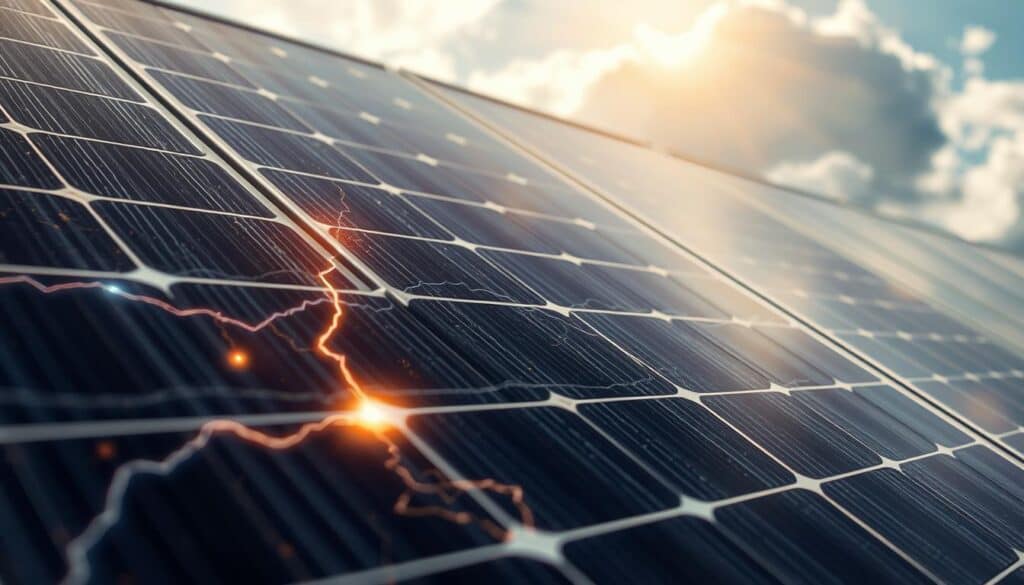
Inadequate wiring in a solar array can stress the cells if too much voltage or current. This leads to quicker ageing.
Likewise, high temperatures in summer can cut power output in half. Likewise, rainy weather can cause degradation rates to range widely. Regular maintenance is key to avoiding these issues. Checking wiring and using quality components helps. This approach can lower yearly degradation rates to between 0.6% and 0.7%.
Below is a comparative analysis highlighting degradation rates and performance metrics:
| Season | Output Power Reduction Rate |
|---|---|
| Winter 2020 | 20.01% |
| Fall 2020 | 5.23% |
| Summer 2020 | 50.53% |
| Spring 2020 | 28.25% |
| Rainy Summer 2020 | 10.39% – 62.75% |
The average yearly degradation rate for aged PV modules is 1.55%. Hence, managing voltage and current is vital. Proper solar panel maintenance tips maintain efficiency and prevent sudden drops in performance.
Impact of Shading and Debris Accumulation
Shading and debris affect solar energy harvesting a lot. They can badly impact how well solar panels work and how long they last. Knowing the role of managing shading and debris helps keep solar panels working their best. This ensures they produce the most energy and last longer.
Partial Shading Effects
Even a little bit of shading on a solar panel can reduce its energy output. A shaded cell can lower the performance of many cells because they are wired together. This can cause a loss of about 14% in short-circuit current in these systems.
If solar panels are not cleaned regularly, they will not work as efficiently. Installing them at a 30° angle is best. But if they are not cleaned for 30 days, the power they produce can drop by nearly 50%. This shows why keeping panels clean is crucial.
Debris Management
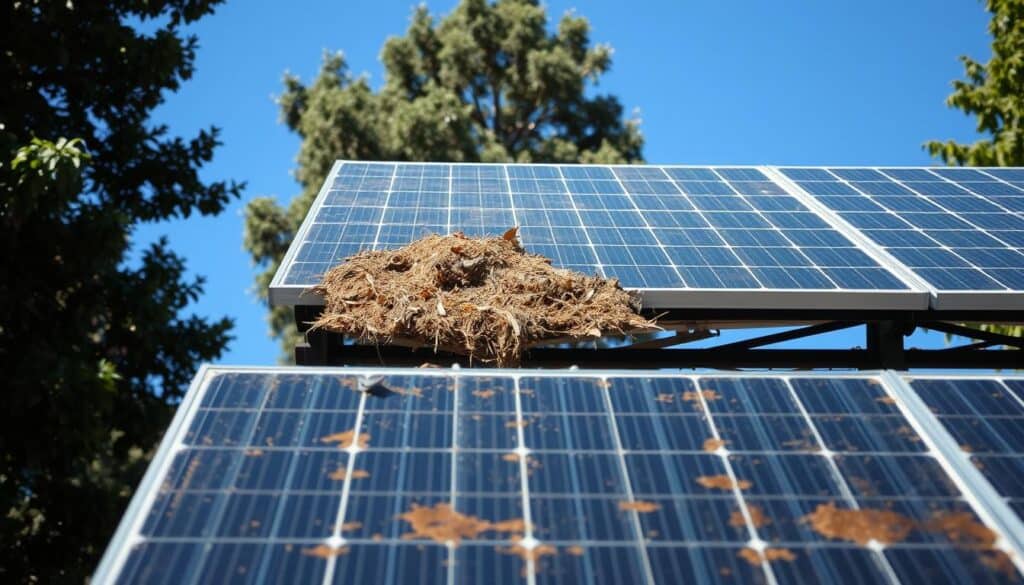
Keeping solar panels free from debris is key to their efficiency and lifespan. Dust and other particles can reduce power output by 8.80% and efficiency by 11.86%. Worse, this contamination can cut down energy output by over 60% in some cases.
In deserts, dust reduces solar efficiency by around 40%. Since dust is considered to be particles smaller than 500 µm, frequent cleaning is a must. If panels are not cleaned, they could produce about 6.5% less energy after two months outside.
Having a good cleaning routine helps reduce the negative effects on solar panels as they age. Using automated cleaning systems and placing panels carefully can help them last longer and work better. By focusing on these areas, solar panels can stay effective and support sustainable energy.
Importance of Regular Maintenance
For your solar panels to work well and last long, you need to maintain them regularly. Taking good care of them increases energy production and protects your investment. We’ll look at why cleaning often and using advanced monitoring systems are key.
Routine Cleaning
Keeping solar panels clean is crucial. Dirt, dust, and bird droppings can block sunlight, making panels less efficient. Experts suggest cleaning them at least twice a year to avoid big buildups. If you ignore cleaning, your panels might work poorly, need expensive fixes, or fail too soon.
The need for maintenance varies by weather, location, and system size. Panels in dusty or polluted areas need cleaning more often. Regular checks help spot problems early on. Always prioritize safety during maintenance to keep in line with warranty terms and protect your investment.
모니터링 시스템
Solar panel monitoring systems are vital for keeping your panels in good shape. They allow you to see how well your panels are working and find problems quickly. With new tech for remote monitoring and predictive analytics, it’s easier to keep panels running well. These tools warn you of faults and help plan repairs, making your panels last longer and work better.
Regular upkeep and checks not only make your solar panels more efficient and longer-lasting. They also give you peace of mind by keeping your investment safe. Following these solar panel maintenance tips will greatly improve your system’s performance and longevity.
| Maintenance Task | Recommended Frequency | Average Cost |
|---|---|---|
| Cleaning | Twice a year | $150 – $300 per visit |
| 점검 | 매년 | $150 – $300 per visit |
| 모니터링 시스템 | Continuous | 다양함 |
Solar Panels Ageing Factors
It’s important to know how solar panel longevity is impacted. Solar panels lose efficiency over time, lowering energy output. They degrade by about 1% each year on average. High-quality panels often degrade slower than low-quality ones. This affects energy production and financial returns.
Solar panel degradation varies, usually between 0.5 to 3% yearly. Voltage imbalances can reduce performance by up to 30%. Also, light-induced degradation can decrease efficiency by 1-3% in the first 1,000 hours. This early loss is crucial for long-term performance.
Certain environmental factors speed up solar panel efficiency loss. For example, saltwater exposure in coastal areas can damage panels quickly. Also, extreme temperatures can lead to faster efficiency loss.
- Environmental Exposure: panels in harsh conditions degrade quicker.
- Installation Quality: good installation helps avoid early degradation.
- Technological Type: panels like monocrystalline have less degradation.
- Maintenance Frequency: keeping panels clean and checked helps them last longer.
Quality solar panels, like those from ShopSolar.com, deal better with degradation. They usually have warranties for a 20% efficiency drop after 25 years. But, many panels work well even longer. Using quality materials and good upkeep can keep efficiency loss low.
Replacing a damaged solar system can be expensive, from $400 to $600, not including labor. So, it’s vital to invest in quality and maintenance early. This investment balance is key for anyone wanting the most from their solar installation.
결론
Knowing how solar panels age is key to keeping them running well and investing wisely in solar energy. Elements like weather and shade impact how quickly they wear down. When solar panels first face the sun, they lose 1 to 3% efficiency due to light-induced degradation. On average, modern panels get less efficient by 0.5% each year. This means they keep about 88% of their power after 25 years.
New technology has made big improvements in solar panels. Their power has gone up from 295 Wp to 600 Wp in ten years. Top-tier panels, like Jinko Solar’s JKM545 module, are really good at resisting damage and can stay 21.13% efficient. They also only get a bit less efficient – by 0.55% – every year for 25 years.
It’s important to take good care of solar panels and put them up the right way. Cleaning them often and using high-tech monitoring helps them last longer. Also, long warranties of 25 years show a commitment to long-lasting, sustainable solar power. By using the latest technology and taking care of the panels, we can keep them working well for many years.
관련 참고 문헌 및 방법론
- Lifecycle management: techniques for extending product lifespan through proactive maintenance and upgrades.
- Material degradation analysis: methods for assessing how different materials deteriorate over time and under various conditions.
- Environmental impact on products: study of how environmental factors like humidity, temperature, and UV exposure affect product longevity.
- Predictive maintenance: use of data analytics to predict when a product will require maintenance before failure occurs.
- Consumer behavior and product lifespan: analysis of how consumer use patterns influence the ageing and lifespan of products.
- Recycling 그리고 upcycling 기법: methods for repurposing aged products to extend their useful life or transform them into new products.
자주 묻는 질문
태양광 패널 노화에 영향을 미치는 주요 요인은 무엇입니까?
태양광 패널의 수명과 효율은 여러 요인의 영향을 받습니다. 여기에는 기후, 설치 품질, 유지 관리 상태 등이 포함됩니다. 기술 발전 또한 중요한 역할을 합니다.
태양광 패널의 성능 저하는 어떤 영향을 미칠까요?
시간이 지남에 따라 태양광 패널은 햇빛을 전기로 변환하는 능력을 서서히 잃게 됩니다. 환경적 영향, 재료 마모 및 효율 감소가 주요 원인입니다.
태양광 패널의 수명에 영향을 미치는 환경적 요인은 무엇입니까?
위치, 온도 변화, 그리고 바다와의 근접성은 중요한 요소입니다. 예를 들어, 고온은 태양광 패널을 약화시킬 수 있습니다. 해안가 근처의 염분 있는 공기 또한 손상을 유발할 수 있습니다.
온도는 태양광 패널 효율에 어떤 영향을 미칠까요?
태양광 패널은 온도가 올라갈수록 효율이 떨어집니다. 이는 온도 계수라는 원리 때문입니다. 따뜻한 지역에서는 이러한 효율 감소가 더욱 두드러지게 나타납니다.
태양광 패널의 최적 설치 방향은 무엇인가요?
태양광 패널은 남향으로 설치했을 때 가장 효율적으로 작동합니다. 남향은 연중 가장 많은 햇빛을 받는 위치이며, 최적의 성능을 위해 필수적입니다.
태양광 패널의 기울기 각도는 성능에 어떤 영향을 미칠까요?
태양광 패널의 각도는 설치 위치의 위도와 일치해야 합니다. 이렇게 하면 햇빛을 최대한 많이 포착할 수 있습니다. 각도를 올바르게 조정하면 에너지 생산량이 증가합니다.
단결정 태양전지와 다결정 태양전지의 차이점은 무엇인가요?
단결정 전지는 효율이 더 높고 수명이 더 깁니다. 이는 단결정 전지가 더 순수한 실리콘으로 만들어지기 때문입니다. 다결정 전지는 가격은 저렴하지만 성능 면에서는 단결정 전지만큼 좋지 않습니다.
어떤 첨단 기술이 태양광 패널의 효율을 향상시키나요?
반사 방지 코팅이나 MPPT(최대 전력점 추적)와 같은 새로운 기술은 태양광 패널의 에너지 변환 효율을 높여줍니다. 이는 더 많은 빛을 포착하고 에너지 손실을 줄임으로써 가능합니다.
전압 및 전류 불균형은 태양광 패널에 어떤 영향을 미칠까요?
전압과 전류의 불균형은 태양 전지를 손상시킬 수 있습니다. 고품질 부품과 올바른 배선을 사용하면 이를 방지하고 패널의 수명을 연장할 수 있습니다.
부분적인 음영이 태양광 패널에 미치는 영향은 무엇입니까?
패널 하나에만 그늘이 져도 전체 그룹의 출력이 떨어질 수 있습니다. 따라서 작은 그늘이라도 큰 영향을 미칩니다.
태양광 패널 유지보수에 있어 폐기물 관리는 얼마나 중요한가요?
태양광 패널을 먼지와 이물질로부터 깨끗하게 유지하는 것은 매우 중요합니다. 깨끗한 패널은 햇빛을 전기로 더욱 효율적으로 변환하여 효율 손실을 방지합니다.
태양광 패널을 정기적으로 청소해야 하는 이유는 무엇입니까?
패널을 정기적으로 청소하면 패널이 막힘없이 햇빛을 흡수할 수 있습니다. 이렇게 하면 효율이 높게 유지되고 수명도 길어집니다.
첨단 모니터링 시스템은 태양광 패널 유지 관리에 어떤 이점을 제공합니까?
모니터링 시스템은 패널의 상태를 실시간으로 추적하여 문제를 조기에 발견할 수 있도록 도와줍니다. 이를 통해 신속한 수리가 가능해지고 패널의 수명을 연장할 수 있습니다.
태양광 패널 노화 요인을 이해하는 것의 주요 이점은 무엇입니까?
Knowing what shortens a panel’s life can help keep it running well. This ensures a good return on investment. It also supports clean energy.
사용된 용어집
Conversion Rate (CR): 웹사이트 또는 랜딩 페이지 방문자 중 구매 또는 뉴스레터 구독과 같은 원하는 행동을 완료한 방문자의 비율로, 전환 수를 전체 방문자 수로 나누어 계산합니다.
Maximum Power Point Tracking (MPPT): 태양광 발전 시스템에서 모듈의 전기적 작동 지점을 조정하여 에너지 추출을 최적화하는 기술로, 다양한 환경 조건에서도 최대 전력 출력을 보장합니다.
Non-Recurring Engineering (NRE): 대량 생산 이전에 제품 또는 시스템의 설계, 개발 및 테스트와 관련된 일회성 비용입니다. 이러한 비용에는 연구, 시제품 제작 및 툴링과 같은 활동이 포함되며, 이후 생산 과정에서는 반복되지 않습니다.
Proportional-Integral-Derivative (PID): 비례, 적분 및 미분 동작을 결합하여 원하는 설정값과 측정된 공정 변수 간의 오차를 최소화함으로써 시스템 출력을 조절하는 제어 루프 메커니즘.
Return on Investment (ROI): 투자 수익성을 평가하는 데 사용되는 재무 지표로, 투자 순이익을 초기 비용으로 나눈 값이며 백분율로 표시됩니다.