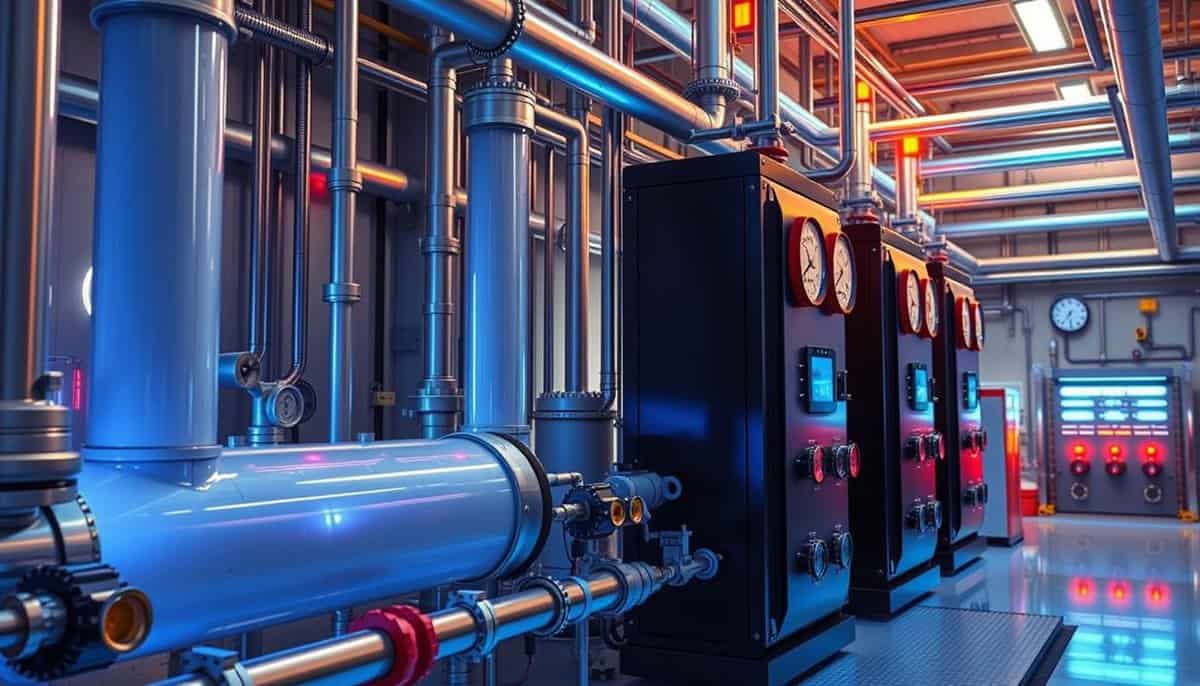
圧力スイング吸着(PSA)によって、ガスを99%以上精製できることをご存知ですか?この技術は、蒸留が不可能な多くの分野で重要な役割を果たしています。水素回収、CO2除去、空気浄化などに利用されています。ゼオライトや活性炭などの材料を用いることで、PSAはガスの吸着と脱着を切り替えます。この切り替えは様々な圧力下で行われ、最高レベルの精製効果をもたらします。
環境に優しく、より安価なガス分離方法が求められる中で、PSAは注目を集めています。食品包装用の窒素製造や、医療用途の高純度酸素の製造に最適です。発電所の排ガス処理から天然ガス処理まで、PSAの幅広い用途は、その重要性を示しています。
主なポイント
- 圧力スイング吸着法は、様々な産業で広く用いられている効率的なガス分離技術である。
- PSA技術は、99%を超えるガス純度を実現できる。
- エネルギー効率が非常に高く、多くの場合、蒸留などの従来の方法を凌駕する。
- PSAユニットは小型で持ち運びも可能であり、既存のシステムにも容易に統合できます。
- この技術は汎用性が高く、二酸化炭素除去、窒素生成、酸素生成といったニーズに対応できる。
次のセクションでは、圧力スイング吸着についてさらに詳しく解説します。その産業用途、利点、そして利用を促進する新しいバージョンについて学びます。
圧力スイング吸着の理解
圧力スイング吸着(PSA)法は、様々な産業分野でガス分離に用いられる手法です。加圧下でガスを吸収する特殊な材料を使用するため、強力かつ柔軟なツールとなっています。
動作原理
PSAは、高圧下でガスを特定の材料に吸着させ、その後圧力を下げてガスを脱着させるというサイクルを繰り返すことで機能します。この方法により、様々なガスを効率的に分離することができます。
PSAは、携帯機器から工業プラントまで、計量器でほぼ純粋な窒素と酸素を得るのに最適です。
主要コンポーネント
PSAシステムには、吸着容器や制御システムといった重要な構成要素があります。これらの構成要素が連携して、ガスを効率的に分離します。窒素製造の一般的な構成としては、空気圧縮機とフィルターなどが挙げられます。
- エアコンプレッサー
- ドライヤー
- 不純物やほこりを取り除くフィルター
- 空気受容器
- 窒素発生装置
- 窒素受容器
重要な要素の一つに空気率があります。これは窒素を生成するために必要な圧縮空気の量を示します。空気率が低いほどシステムの効率が良く、運転コストも低くなります。この装置は、純粋な窒素を継続的に生成するサイクルを繰り返します。
PSA法と極低温蒸留法の比較
PSAには利点があります 極低温 蒸留は室温で行えるため、エネルギーを大幅に節約できます。また、極低温法よりも安価で、手順も簡単で、開始も速いです。
| パラメータ | PSAテクノロジー | 極低温蒸留 |
|---|---|---|
| 動作温度 | ほぼ周囲温度 | 非常に低い |
| エネルギー効率 | 高い | 適度 |
| 初期設定費用 | 低~中程度 | 高い |
| システムの複雑性 | 中くらい | 高い |
| 起動速度 | 速報(分/時間) | 遅い(数時間/数日) |
工業プロセスにおけるPSAの応用
圧力スイング吸着(PSA)は、多くの産業においてガスを効率的に分離するための鍵となる技術です。これは1960年代にエア・リキードとエクソンによって開発されました。その主な原理は、 仕事 このシステムの目的は、水素回収、窒素製造、酸素製造に必要な高純度ガスを生成することです。システムは、サイクル、自動バルブ、ガス貯蔵設備を利用して効率的にガスを回収します。
リンデはPSA技術の活用において業界をリードする企業のひとつであり、世界中で500以上のプラントを建設してきました。これらのプラントの規模は、数百から40万Nm³/hを超える処理能力まで多岐にわたります。
水素回収
水素回収 PSAは、特に石油精製所や石油化学産業において主要な用途となっています。ガス会社は、最大99.9999モル%の高純度水素を生成する装置を提供しています。この高純度は、水素分解、臭気除去、硫黄除去に不可欠です。これらのシステムは10~40バールの圧力で稼働し、高い効率と信頼性を確保するために少なくとも4つの吸着容器を備えています。
PSAプロセスは、運転中に吸着、減圧、再生、再加圧という複数のステップから構成されます。これにより高い回収率が実現し、システムの効率が向上します。
窒素生成
PSAは、食品包装や電子機器分野向けの窒素製造にも使用されています。99.9%以上の高純度窒素を製造できるため、食品や電子機器の安全性と長寿命化に不可欠です。この技術は、ゼオライトなどの特殊な吸着剤を用いて空気中から効率的に窒素を吸着します。これらのシステムは常時使用と高い信頼性を前提に設計されており、安定した窒素供給を保証します。
酸素生成
PSAを用いた酸素生成は、医療用酸素療法や廃水処理などの活動において極めて重要です。酸素システムは95%以上の純度を実現でき、厳しい医療基準および環境基準を満たします。吸着と脱着のサイクルが速いため、継続的かつ安定した酸素供給が必要な場所に最適です。
PSA技術は、高純度ガスを得るための柔軟で拡張性の高い選択肢であり、様々な産業活動において重要な役割を果たしています。
Benefits of Using Pressure Swing Adsorption
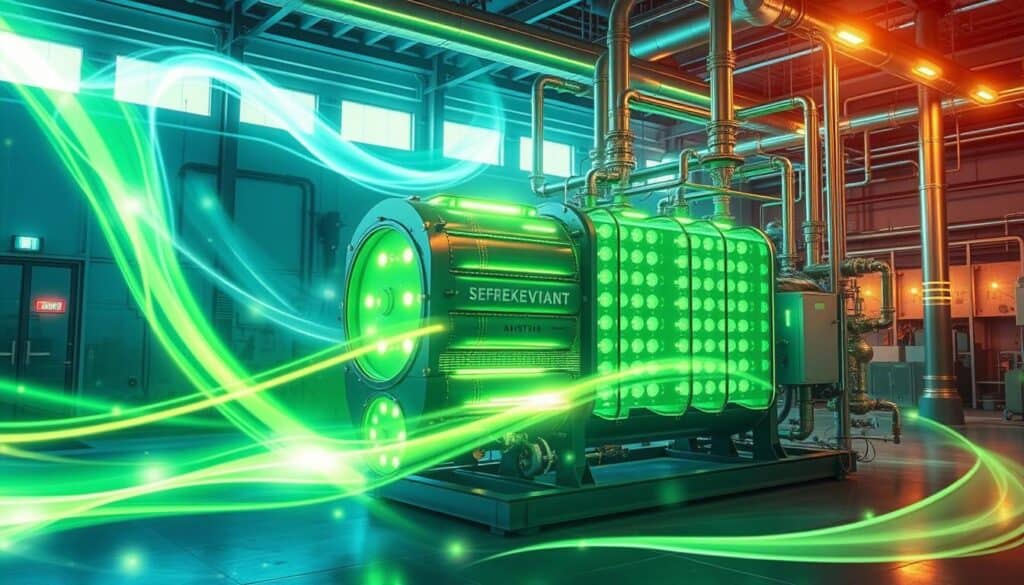
Pressure Swing Adsorption (PSA) technology is gaining ground in industrial gas separation. It’s loved for its efficiency, affordability, and ability to scale up or down. These traits make it a standout choice for many industries.
Scalability for Various Applications
PSA systems can grow with your needs. They fit everything from small oxygen machines to big gas plants. Its design can change to meet different requirements. This makes it perfect for many fields like healthcare, food, and environmental work.
Whether it’s for making hydrogen, nitrogen, or oxygen, PSA can do it. Its ability to adjust makes it vital for various industries. Plus, it supports business growth in these sectors by being so adaptable.
| PSA System | Operating Pressure | Suitability | 消費電力 |
|---|---|---|---|
| Pressure Swing Adsorption (PSA) | 4.5 – 7 bar | Medical Oxygen, Industrial Applications | 適度 |
| Vacuum Pressure Swing Adsorption (VPSA) | 1 bar | Larger Industrial Applications | Lower at larger scales |
| Vacuum Swing Adsorption (VSA) | 0.7 bar | Specialized Industrial Processes | 低い |
Adsorbent Materials in PSA Systems
Adsorbent materials are key to how well Pressure Swing Adsorption (PSA) systems work. They help separate gases. The top three materials used in PSA are zeolites, activated carbon, and molecular sieves. Each type is good for different jobs in gas separation.
Zeolites
Zeolites are minerals with tiny pores and are great at picking out certain gases. They work well for making oxygen from air. Because zeolites have pores that are all the same size, they can catch gas molecules very precisely. This means they can create very pure oxygen or hydrogen.
Activated Carbon
Activated carbon can grab onto a lot of hydrocarbons and smells. That’s why it’s used a lot in PSA systems for industries. It has a complex pore structure that gives it a big surface area for catching gases.
Its ability to work in many different settings makes it a go-to choice for cleaning gases.
Molecular Sieves
Molecular sieves are special because they can pick out gas molecules by size. This makes them super important for making pure oxygen and hydrogen.
Also, these systems are way smaller than old ones, sometimes 3-5 times.
| 財産 | Zeolites | Activated Carbon | Molecular Sieves |
|---|---|---|---|
| Main Use | 酸素生成 | Hydrocarbon Removal | High Purity Gas Production |
| 効率 | High (up to 99.9999%) | Long-lasting (over 10 years) | 80-90% Hydrogen Recovery |
| 特徴 | Microporous | High Surface Area | Precise Molecular Targeting |
Pressure Swing Adsorption in Environmental Applications
Pressure Swing Adsorption (PSA) is changing how we manage our environment. It’s key for removing carbon dioxide, purifying biogas, and using landfill gas. More than 325 companies, including big names like Linde, Exxon Mobil, and Air Liquide, are making strides with PSA. This tech is crucial for eco-friendly industrial work.

Carbon Dioxide Removal
Getting rid of CO2 is vital for fighting industrial impacts on 気候変動. PSA is a top method for grabbing and separating carbon dioxide from gases. Companies such as Linde and Shell have created advanced PSA systems for this. These systems cut down greenhouse gases, helping industries meet environmental rules.
Biogas Purification
PSA technology also cleans biogas, boosting its energy use. It removes bad stuff like carbon dioxide, hydrogen sulfide, and moisture. This clean biogas becomes a renewable energy source, cutting down on fossil fuel need. PSA systems are flexible, making them great for different sized projects.
Landfill Gas Utilization
Using landfill gas is another key use of PSA technology. It turns waste gas into quality fuel. This efficient method reduces pollution and supports リサイクル, making valuable energy from landfill gas.
PSA is becoming more important in eco work. As businesses seek to be more eco-friendly and follow rules, PSA is a path to a greener industry worldwide.
Advanced Variations of PSA Technology
For over 60 years, Pressure Swing Adsorption (PSA) technology has grown. It now meets many industrial needs. These include making biofuels, capturing carbon, and purifying air. Its ability to adapt has 導かれた to more efficient and effective ways to use it.
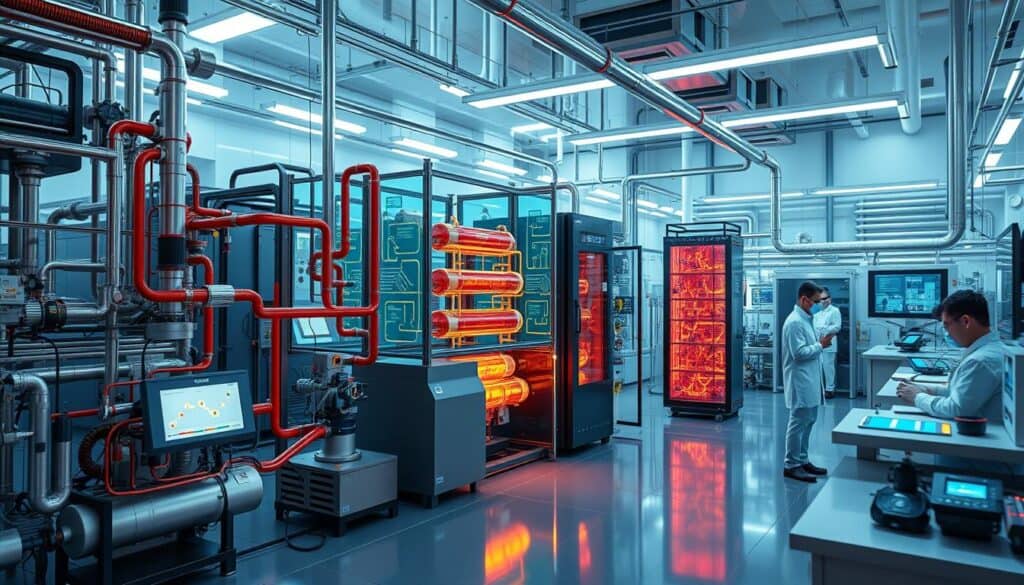
Double Stage PSA
Double Stage PSA is a big step forward. It uses two steps to make gases very pure. This purity is essential for things like medical oxygen or very clean nitrogen. By managing how the adsorbent gets full, it yields more product and cuts down costs.
Rapid PSA
Rapid PSA responds to the need for speed and portability. It’s great for urgent needs like in medical emergencies or for portable oxygen machines. By speeding up the pressure changes and cleaning process, it delivers fast without losing quality or purity.
Vacuum Swing Adsorption (VSA)
Vacuum Swing Adsorption (VSA) is different because it works in a vacuum. This method is more efficient and uses less energy. It’s perfect for tasks like removing CO2 or cleaning biogas, where saving energy matters. Using VSA means getting the job done in a green and cost-effective way.
By using these advanced PSA types—Double Stage, Rapid, and Vacuum Swing—industries can work better and more efficiently. These upgrades help PSA remain a key method for separating gases, making it more sustainable and financially wise.
Technical Challenges and Solutions in PSA Implementation
Pressure Swing Adsorption (PSA) technology helps separate gases innovatively. Yet, it faces challenges like high energy use, constant maintenance, and the need for smart optimization.
Optimization Techniques
Effective optimization methods are key to solving PSA challenges. The COVID-19(新型コロナウイルス感染症 crisis in India showed the urgent need for efficient PSA systems in healthcare. The setup of over 501 PSA oxygen plants in public facilities highlights the potential of well-managed systems.
- Enhanced system designs to support operational efficiency.
- Continuous monitoring and predictive maintenance.
- Leveraging advanced algorithms for プロセス制御.
Optimization not only improves energy efficiency but also extends PSA systems’ life. It ensures their reliability in important areas like industry and healthcare.
Future Trends and Innovations in PSA
The future of PSA technology looks bright, with big changes on the way in gas separation. We can look forward to better materials, pairing with renewable energy, and smarter control systems. The PSA market was worth USD 5.2 billion in 2022. It’s expected to grow to USD 8.1 billion by 2030. That’s a growth rate of 6.0% each year from 2024 to 2030.
Materials like zeolites, activated carbon, and molecular sieves are getting better. They’re used in gas separation, making the process more selective and efficient. This is great news for sectors that need pure gases, such as healthcare, energy, and manufacturing.
関連文献とテクノロジー
- Temperature Swing Adsorption (TSA): a method similar to PSA that uses temperature changes to regenerate the adsorbent material.
- Vacuum Swing Adsorption (VSA): a variation of PSA where vacuum is used to aid in the regeneration of the adsorbent, often used for oxygen production.
- Membrane separation: utilizes selective permeability to separate gases, often used in conjunction with PSA for enhanced efficiency.
- 極低温蒸留: a method of gas separation based on differences in boiling points, often used for the production of high-purity gases.
- Chemical absorption: involves the use of liquid solvents to selectively absorb specific gases, often used for 二酸化炭素回収.
- Molecular sieves: materials with pores of uniform size used in PSA to selectively adsorb specific molecules.
- Zeolites: a type of molecular sieve commonly used in PSA for their high surface area and selective adsorption properties.
- Metal-Organic Frameworks (MOFs): porous materials that can be tailored for specific adsorption applications, offering high selectivity and capacity.
よくある質問
圧力スイング吸着(PSA)とは何ですか?
圧力スイング吸着法(PSA)は、ガスを分離する方法の一つです。圧力とゼオライトや活性炭などの材料を利用します。この方法は、分子構造の違いを利用して混合ガスから特定のガスを分離します。
PSAの動作原理は何ですか?
PSAは、高圧下でガスを吸着し、その後、低圧下で放出することで機能します。吸着材はここで重要な役割を果たします。
PSAシステムの主要構成要素は何ですか?
PSAシステムは、吸着剤容器と切替弁を備えています。また、圧力構成と制御システムも含まれています。
PSAは極低温蒸留と比べてどう違うのか?
PSAは極低温蒸留のような低温を必要としません。ほぼ室温で動作します。そのため、エネルギーを節約でき、多くの利点があります。
PSAの産業用途にはどのようなものがありますか?
PSAは水素回収や窒素生成に用いられる。また、医療用酸素や廃水処理などにも利用される。
PSAにはどのようなメリットがありますか?
PSAシステムはエネルギーとコストを節約します。また、拡張性にも優れているため、小規模な施設から大規模な設備まで幅広く活用できます。
PSAシステムではどのような吸着材が使用されていますか?
PSAの主要材料には、ゼオライトと活性炭が含まれる。ゼオライトは窒素と酸素の分離に優れており、活性炭は炭化水素や臭気を除去する。
PSA技術の高度なバリエーションにはどのようなものがありますか?
新しいPSAタイプには、高純度を実現する二段式PSA、高速サイクルを実現する高速PSAなどがあります。また、真空スイング吸着(VSA)もあります。VSAは真空を利用して効率を高め、エネルギーを節約します。
ガス精製および分離に関する外部リンク
国際規格
(リンクにカーソルを合わせると、コンテンツの説明が表示されます)
用語集
Metal-Organic Framework (MOF): 金属イオンまたは金属クラスターが有機配位子に配位してネットワーク構造を形成する多孔質結晶性材料。これらの材料は、高い表面積と調整可能な特性により、ガス貯蔵、分離、触媒作用などに利用される。
Molecular Sieve: 分子の大きさや形状に基づいて選択的に分子を吸着する多孔質材料で、小さな分子は通過させ、大きな分子は保持する。ガス分離、乾燥、精製プロセスなどで一般的に使用される。
Pressure Swing Adsorption (PSA): 圧力変化を利用して特定のガスを選択的に固体吸着剤に吸着させる分離プロセスであり、ガス混合物の精製または分離を可能にする。酸素や水素の製造に一般的に用いられる。