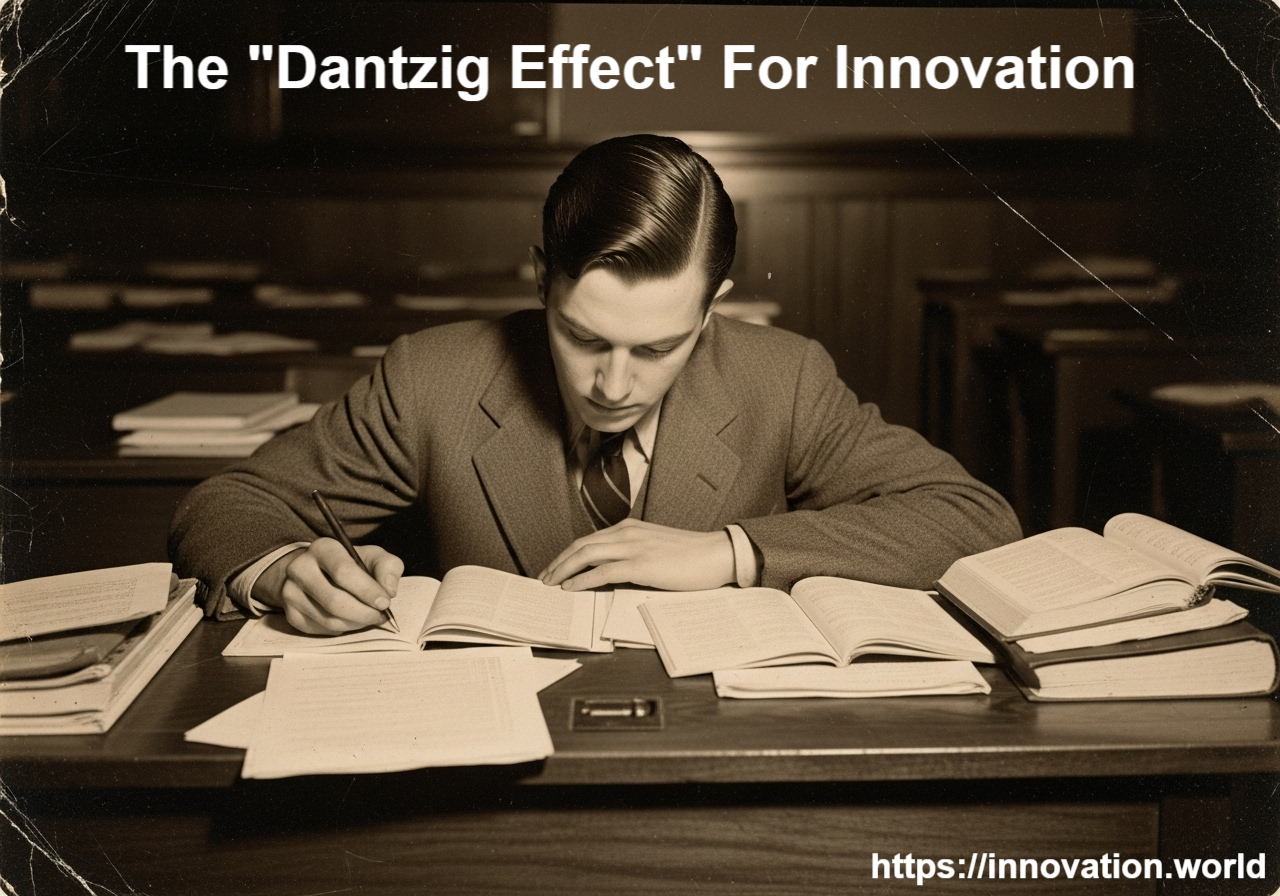
イノベーションは、ジョージ・ダンツィヒが当時解決不可能とされていた2つの統計問題に取り組んだ際に示した驚くべき経験のように、しばしば予期せぬ考え方から生まれる。ダンツィヒがこれらの「不可能」とされた宿題に誤って解答を提出したことで、彼は知らず知らずのうちに統計研究の方向性を変え、後にシンプレックス法を開発した。このエピソードは、私たちの認識が能力の限界を形作るという深い真実を強調している。2018年の研究では、「初心者の心」で臨む人は、創造的なブレークスルーを達成する可能性が25%高いことが分かった(Kahn & Gülşen、2018)。
By examining the 心理的 underpinnings of Dantzig’s success and the broader implications for innovation management, this article will elucidate how reframing challenges can dismantle self-imposed barriers and spark extraordinary solutions in engineering and product design.
主なポイント

- 有名な未解決の統計問題のうち2つは、誤った課題から生まれたものだった。
- ジョージ・ダンツィヒは、それらを単に難易度の高い任務と捉えていた。
- 限界を知らない考え方は、画期的な成果につながる。
- 初心者の視点は、革新的な解決策を生み出すきっかけとなる。
- 精神的な障壁を克服することは、問題解決能力を高める。
ジョージ・ダンツィヒの逸話

その物語
George Dantzig’s encounter with a seemingly impossible problem began in 1939 while he was a graduate student at the University of California, Berkeley. One evening, he arrived late to class and mistakenly believed he had been assigned two difficult homework problems. These problems were, unbeknownst to him, world-renowned unsolved challenges in the field of statistics. For Dantzig, they appeared merely as a set of ordinary exercises awaiting resolution, which directed his focus towards finding solutions rather than succumbing to any preconceived limitations associated with their difficulty.
ダンツィヒは線形計画法の知識を駆使し、数日間かけてこれらの問題に精力的に取り組んだ。完成後、彼は解答を提出したが、当初は単なる大学院生の課題の一つと見なされていた。ダンツィヒの教授であるイェジー・ネイマンがこれらの「宿題」の重要性に気づいて初めて、ダンツィヒの功績の真の重みが認められたのである。
この逸話は、人間の認知に関する深い真実を示している。 ダンツィヒは、その問題が不可能であるという先入観にとらわれることなく、問題に取り組んだ。彼が既存の課題を知らなかったからこそ、心理学理論や数学の天才に見られる要素と共通する、創造的な推論と戦略的思考を用いることができたのである。
素晴らしい 映画 “グッド・ウィル・ハンティングガス・ヴァン・サント監督の『1997』は、ウィル・ハンティング(マット・デイモン)の能力を明らかにする出発点として、この逸話から着想を得た。
ヒント: 困難に直面した際、既成概念にとらわれない考え方を持つことで、思いがけない解決策が生まれることがあります。参加者が先入観にとらわれず、自由に発想を広げられるようなチームでのブレインストーミングセッションを奨励し、革新的な思考を促す環境づくりに努めましょう。
Unsolvable Problems in 20th-century

The Monty Hall problem presents a scenario where a contestant is on a game show and is asked to choose one of three doors. Behind one of these doors is a valuable prize, like a car, and behind the other two doors are “goats” or non-prizes. After the contestant makes their initial choice, the host, Monty Hall, who knows the location of the prize, opens one of the other two doors to reveal a goat. The core question then posed to the contestant is: should they stick with their original choice, or should they switch to the other remaining unopened door?
In the early 20th century, maths statistics faced numerous challenges, particularly with the conception of problems deemed unsolvable. Math focus was raising and statistics were were under-researched domains yet and compounded by a lack of advanced computing tools, limiting the ability to validate outcomes or 従事する in simulations that could clarify the inherent complexities of problems.
A significant characteristic of these unsolvable problems was their reliance on understanding limits associated with probability theory and hypothesis testing.
On a non-pro level, cases like the famous “Monty Hall problem” showcased how intuition often 導かれた to incorrect assumptions:
Adopt the Beginner’s Mind For Innovation
Examining the corporate environment, organizations that promote a culture of experimentation and risk-taking often outperform their competitors. Such cultures attract talent and nurture innovative thinking.
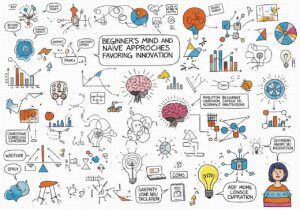
- A beginner’s mind and naïve approaches favor innovation by allowing fresh perspectives on problem-solving.
- Engineers often view challenges through established norms, which can limit creativity and innovation.
- Recognizing the value of a beginner’s mindset helps individuals disengage from preconceived notions, facilitating fresh insights.
- A mindset free from perceived limitations encourages creativity and resilience.
- Organizations that cultivate a culture of experimentation and risk-taking tend to outperform competitors and attract talent.
ヒント: encouraging チーム to approach challenges as experiments, rather than problems, can unlock innovative solutions without the confines of traditional thinking.
ヒント: when facing a challenge, ask yourself if the perceived limits are universally accepted. Consider re-evaluating the problem without preconceived notions about its difficulty.
ヒント: encourage brainstorming sessions where participants are invited to suggest “crazy” ideas without the pressure of feasibility. This can lead to innovative breakthroughs, as seemingly impractical suggestions can inspire practical solutions when refined further. Cultivating a culture that rewards innovation, regardless of its source, can lead to unexpected discoveries.
The beginner’s mindset in a problem-solving context:
| 基準 | Traditional Approach | Beginner’s Mindset Approach |
|---|---|---|
| 創造性 | Limited by existing frameworks | Encourages free-thinking and exploration |
| Problem Identification | Relies on known issues | Open to discovering new challenges |
| Solution Generation | Incremental improvements | Radical innovations |
| Risk Appetite | Risk-averse | Willing to experiment and fail |

Overcoming self-imposed limitations: self-imposed limitations often stem from preconceived notions about the feasibility of certain problems. This psychological barrier can prevent teams from attempting radical solutions. A proactive approach is to cultivate an environment that encourages asking “what if” questions. Diverse perspectives and expertise can reveal overlooked aspects of a problem and inspire innovative solutions. Notably, companies like Google utilize the “20% time” or “1 day per week” methodology, allowing engineers to spend a portion of their workweek on side projects.
Document lessons learned: a systematic evaluation of past projects can highlight common themes or patterns in problem-solving success and failure. By documenting “lessons learned,” organizations can break cycles of ineffectiveness. For instance, businesses that analyze customer feedback repeatedly improve their products, honing in on user needs that might have been overlooked previously. Such reflective practices create a feedback loop that encourages continuous improvement and flexibility in approach, dismantling the self-imposed barriers to innovation.
ヒント: incorporate structured brainstorming sessions that challenge participants to consider radical solutions, with no idea being too outlandish. Setting specific time limits for idea generation can stimulate creative thought under pressure, promoting the likelihood of discovering solutions that defy previous assumptions about feasibility.
In Summary
The “Dantzig effect” can serve as a reminder that the barriers we perceive can often be mere illusions shaped by our experiences and training. George Dantzig’s fortuitous engagement with what he believed were standard homework problems catapulted him into a realm of statistical innovation that defied the established boundaries of his time. His unassuming approach, devoid of the fear of the impossible, led to the creation of the simplex algorithm, a cornerstone of modern operations research. This phenomenon illustrates how cultivating a mindset free from preconceived limitations can inspire novel solutions and transformative ideas across various disciplines, from engineering to product design.
Adopting a beginner’s mind can revolutionize our approach to problem-solving; the psychological liberation that allows us to view challenges without the weight of perceived impossibilities encourages creativity and pushes the boundaries of innovation.
By valuating an organizational culture that values curiosity and open-mindedness, we dismantle the self-imposed limitations that stifle progress.
よくある質問
イノベーションにおける「ダンツィヒ効果」とは何ですか?
「ダンツィヒ効果」とは、人々が困難な問題を、それが不可能だと認識していないために解決してしまう現象を指します。このような考え方によって、従来の信念に縛られることなく、画期的な解決策が生まれるのです。
ジョージ・ダンツィヒの宿題の問題はどうなったのですか?
ジョージ・ダンツィヒは、未解決の統計問題を2つ宿題と勘違いし、その結果、学者たちを驚かせるような解法を編み出した。彼の成功した解法は、問題の複雑な性質についての知識不足から生まれたものだった。
ダンツィヒは、自身が直面した課題をどのように捉えていたのだろうか?
ダンツィヒはこれらの問題を、単に通常より難しい宿題だと捉えた。この考え方のおかげで、彼は一般的な学生なら挑戦をためらうような先入観にとらわれることなく、これらの問題に取り組むことができた。
限界を意識せずに問題解決に取り組むことの心理的な影響とは?
先入観にとらわれずに課題に取り組むことで、創造性と革新性が解き放たれる。このような考え方を持つことで、問題解決者は、自己不信や失敗への恐れに囚われている人には思いつかないような解決策を思い描くことができるようになる。
イノベーションの文脈において、「初心者の心」とはどういう意味でしょうか?
「初心者の心」とは、先入観にとらわれず、オープンで意欲的な姿勢を指します。このような心構えは新たな視点をもたらし、革新的な思考や問題解決戦略に大きな影響を与える可能性があります。
自ら課した制限について、どのような教訓が得られるだろうか?
ダンツィヒの物語は、自ら課した限界を認識し、それに挑戦することが、驚くべき成果につながることを示している。こうした精神的な障壁を克服することで、個人は問題解決において自身の潜在能力を最大限に発揮できるようになるのだ。
ジョージ・ダンツィヒはどのような発見で知られていますか?
Dantzig is particularly renowned for developing the simplex algorithm, a major advancement in optimization and operations research. His contributions have significantly influenced multiple fields, including innovation management and educational 心理学.
関連トピック
- クリエイティブ 問題解決 テクニック: 革新的な思考を促し、解決策を生み出すための体系的なアプローチ。
- デザイン思考の手法: 1 ユーザー中心 製品開発において、共感と反復的なテストを重視するアプローチ。
- 協働によるイノベーション: 多様なチームと協力し、創造性を高め、画期的なアイデアを生み出す。
- 事例研究分析: 過去のイノベーションを評価し、新たな課題に適用可能な教訓や方法論を抽出する。
- システム思考: 複雑な問題における相互関係を理解し、包括的な解決策を見出す。
- 批判的思考力: 問題と解決策を効果的に評価するための論理的思考能力を高める。
- メンターシッププログラム: 経験豊富な専門家による指導により、問題解決能力の向上を促す。
- 学際的なアプローチ: 異なる分野の知識を組み合わせ、斬新な視点から問題に取り組む。
- 定量的研究と定性的研究: 意思決定とイノベーションに役立つ、対照的なデータ収集方法。