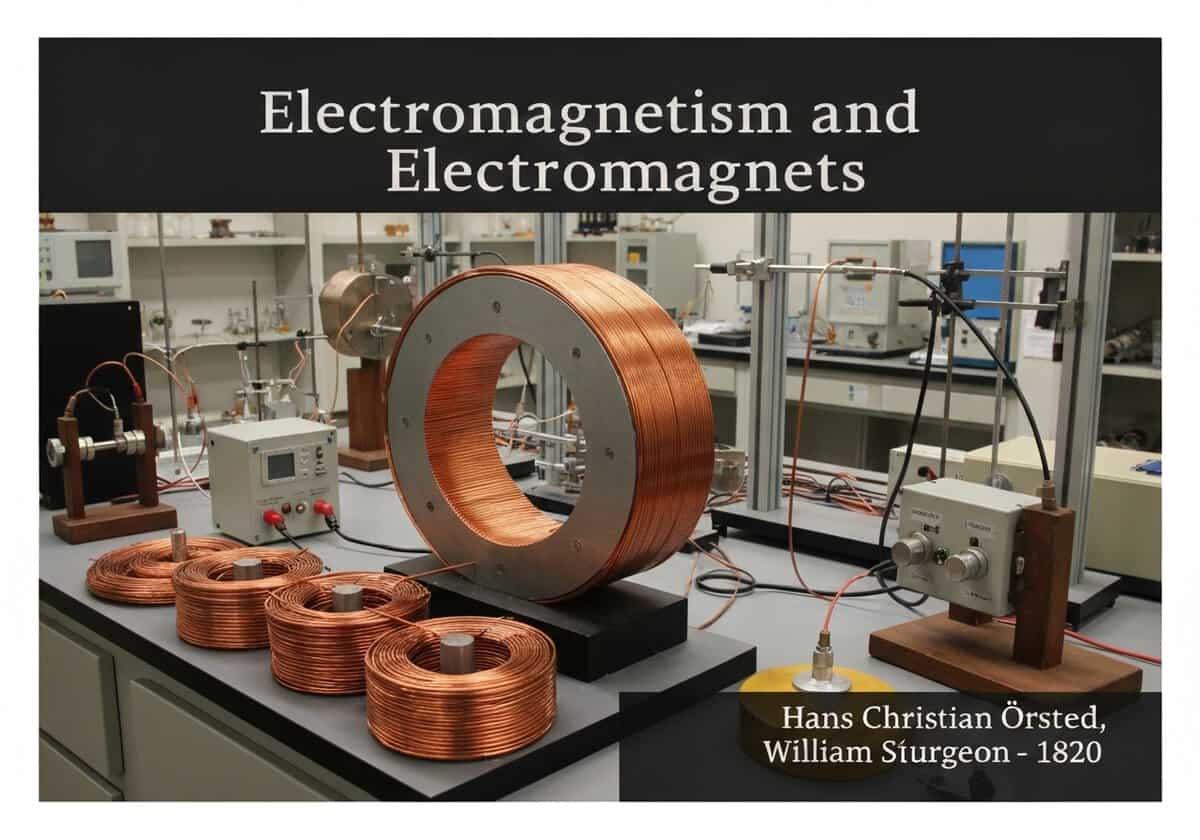
The direction of the magnetic field can be determined by the right-hand grip rule: if the fingers of the right hand are curled in the direction of the current flow around the coil, the thumb points in the direction of the magnetic north pole. The key advantage of an electromagnet over a permanent 磁石 is that its magnetic field can be rapidly changed by controlling the amount of electric current in the winding. This control is the basis for a vast array of modern テクノロジー, from simple relays that act as electrically-controlled switches to the powerful superconducting magnets used in MRI scanners and particle accelerators, which require enormous magnetic fields.