Product Design, Manufacturing & Innovation Resources
Home » US Fire Classification System (NFPA 10)

US Fire Classification System (NFPA 10)

1950
  • National Fire Protection Association (NFPA)
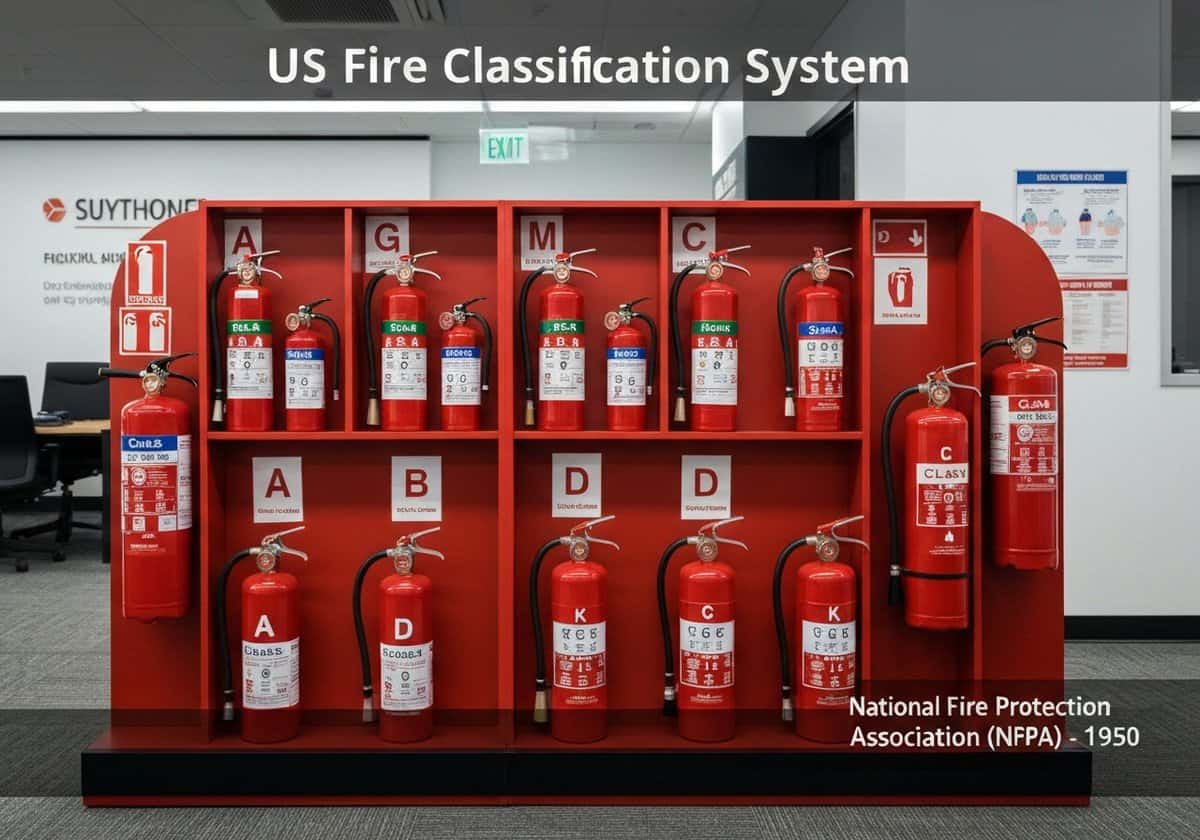
Fire extinguisher display categorized by US Fire Classification System for safety compliance.

(generated image for illustration only)

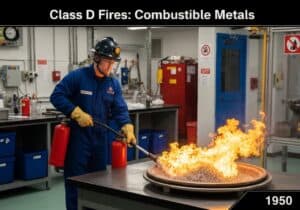
The United States fire classification system, standardized by NFPA 10, categorizes fires into five main classes based on the type of fuel. Class A includes ordinary combustibles like wood and paper. Class B covers flammable liquids and gases. Class C is for fires involving energized electrical equipment. Class D pertains to combustible metals, and Class K is for cooking oils and fats.
The NFPA 10 standard provides a foundational framework for fire safety in the United States. Its primary purpose is to simplify the selection of the correct extinguishing agent for a given fire, preventing the user from inadvertently making the situation worse. For example, using a water-based (Class A) extinguisher on a flammable liquid fire (Class B) could spread the burning fuel, and using it on an electrical fire (Class C) could lead to electrocution.

Each class corresponds to specific extinguishing methods. Class A fires are typically extinguished by the cooling effect of water or by smothering with dry chemicals. Class B fires require agents that cut off the oxygen supply, such as carbon dioxide, dry chemical, or foam. Class C fires require a non-conductive agent like carbon dioxide or a dry chemical; the primary goal is to de-energize the circuit before tackling the fire as a Class A or B. Class D fires need special dry powder agents that smother the fire without reacting with the burning metal. Class K, established in 1998 for commercial kitchens, uses wet chemical agents that cool the fire and produce a soapy foam layer (saponification) to prevent re-ignition of hot grease.

This classification system is visually represented by pictograms on fire extinguishers—a green triangle for A, a red square for B, a blue circle for C, a yellow star for D, and a black hexagon for K—making identification quick and intuitive during an emergency.

UNESCO Nomenclature: 3305
– Chemical engineering

Type

Abstract System

Disruption

Foundational

Usage

Widespread Use

Precursors

  • the fire triangle concept (fuel, heat, oxygen)
  • empirical knowledge of different materials’ combustion properties
  • development of early extinguishing agents like water, sand, and soda-acid
  • increased fire risks from industrialization and electrification

Applications

  • design and labeling of portable fire extinguishers
  • development of building fire codes and regulations
  • firefighter training and emergency response protocols
  • specification of automatic fire suppression systems (e.g., sprinklers)
  • workplace safety requirements mandated by osha

Patents:

NA

Potential Innovations Ideas

Due to scrapping bot traffic, currently more than 40k per day, this content is reserved to community members.
> Login < or > Register < (100% free) to access this, so as all other restricted content and tools.

Related to: NFPA 10, fire classification, class A, class B, class C, class D, class K, fire safety, fire extinguisher, USA.

Historical Context

US Fire Classification System (NFPA 10)

1950
1950
1950
1950
1950
1955
1958
1950
1950
1950
1950
1950
1955
1956
1960

(if date is unknown or not relevant, e.g. "fluid mechanics", a rounded estimation of its notable emergence is provided)

Related Invention, Innovation & Technical Principles

Full size images and downloads are only available, 100% free, for registered members.

> Login <