Product Design, Manufacturing & Innovation Resources
» 미국 화재 분류 시스템(NFPA 10)

미국 화재 분류 시스템(NFPA 10)

1950
  • National Fire Protection Association (NFPA)
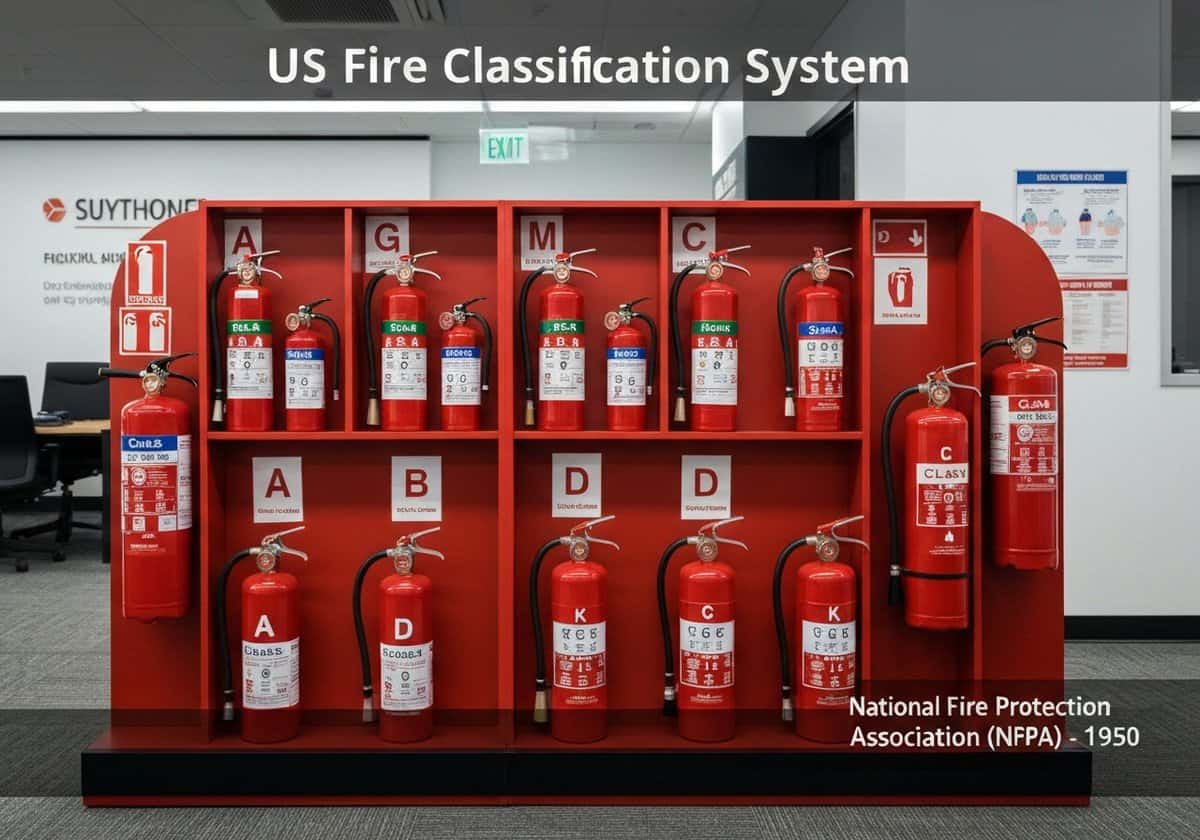
소화기 진열대는 안전 규정 준수를 위해 미국 화재 분류 시스템에 따라 분류되었습니다.

(설명을 위한 생성된 이미지입니다)

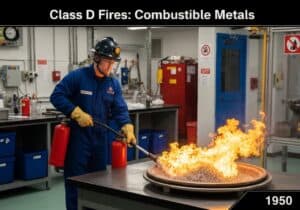
미국 소방협회(NFPA) 10 표준에 따라 제정된 미국 화재 분류 체계는 연료 유형에 따라 화재를 5가지 주요 등급으로 분류합니다. A급 화재는 목재, 종이와 같은 일반 가연성 물질을 포함합니다. B급 화재는 가연성 액체 및 기체를 포함합니다. C급 화재는 전기가 흐르는 전기 장비와 관련된 화재입니다. D급 화재는 가연성 금속에 관한 것이며, K급 화재는 식용유 및 지방에 관한 것입니다.
The NFPA 10 standard provides a foundational framework for fire safety in the United States. Its primary purpose is to simplify the selection of the correct extinguishing agent for a given fire, preventing the user from inadvertently making the situation worse. For example, using a water-based (Class A) extinguisher on a flammable liquid fire (Class B) could spread the burning fuel, and using it on an electrical fire (Class C) could lead to electrocution.

Each class corresponds to specific extinguishing methods. Class A fires are typically extinguished by the cooling effect of water or by smothering with dry chemicals. Class B fires require agents that cut off the oxygen supply, such as carbon dioxide, dry chemical, or foam. Class C fires require a non-conductive agent like carbon dioxide or a dry chemical; the primary goal is to de-energize the circuit before tackling the fire as a Class A or B. Class D fires need special dry powder agents that smother the fire without reacting with the burning metal. Class K, established in 1998 for commercial kitchens, uses wet chemical agents that cool the fire and produce a soapy foam layer (saponification) to prevent re-ignition of hot grease.

This classification system is visually represented by pictograms on fire extinguishers—a green triangle for A, a red square for B, a blue circle for C, a yellow star for D, and a black hexagon for K—making identification quick and intuitive during an emergency.

UNESCO Nomenclature: 3305
화학공학

유형

추상 시스템

분열

기초적인

용법

널리 사용됨

전구체

  • the fire triangle concept (fuel, heat, oxygen)
  • empirical knowledge of different materials’ combustion properties
  • development of early extinguishing agents like water, sand, and soda-acid
  • increased fire risks from industrialization and electrification

응용 프로그램

  • design and labeling of portable fire extinguishers
  • development of building fire codes and regulations
  • firefighter training and emergency response protocols
  • specification of automatic fire suppression systems (e.g., sprinklers)
  • workplace safety requirements mandated by osha

특허:

NA

잠재적 혁신 아이디어

현재 하루 4만 건이 넘는 봇 트래픽을 차단하기 위해 이 콘텐츠는 커뮤니티 회원만 이용할 수 있습니다.
> 로그인 < 또는 >등록 < 이 콘텐츠를 비롯한 모든 제한된 콘텐츠와 도구는 (100% 무료로) 이용할 수 있습니다.

Related to: NFPA 10, fire classification, class A, class B, class C, class D, class K, fire safety, fire extinguisher, USA.

역사적 맥락

미국 화재 분류 시스템(NFPA 10)

1950
1950
1950
1950
1950
1955
1958
1950
1950
1950
1950
1950
1955
1956
1960

(날짜를 알 수 없거나 관련이 없는 경우, 예를 들어 "유체역학"의 경우, 주목할 만한 등장 시기를 대략적으로 추정하여 제공합니다.)
관련 발명, 혁신 및 기술 원칙

고화질 이미지 및 다운로드는 등록된 회원에게만 100% 무료로 제공됩니다.

> 로그인 <