Product Design, Manufacturing & Innovation Resources
Home » Oxy-Acetylene Flame Types

Oxy-Acetylene Flame Types

1910
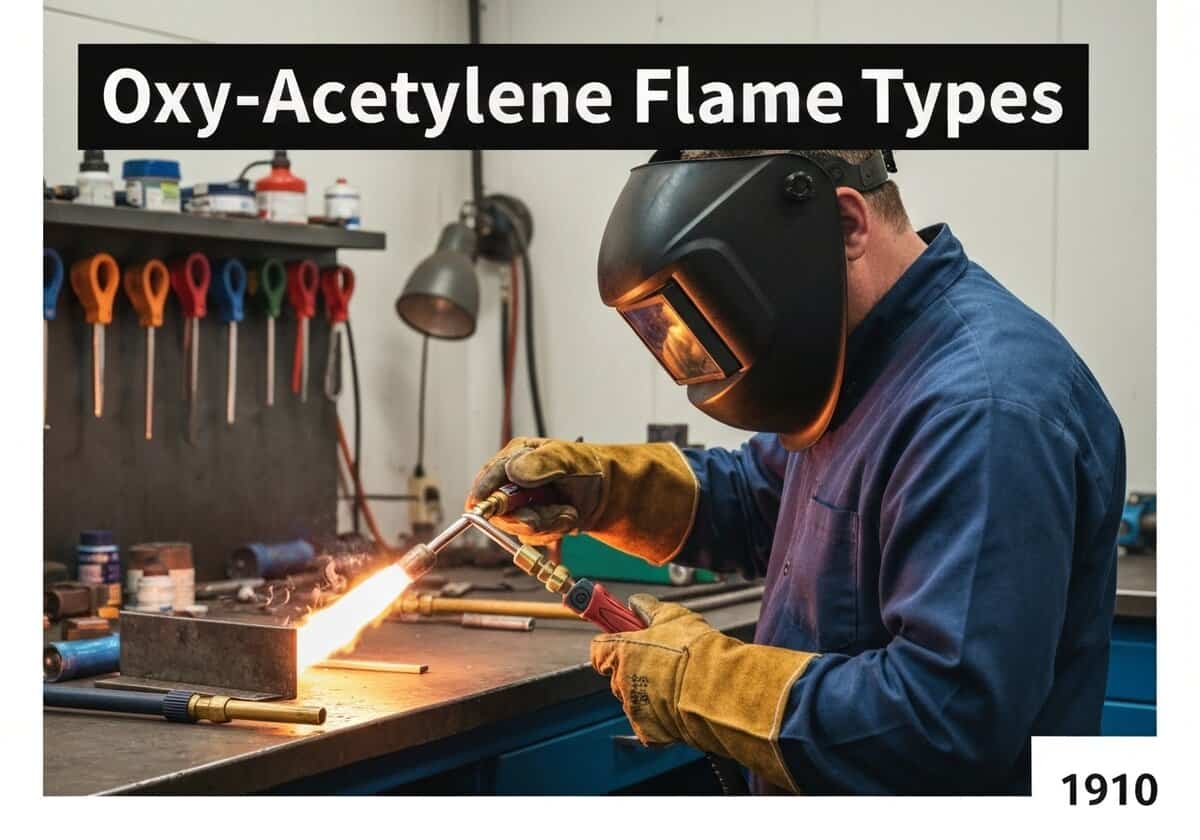
Oxy-acetylene welding process in mechanical engineering for steel fusion.

(generated image for illustration only)

The properties of an oxy-acetylene flame are controlled by the volumetric ratio of oxygen to acetylene. A neutral flame (ratio ≈ 1.1:1) is standard for steel welding. A carburizing or reducing flame (ratio 1.1:1) has excess oxygen, is hotter, and is used for braze-welding.


Each flame type has a distinct appearance and chemical effect on the molten weld pool. The neutral flame is characterized by a well-defined, bright inner cone and a fainter, bluish outer envelope. It provides heat without altering the chemistry of the base metal, making it ideal for most steel welding applications. The carburizing flame is identified by a third, feathery cone (the ‘acetylene feather’) extending from the inner cone. The length of this feather indicates the amount of excess acetylene. This flame introduces carbon into the molten weld pool, which can increase the hardness of the deposit, a desirable trait in hardfacing but detrimental to the ductility of mild steel. The oxidizing flame has a shorter, more pointed, and sometimes purplish inner cone and produces a characteristic hissing sound. The excess oxygen tends to burn out carbon and other alloying elements from the weld pool, which is generally undesirable for steel welding but can be useful for creating a strong oxide layer that promotes wetting in certain brazing and braze-welding operations on materials like copper and brass.

UNESCO Nomenclature: 3313
– Mechanical engineering and machinery

Type

Chemical Process

Disruption

Incremental

Usage

Widespread Use

Precursors

  • Invention of the adjustable oxy-acetylene torch with separate gas valves
  • Basic understanding of combustion stoichiometry
  • Empirical studies on the effects of flame chemistry on molten metals
  • Development of reliable pressure regulators for precise gas mixing

Applications

  • fusion welding of steels with a neutral flame
  • hardfacing operations to deposit wear-resistant materials using a carburizing flame
  • braze-welding of cast iron and certain non-ferrous metals with an oxidizing flame
  • welding high-carbon steels without losing carbon content
  • silver soldering and brazing operations
  • glass working and lampworking

Patents:

NA

Potential Innovations Ideas

Due to scrapping bot traffic, currently more than 40k per day, this content is reserved to community members.
> Login < or > Register < (100% free) to access this, so as all other restricted content and tools.

Related to: neutral flame, carburizing flame, oxidizing flame, flame adjustment, oxygen-acetylene ratio, welding, hardfacing, braze-welding, stoichiometry, weld pool.

Historical Context

Oxy-Acetylene Flame Types

1900
1903
1906
1910
1910
1910
1920
1900
1900
1903-05-10
1910
1910
1910
1910
1920

(if date is unknown or not relevant, e.g. "fluid mechanics", a rounded estimation of its notable emergence is provided)

Related Invention, Innovation & Technical Principles

Full size images and downloads are only available, 100% free, for registered members.

> Login <