Product Design, Manufacturing & Innovation Resources
Home » Hydrostatic Test

Hydrostatic Test

1850
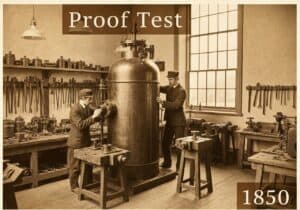
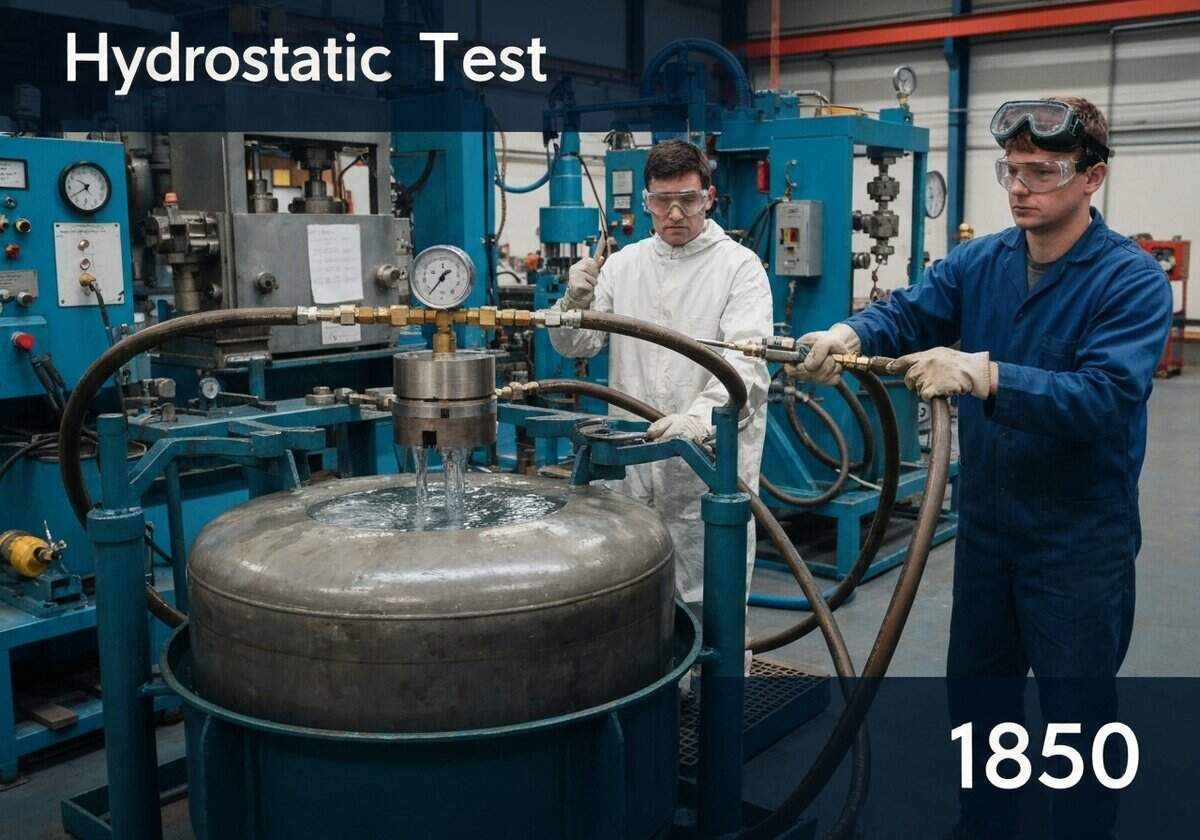
Hydrostatic testing apparatus for pressure vessels in materials science.

(generated image for illustration only)

A hydrostatic test is a specific type of proof test for pressure vessels like pipes, boilers, and gas cylinders. The vessel is filled with a nearly incompressible liquid, typically water, and pressurized to a specified test pressure. This method is preferred over pneumatic testing because it requires less energy release to achieve the same pressure, making it very significantly safer if a rupture occurs.

The hydrostatic test, or hydrotest, is a cornerstone of safety in industries dealing with pressurized systems. The procedure involves completely filling the component with a liquid, ensuring all air is purged, and then using a pump to increase the pressure to the required test level, which is always significantly higher than the maximum allowable working pressure (MAWP). The pressure is held for a predetermined duration while the vessel is inspected for leaks or permanent changes in shape. The safety advantage of using a liquid like water is rooted in its low compressibility. If the vessel fails and ruptures, the pressurized liquid will only expand slightly, resulting in a rapid pressure drop and a simple leak. In contrast, a compressed gas (as in a pneumatic test) stores a vast amount of potential energy. A rupture during a pneumatic test would lead to a violent, explosive release of this energy, propelling shrapnel and creating a dangerous blast wave. The energy stored in compressed water is orders of magnitude less than that stored in air at the same pressure.

The test not only checks for leaks but also serves as a proof test for the vessel’s structural integrity. Any plastic deformation detected after the pressure is released (e.g., by measuring the volume of water displaced before and after the test) indicates that the material has yielded, and the component is rejected. This ensures that the vessel can withstand pressure spikes without failing.

UNESCO Nomenclature: 3322
– Materials science

Type

Engineering Test Method

Disruption

Substantial

Usage

Widespread Use

Precursors

  • invention of the steam engine and subsequent boiler technology
  • understanding of fluid mechanics and pressure (pascal’s principle)
  • development of pressure gauges and pumps
  • early boiler explosion incidents driving the need for safety regulations

Applications

  • testing of gas cylinders (scuba, medical, industrial)
  • pipeline integrity testing for oil and gas
  • certification of boilers and heat exchangers
  • leak testing of plumbing systems
  • verification of fire extinguisher casings

Patents:

NA

Potential Innovations Ideas

Due to scrapping bot traffic, currently more than 40k per day, this content is reserved to community members.
> Login < or > Register < (100% free) to access this, so as all other restricted content and tools.

Related to: hydrostatic test, hydrotest, pressure vessel, proof test, safety, incompressible fluid, boiler, gas cylinder, pipeline, leak detection.

Historical Context

Hydrostatic Test

1761
1807-01-01
1850
1850
1850
1850
1860
1750
1788
1834
1850
1850
1850
1850
1867

(if date is unknown or not relevant, e.g. "fluid mechanics", a rounded estimation of its notable emergence is provided)

Related Invention, Innovation & Technical Principles

Full size images and downloads are only available, 100% free, for registered members.

> Login <