Product Design, Manufacturing & Innovation Resources
Home » Deep Homology

Deep Homology

1997
  • Neil Shubin
  • Cliff Tabin
  • Sean B. Carroll
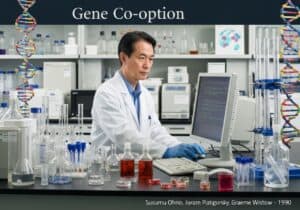
Laboratory scene showcasing genetic research on PAX6 gene in evolutionary genetics.

(generated image for illustration only)

Deep homology describes cases where morphologically disparate features in different species, long considered analogous, are found to be controlled by the same conserved “toolkit” genes. A classic example is the PAX6 gene, which initiates eye development in species as different as mice and fruit flies, despite their eyes having vastly different structures and independent evolutionary origins.

The concept of deep homology bridges the classical biological concepts of homology (similarity due to shared ancestry of a structure) and analogy (similarity due to convergent evolution of a function). It reveals a third possibility: structures that are themselves analogous (like the compound eye of a fly and the camera-type eye of a mouse) can be built using homologous genes and developmental pathways inherited from a common ancestor. This ancestor may not have possessed the final structure (e.g., a complex eye) but had the precursor genetic circuit for, perhaps, a simple light-sensing organ.

The discovery that the fly gene ‘eyeless’ and the mouse gene ‘Pax6’ were not only homologous but also functionally interchangeable—the mouse gene could induce ectopic eyes in a fly—was a stunning demonstration of this principle. It showed that the master control switch for eye development was conserved for over 500 million years. Other examples abound, such as the Distal-less (Dll) gene family’s role in appendage formation across protostomes and deuterostomes. Deep homology implies that the genetic toolkit provides a set of reusable subroutines that evolution can deploy in different combinations and contexts to generate novel structures, explaining both the underlying unity and the vast diversity of life.

UNESCO Nomenclature: 2411
– Evolution

Type

Abstract System

Disruption

Incremental

Usage

Widespread Use

Precursors

  • the genetic toolkit concept
  • classical definitions of homology and analogy by Richard Owen
  • discovery of the function of the eyeless/Pax6 gene by Walter Gehring’s lab
  • advances in gene knockout and transgenic technology
  • comparative anatomy

Applications

  • identifying genetic targets for treating congenital eye disorders like aniridia
  • understanding the origins of complex organs
  • providing evidence for a single origin of animal life (monophyly)
  • research into limb regeneration by studying conserved developmental pathways
  • comparative genomics to trace the evolutionary history of traits

Patents:

NA

Potential Innovations Ideas

Due to scrapping bot traffic, currently more than 40k per day, this content is reserved to community members.
> Login < or > Register < (100% free) to access this, so as all other restricted content and tools.

Related to: deep homology, PAX6, eyeless, developmental genetics, homology, analogy, convergent evolution, genetic toolkit, evo-devo, Neil Shubin.

Historical Context

Deep Homology

1990
1990
1990
1997
2000
1988
1990
1990
1997
2000
2008

(if date is unknown or not relevant, e.g. "fluid mechanics", a rounded estimation of its notable emergence is provided)

Related Invention, Innovation & Technical Principles

Full size images and downloads are only available, 100% free, for registered members.

> Login <