दशमलव न्यूनीकरण समय (डी-मान)
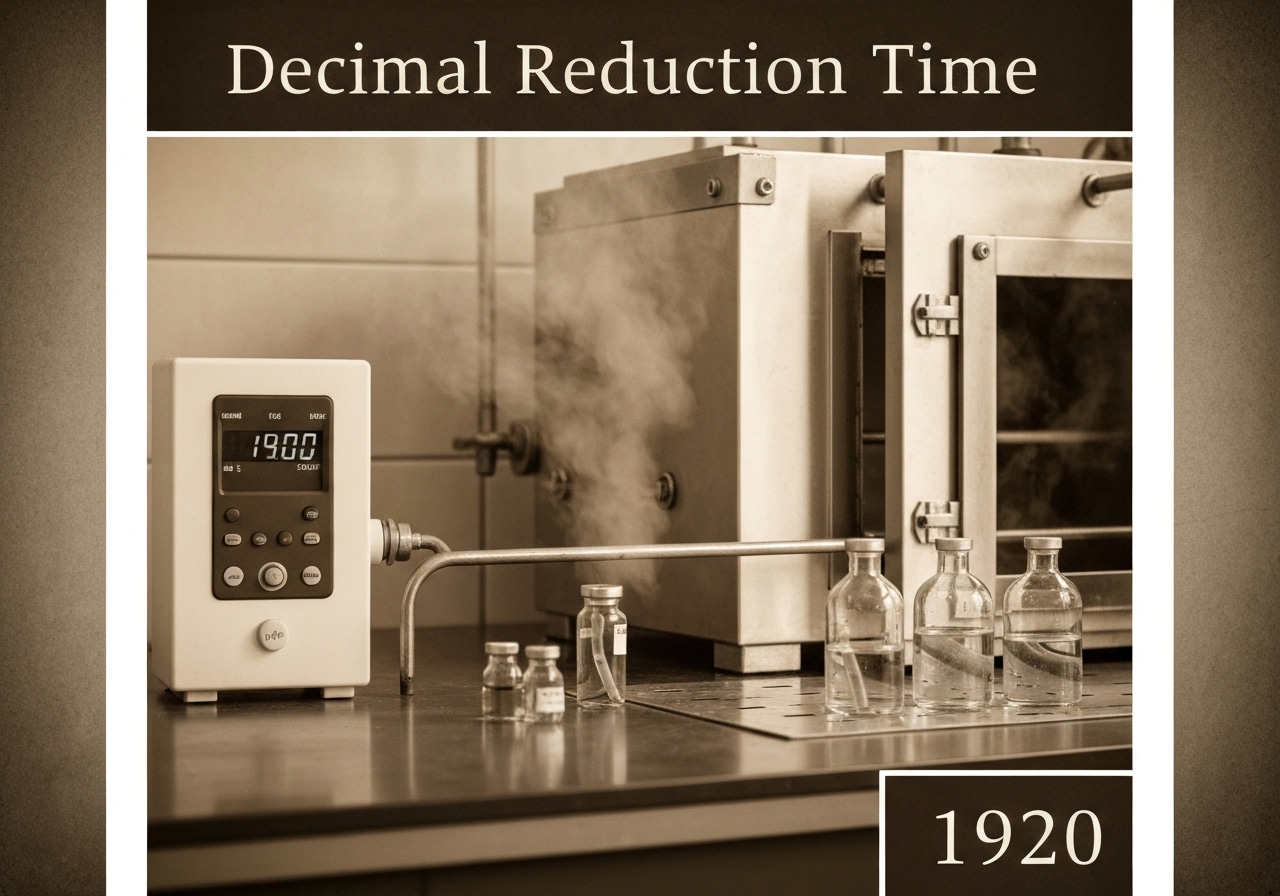
डी-वैल्यू किसी विशिष्ट तापमान पर लक्षित सूक्ष्मजीवों की 90% (या एक लॉग कमी) आबादी को नष्ट करने के लिए आवश्यक समय है। यह थर्मल स्टेरिलाइज़ेशन में एक महत्वपूर्ण पैरामीटर है, जो सूक्ष्मजीवों के ताप प्रतिरोध को मापता है। उदाहरण के लिए, यदि [latex]10^6[/latex] बीजाणुओं की आबादी का डी-वैल्यू 2 मिनट है, तो इसे [latex]10^5[/latex] तक कम करने में 2 मिनट लगते हैं।
The D-value, or decimal reduction time, is a cornerstone of thermal processing science, providing a precise measure of an organism’s heat resistance. It is specific to a particular microorganism under a defined set of conditions (temperature, pH, water activity, etc.). The value is derived from a microbial survivor curve, which is a plot of the logarithm of the number of surviving organisms versus the exposure time at a constant temperature. For a first-order reaction, this plot yields a straight line, and the D-value is the negative reciprocal of the slope. Mathematically, it represents the time required for a 90% reduction in the microbial population. For example, a D-value of 1.5 minutes at 121°C ([latex]D_{121}[/latex]) for Clostridium botulinum spores means that for every 1.5 minutes of exposure at that temperature, the population of these spores will decrease by a factor of ten. To achieve a 12-log reduction (a standard for low-acid canned foods, known as the ’12D concept’), the required processing time would be [latex]12 \times D[/latex], or [latex]12 \times 1.5 = 18[/latex] minutes. This ensures an extremely high probability that no viable C. botulinum spores remain. The D-value is critical for designing sterilization processes that are effective enough to ensure safety but not so harsh that they degrade the quality of the product, whether it’s food, a pharmaceutical, or a medical device. Different microorganisms have vastly different D-values; vegetative bacteria are typically much less resistant (lower D-value) than bacterial endospores.
ऊष्मीय प्रतिरोध को मापने की अवधारणा 20वीं शताब्दी के आरंभिक दौर में, विशेष रूप से डिब्बाबंद खाद्य पदार्थों के उद्योग में किए गए अग्रणी कार्यों से उभरी। डब्ल्यू.डी. बिगेलो और सी. ओलिन बॉल जैसे वैज्ञानिकों ने खाद्य संरक्षण के लिए सरल परीक्षण-और-त्रुटि विधियों से आगे बढ़कर नए तरीके खोजने का प्रयास किया। उन्होंने व्यवस्थित अध्ययन करके ऐसे समय और तापमान के संयोजन का निर्धारण किया जो खाद्य पदार्थों को खराब करने वाले और रोगजनक जीवों, विशेष रूप से क्लोस्ट्रीडियम बोटुलिनम को नष्ट करने के लिए आवश्यक थे। इस शोध से 'थर्मल डेथ टाइम' (टीडीटी) वक्र का विकास हुआ और डी-मान तथा संबंधित जेड-मान (जो डी-मान की तापमान निर्भरता का वर्णन करता है) को औपचारिक रूप दिया गया। इस मात्रात्मक दृष्टिकोण ने खाद्य प्रसंस्करण को एक कला से विज्ञान में परिवर्तित कर दिया, जिससे डिब्बाबंद खाद्य पदार्थों का सुरक्षित और बड़े पैमाने पर उत्पादन संभव हुआ और यह विभिन्न उद्योगों में आधुनिक नसबंदी सत्यापन का आधार बना। इसने सूक्ष्मजीव प्रतिरोध और प्रक्रिया घातकता का वर्णन करने के लिए एक सार्वभौमिक भाषा प्रदान की।
UNESCO Nomenclature: 2401
माइक्रोबायोलॉजी
शगुन
- अभिक्रिया दरों की तापमान निर्भरता का वर्णन करने वाला आर्हेनियस समीकरण
- प्रथम-कोटि अभिक्रिया गतिकी
- बैक्टीरिया की तापीय मृत्यु पर बिगेलो और एस्टी द्वारा किए गए अध्ययन
आवेदन
- खाद्य उद्योग में पाश्चुरीकरण और नसबंदी चक्रों का डिजाइन और सत्यापन करना
- चिकित्सा उपकरणों के लिए नसबंदी समय की गणना करना
- पर्यावरण सूक्ष्मजीव विज्ञान अध्ययन
- दवा निर्माण प्रक्रिया नियंत्रण
संभावित नवाचार विचार
बॉट ट्रैफिक को कम करने के कारण, जो वर्तमान में प्रति दिन 40,000 से अधिक है, यह सामग्री केवल समुदाय के सदस्यों के लिए आरक्षित है।
> लॉगिन < या > रजिस्टर < इस सामग्री और अन्य सभी प्रतिबंधित सामग्रियों और उपकरणों तक पहुंच (100% निःशुल्क) है।
संबंधित विषय: डी-मान, दशमलव कमी समय, तापीय नसबंदी, सूक्ष्मजीव विज्ञान, लॉग कमी, ताप प्रतिरोध, खाद्य प्रसंस्करण, क्लोस्ट्रीडियम बोटुलिनम, गतिकी, सत्यापन।