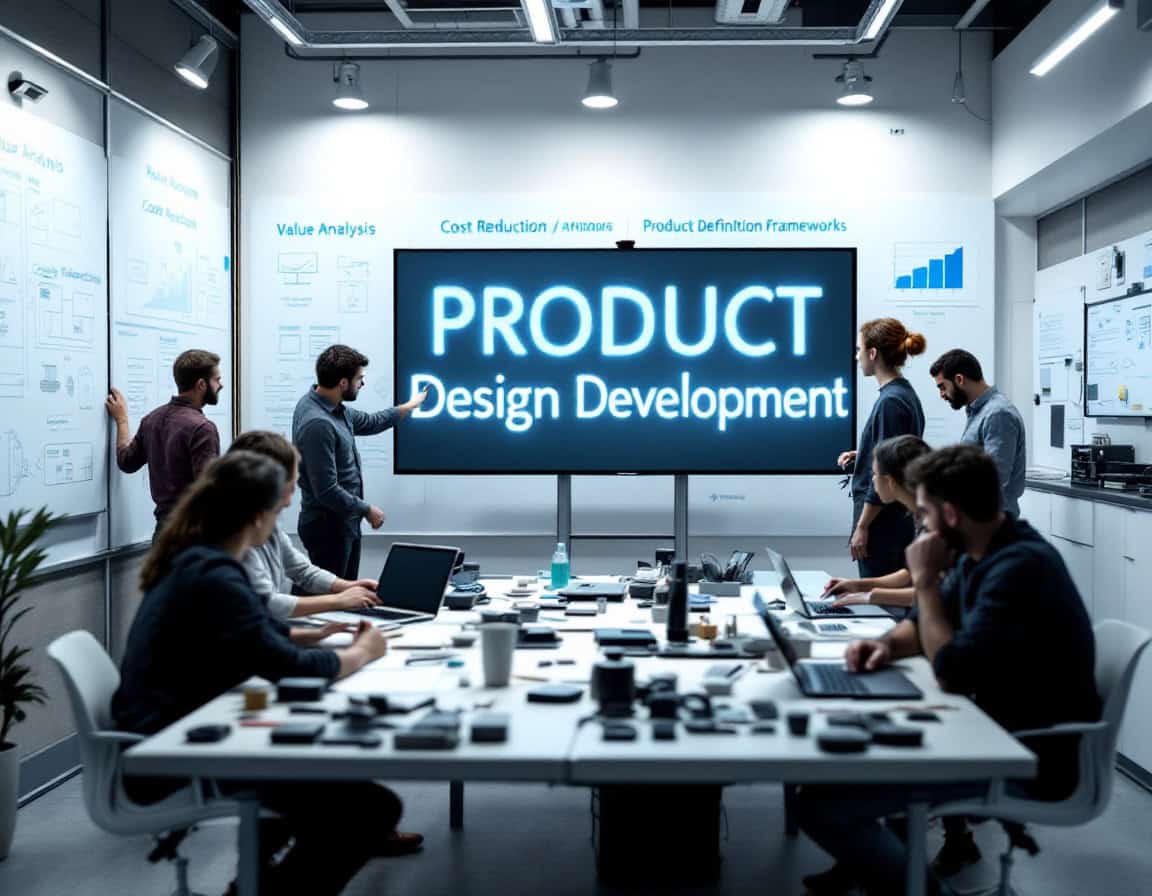

Once a part works, a harder question follows: does the product deserve to be built and sold at all, and Level 2 shifts attention from function to that judgment. It opens with value analysis, the discipline of separating a feature’s cost from the value a customer assigns to it, then moves through 降低成本 方法论, technology readiness assessment and the risk benefit calculations that justify a design decision to a review board. It closes on product definition frameworks, from minimum viable product through minimum marketable and minimum awesome product, inside the phase gate structure that governs how a concept survives from sketch to production release.
Engineers who stop at Level 1 can build a correct part but struggle to defend its cost or its place in a 路线图. This level is built for engineers moving into lead or program owner roles, and for product developers who need a shared language with finance and 营销 when a project’s scope or budget is challenged. Manufacturers gain directly, since 价值分析 and cost reduction applied early in a program remove cost that becomes far more expensive to remove once tooling exists.