

في مجال الألعاب والتسويق، يتم قياس تطبيق النظرية النفسية وتنقيحها وتضخيمها من خلال تحليل البيانات والإحصائيات. حيث يتم جمع الأنماط السلوكية لملايين المستخدمين ومعالجتها، مما يسمح بإحصائيات تصديق من خيارات التصميم. توفر تقنيات مثل اختبار A/B دليلاً تجريبيًا على المحفزات الأكثر فعالية في تحفيز المستخدم على اتخاذ إجراء ما، بينما يسمح تقسيم اللاعبين بتقديم محتوى مخصص يتناسب مع ملفات تعريف سلوكية محددة.
يمكن للتحليلات التنبؤية ونماذج التعلُّم الآلي تحديد متى يُحتمل أن يترك اللاعب اللعبة أو يقوم بالشراء، مما يتيح التدخلات الاستباقية والآلية. هذا الدمج بين العلوم الاجتماعية والتحقق من صحة البيانات يخلق دورة قوية حيث يتم اختبار الفرضيات النفسية على نطاق واسع، ويتم استخدام الرؤى الناتجة لتحسين أنظمة الألعاب باستمرار للاحتفاظ باللاعبين وتحقيق الدخل.
هذا المقال هو الجزء الأول من 3 أجزاء:
- الحيل القائمة على البيانات والحيل الإحصائية للألعاب والتسويق
- حيل العلوم المعرفية للألعاب والتسويق
- المزيد من حيل العلوم المعرفية للألعاب والتسويق
الجزء #1: الحيل القائمة على البيانات والحيل الإحصائية للألعاب والتسويق
1. اختبار أ/ب
هذا طريقة يعتمد على التجريب المضبوط لمراقبة سلوك المستخدم بشكل مباشر، وإزالة تحيز المطور من قرارات التصميم. الآلية النفسية التي تلعب دورها هي قياس تفضيل اللاوعي. قد لا يعرف المستخدمون بوعيهم سبب تفضيلهم لتصميم على آخر، لكن تصرفاتهم تكشف عن استجابة أكثر تفضيلاً لمحفز معين، سواء كان لوناً أو شكلاً أو سعراً. وهذا يوفر دليلاً تجريبيًا على خيارات التصميم التي تؤدي إلى زيادة المشاركة أو التحويل.
يتطلب التنفيذ وجود واجهة خلفية قوية لتكنولوجيا المعلومات قادرة على تقسيم قاعدة اللاعبين المباشرين إلى مجموعات متميزة (المجموعة أ، والمجموعة ب، وما إلى ذلك) وتقديم إصدارات مختلفة من عنصر اللعبة لهم. ثم يتم تطبيق التحليل الإحصائي على البيانات التي تم جمعها من هذه المجموعات. ويتضمن ذلك حساب مقاييس مثل معدلات التحويل أو وقت المشاركة أو الاحتفاظ، واستخدام اختبارات الدلالة الإحصائية (مثل اختبارات تشي تربيع أو اختبارات ت) للتأكد من أن الاختلافات الملحوظة ليست ناتجة عن صدفة عشوائية. تحدث معالجة البيانات هذه على الخوادم التي تجمع سجلات الأحداث من ملايين عملاء اللعبة وتجمعها.
تطبيق اللعبة: في لعبة ألغاز على الهاتف المحمول، يرغب المطورون في زيادة استخدام "القنبلة". لقد اختبروا أيقونتين: إحداهما كرة سوداء كلاسيكية ذات فتيل، والأخرى بلورة غامضة نابضة. لمدة أسبوع واحد، 50% من اللاعبين الجدد يرون الكرة (أ) و50% يرون البلورة (ب). يسجّل الخادم معدل الاستخدام لكل لاعب، ويُظهر التحليل الإحصائي أن البلورة الغامضة تُستخدم 15% أكثر من اللاعبين، مما يدفع إلى تطبيقها بشكل دائم.
يمكنك العثور على مراجعة كاملة حول منهجية اختبار A/B:

2. تجزئة اللاعبين

يعمل تقسيم اللاعبين من خلال جذب هوية الفرد وأسلوب لعبه. من خلال تجميع المستخدمين، يمكن للعبة تقديم محتوى يتماشى مع دوافعهم الجوهرية. فاللاعب الذي يتم تصنيفه على أنه "مستكشف" سيستجيب بشكل إيجابي للمهام التي تنطوي على الاستكشاف، بينما سيكون اللاعب "المنافس" أكثر تفاعلاً مع لوحات المتصدرين ومحتوى لاعب ضد لاعب. يخلق هذا التخصيص شعورًا بأن اللعبة تفهم المستخدم وتلبي احتياجاته، مما يعزز ارتباطه بها.
هذه العملية كثيفة البيانات، وتبدأ بجمع كميات هائلة من تصرفات اللاعبين، مثل الوقت الذي يقضيه اللاعبون في أوضاع لعب مختلفة، وسجل الشراء، والتفاعلات الاجتماعية. ثم تُستخدم خوارزميات التعلم الآلي، وتحديداً خوارزميات التجميع مثل K-Means، لتحديد الأنماط في هذه البيانات وتجميع اللاعبين في شرائح متميزة. يجب أن تدعم البنية التحتية للشبكة وضع علامات على البيانات واسترجاعها في الوقت الفعلي حتى يتمكن عميل اللعبة من طلب وعرض المحتوى أو العروض المناسبة لشريحة معينة من اللاعبين.
تطبيق اللعبة: تجمع لعبة محاكاة الفضاء بيانات عن أنشطة اللاعبين. وتحدد شريحة "التاجر" التي تستخدم السوق بشكل متكرر وتطير سفن النقل. ثم تتلقى هذه الشريحة بعد ذلك موجزات إخبارية مخصصة داخل اللعبة حول التحولات في أسعار السلع والمهام الحصرية لنقل السلع النادرة، وهو محتوى لا يظهر للاعبين في شريحة "الطيار المقاتل".
3. تحليل القمع
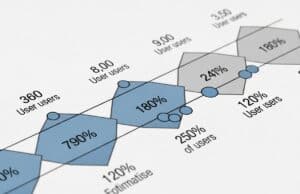
إن التأثير النفسي لتحليل مسار التحويل متجذر في تحسين رحلة المستخدم وتقليل الاحتكاك. من خلال تحديد النقاط التي يتوقف فيها عدد كبير من المستخدمين عن التقدم (نقاط التوقف)، يمكن للمطورين معالجة السبب الكامن وراء ذلك، والذي غالباً ما يكون الإحباط أو الارتباك أو الملل. إن تهدئة هذه النقاط الصعبة في تجربة المستخدم تمنع المشاعر السلبية التي تؤدي إلى التخلي عن اللعبة وتحافظ على حالة من الزخم والتفاعل مع اللاعب.
من الناحية الرياضية، القمع هو تصور لنسب تدفق المستخدم من خطوة إلى أخرى. على سبيل المثال,
- قد تحتوي الخطوة 1 (البرنامج التعليمي المكتمل) على 100% من المستخدمين,
- قد تحتوي الخطوة 2 (الوصول إلى المستوى 5) على 80%,
- قد تحتوي الخطوة 3 (إجراء أول عملية شراء) على 5%.
يتمثل دور البنية التحتية لتكنولوجيا المعلومات في تسجيل إكمال كل حدث رئيسي محدد مسبقًا لكل مستخدم على حدة. ثم تقوم منصات تحليل البيانات بالاستعلام عن مجموعة البيانات الضخمة هذه لحساب معدلات التحويل بين كل خطوة متسلسلة، وتصور مسار التحويل وتسلط الضوء على أكبر نسبة انخفاض.
تطبيق اللعبة: وهي لعبة بناء مدن تلاحظ انخفاضًا هائلاً في عدد اللاعبين بعد مهمة "بناء محطة توليد الطاقة" التعليمية. من خلال تحليل مسار التحويل، يفترضون أن الخطوة معقدة للغاية بالنسبة للمستخدمين الجدد. قاموا بتقسيم المهمة إلى ثلاث مهام أصغر وأبسط: "بناء توربينات رياح" و"توصيل خط كهرباء" و"تشغيل مبنى". بعد التغيير، ينخفض الانخفاض في تلك المرحلة إلى 20%.
4. الخرائط الحرارية
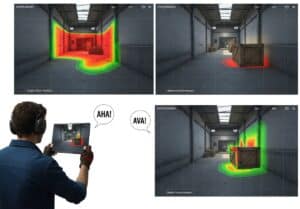
تترجم الخرائط الحرارية سلوك اللاعب الإجمالي إلى تنسيق مرئي بديهي يستغل كفاءة الدماغ البشري في التعرف على الأنماط. إن رؤية منطقة حمراء "ساخنة" على الخريطة حيث يموت اللاعبون بشكل متكرر تنقل على الفور مشاكل التصميم دون الحاجة إلى قراءة مخططات معقدة. يتيح ذلك للمصممين التعاطف مع تجربة اللاعب الجماعية للإحباط أو الصعوبة في منطقة معينة، مما يؤدي إلى توجيه أكثر استهدافًا وفعالية تغيير التصميم.
Technically, heatmaps are generated by capturing the X, Y (and sometimes Z) coordinates of specific player events, such as deaths, clicks, or ability usage, and storing them in a database. This can generate millions of data points per day. A rendering layer then aggregates these coordinates into a 2D or 3D grid. Statistical density functions are applied to this grid, assigning a color value (e.g., from blue for low density to red for high density) to each cell based on the number of events it contains. This visualization is then overlaid onto the game map for analysis.
تطبيق اللعبة: في لعبة التصويب من منظور الشخص الأول، مستوى مصمم reviews a heatmap of player deaths on a warehouse map. They see a bright red spot in a long hallway, indicating an unusually high number of deaths. They realize a single sniper position has an unfair line of sight. They add a large crate to the middle of the hallway to provide cover, and subsequent heatmaps show the death concentration has dissipated.

5. Predictive Analytics
This technique leverages the psychological principle of proactive intervention. By identifying a player’s likely future behavior, the system can act to reinforce positive outcomes or prevent negative ones. For a player predicted to make a purchase, presenting a relevant offer feels like a serendipitous and valuable opportunity. For a player predicted to churn (quit the game), receiving a special bonus or a message from a “friend” can re-engage them by creating a renewed sense of value or social obligation.
Predictive analytics is built on machine learning models, particularly classification and regression models. These models are trained on historical data from thousands of players who have already churned or made purchases. The models identify complex patterns in gameplay metrics (e.g., session length decrease, social interaction drop) that are statistically correlated with those outcomes. The IT system then runs these models on the data of the current player base in near-real-time to assign a “churn probability” or “purchase propensity” score to each user, triggering automated in-game actions when a score crosses a certain threshold.
Game example: a monster-collection game uses a model that predicts player churn. When a player’s churn probability score exceeds 75%, the system automatically triggers a “special event” for them: an in-game character sends them a message saying, “We miss you! Here is a rare Incubator to help you hatch your next creature.” This targeted incentive aims to prevent the player from leaving the game.
6. Dynamic Difficulty Adjustment

Dynamic difficulty adjustment (DDA) targets the psychological state of “flow,” where a player is fully immersed and the challenge level perfectly matches their skill. If a game is too hard, it causes frustration; if it’s too easy, it leads to boredom. DDA seeks to keep the player in that optimal channel of engagement by subtly increasing or decreasing the challenge, making the player feel competent and constantly stimulated without becoming overwhelmed.
The system works by defining and tracking key performance metrics (KPMs) for a player, such as accuracy percentage, level completion time, or resource collection rate. A statistical algorithm, often a simple rule-based system or a more complex Bayesian model, compares the player’s current KPMs against a pre-defined “ideal performance” baseline. If the player is performing too well, the system might increase enemy health or decrease resource availability. The network ensures these adjustments are made seamlessly from the server without interrupting gameplay.
تطبيق اللعبة: in a racing game, if a player wins three races in a row by more than 10 seconds each, the DDA system subtly increases the AI opponents’ top speed and cornering ability in the next race. Conversely, if a player loses three consecutive races, the system might slightly decrease the opponents’ aggression, keeping the races competitive and engaging.
7. Personalized In-Game Offers

Personalization taps into the “relevance” principle; an offer is more likely to be accepted if it aligns with the individual’s existing behaviors and preferences. Seeing an offer for a sword a player has inspected multiple times in the past creates a feeling of being understood and catered to. This reduces the perceived “spamminess” of monetization and frames the purchase as a logical next step in their personal game journey.
This is achieved by creating a detailed profile of each player’s in-game behavior, stored in a server-side database. This includes data on items they have used, characters they play, and even items they have previewed but not bought. When an offer opportunity arises, a server-side script queries this profile. Using simple rule-based logic or a machine learning recommendation engine, it selects the most relevant offer from a catalog of possibilities to present to the player via the game’s واجهة المستخدم.
تطبيق اللعبة: a role-playing game tracks that a player almost exclusively plays as a Mage character. When a weekend sale begins, instead of showing a generic “50% Off” banner, the game presents that player with a specific offer: “50% Off the Archmage’s Robe of Power,” an item directly relevant to their playstyle, increasing the chance of a purchase.
8. Churn Prediction and Prevention
This leverages loss aversion, the psychological idea that people are more motivated to avoid a loss than to acquire a gain.

When the system predicts a player is about to churn, it can intervene. The intervention—a bonus, a new challenge, a message—frames continued play as avoiding the loss of progress, community standing, or a special opportunity. This can be more powerful than a simple reward, as it reframes the decision to quit as an active loss.
The technical implementation is nearly identical to predictive analytics but is specifically focused on the “churn” outcome. Machine learning models are trained on historical data of players who have quit, identifying leading indicators such as declining session frequency, shorter session durations, or reduced social interaction. The IT system assigns a churn risk score to each active player. An automated marketing or content delivery system is configured to trigger specific retention campaigns (e.g., push notifications, in-game mail with gifts) for players whose risk score crosses a critical threshold.
تطبيق اللعبة: in a social farming game, the system flags a high-level player whose login frequency has dropped from daily to once a week. The system automatically sends a push notification to their phone: “Your friend Beatrice just sent you a ‘Golden Tractor Fuel’ gift! Log in within 24 hours to claim it before it expires.” This combines a gift with social ضغط and urgency to prevent churn.
9. Time Series Analysis

Time series analysis allows developers to understand the rhythm and pulse of their game community, tapping into the collective behavior of the player base. By identifying weekly or seasonal patterns, they can align game events with times of naturally high engagement to maximize participation. This creates a sense of a living world that has its own tempo, encouraging players to align their own schedules with the game’s, for example, by logging in on weekends for special events.
This is a purely statistical technique that models time-stamped data points to identify trends, seasonality, and cyclical patterns. Data such as daily active users, revenue, or logins per hour are plotted over time. Mathematical models like ARIMA (AutoRegressive Integrated Moving Average) can then be applied to this data to forecast future behavior. This requires a robust data warehousing solution capable of storing and processing massive volumes of historical, time-stamped event data.
تطبيق اللعبة: the developers of an online multiplayer game use time series analysis on their player login data. They discover that logins peak every Saturday at 8 PM UTC. To capitalize on this, they schedule their most important weekly world boss event to begin every Saturday at 8:15 PM UTC, ensuring maximum player participation and excitement.
10. Cohort Analysis
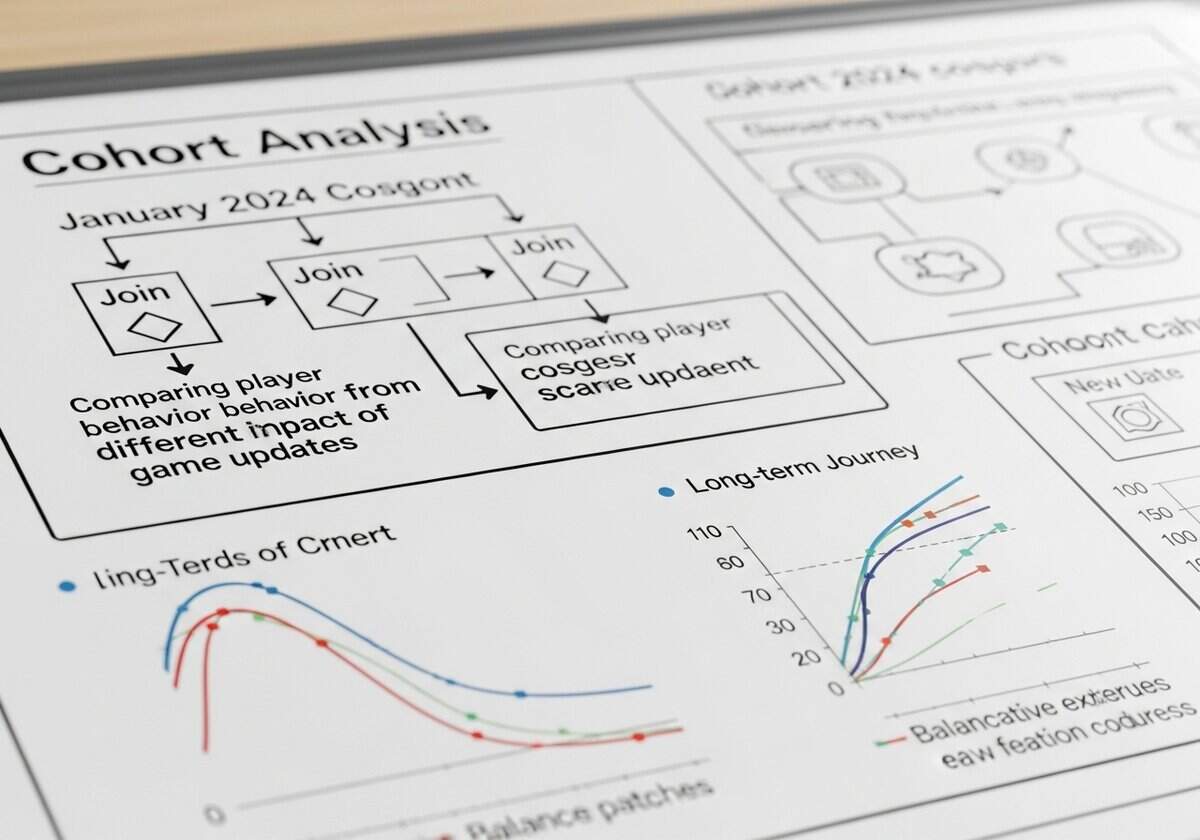
Cohort analysis works by framing player behavior in the context of a shared starting experience. By comparing the “Week 1” players from January with the “Week 1” players from February, developers can isolate the impact of game updates. This allows them to understand how specific changes affect the long-term journey of a new user. Psychologically, it helps developers build empathy for the “new player experience” of a specific era, understanding how a particular balance patch or new feature shaped that group’s collective journey.
The method involves grouping users based on a shared characteristic, most often their join date (e.g., the “January 2024 cohort”).
The IT infrastructure must tag every user with their cohort identifier upon creation. Then, a database can be queried to track the behavior of these specific groups over time. For example, a query might calculate the percentage of the January cohort that was still active after 30, 60, and 90 days, and compare those retention curves to the February cohort’s.
تطبيق اللعبة: a fantasy role-playing game released a major “pets” update on March 1st. Using cohort analysis, they compare the 30-day retention of the “February Cohort” (who leveled without pets) to the “March Cohort” (who leveled with pets). They find the March Cohort’s retention is 10% higher, validating that the new pet system has a positive long-term impact on player engagement.
This post continues with Part #2: cognitive science tricks for games and marketing

مسرد المصطلحات المستخدمة
Conversion Rate (CR): نسبة زوار موقع الويب أو صفحة الهبوط الذين يكملون إجراءً مرغوبًا فيه، مثل إجراء عملية شراء أو الاشتراك في النشرة الإخبارية، ويتم حسابها عن طريق قسمة عدد التحويلات على إجمالي عدد الزوار.
User experience (UX): الرضا العام والإدراك لدى المستخدم عند التفاعل مع منتج أو نظام أو خدمة، بما في ذلك قابلية الاستخدام وإمكانية الوصول والتصميم والاستجابة العاطفية طوال عملية التفاعل بأكملها.
User Interface (UI): نظام يتيح التفاعل بين المستخدمين وتطبيقات البرامج، ويشمل عناصر مرئية، وأدوات تحكم، وتخطيطًا عامًا لتسهيل مهام المستخدم وتحسين التجربة.