Verification can find 50 to 60 percent of errors early on. Meanwhile, validation spots 20 to 30 percent of issues later. Even so, both are key in ensuring quality. They play big roles in ISO 9000 standards and day-to-day operations.
Verification checks if a product meets its requirements. This is often called static testing. On the other hand, validation makes sure the product does what it’s supposed to do for the user. This is known as dynamic testing. Knowing the difference can really improve how you manage quality.
النقاط الرئيسية
- Verification detects approximately 50 to 60% of defects early on.
- Validation uncovers 20 to 30% of defects, often those missed during verification.
- Verification is considered static testing; validation is dynamic testing.
- Both verification and validation are pivotal for quality assurance, with differing focus areas.
- Verification ensures the product’s correctness, while validation assures its utility and user satisfaction.
- Applying both processes optimally can reduce overall defects by up to 40% and enhance customer satisfaction by 85%.
Introduction to Validation and Verification
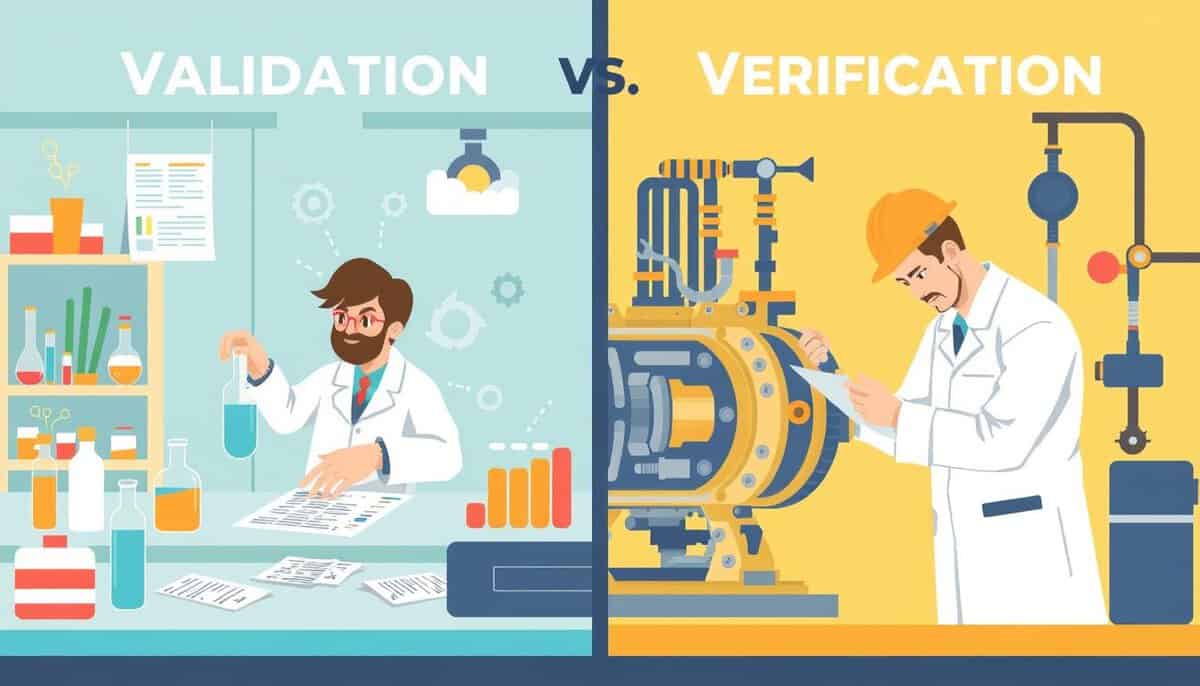
Validation and verification are key in making sure things are built right. Verification means looking at the work like code reviews, walkthroughs, and inspections. It does not involve actual testing. It checks if a product meets certain requirements at different development stages. This process asks, “Am I building the product right?”
Validation, on the other hand, makes sure the final product meets real needs. It’s about doing tests like regression, user, and performance testing at the end. These help answer, “Am I building the right product?”
Both validation and verification are key for great product quality. Verification spots errors early, saving time and money. Validation makes sure the product does what it should for its users. These steps are vital in fields like software, manufacturing, and project management.
To explain, verification checks if a product meets set standards, like during code reviews. Validation, however, is about tests like user acceptance testing. They’re different but related. Verification makes sure the right processes are used. Validation ensures the final product is what it should be.
Looking at examples shows their value. In software making, verification might use unit testing for correct code. Validation may use beta testing with real users. Both steps are needed. Verification keeps the process on track. Validation ensures users are happy with the product.
Definition of Verification
Verification makes sure products or systems meet set rules and specs. It includes thorough checks to ensure everything matches its design. This ensures the final product works as expected.
Process and Purpose of Verification
The main goal of verification is to check if a product meets its requirements during development. It includes:
- Testing
- تقتيش
- التحليل
Activities like testing and inspection help confirm a product is ready for the next step. In software testing, verification checks the software against its design documents.
Examples of Verification in Different Industries
Many industries use verification to keep products safe and high quality.
- Manufacturing: this involves several types of qualification tests.
- Medical devices: the FDA wants devices to meet design requirements.
- Software development: This includes tests to match design documents.
Verification is key in many fields, from cars to computers. Understanding the difference between validation and verification is crucial in developing new products.
The rest of this article is reserved for members
To limit scraping bots (currently 40,000 hits per day!),
we had to restrict access to full articles and tools to registered members only.
to access all the rest.
التعليمات
What is the difference between validation and verification?
Validation makes sure a product fits user needs and purposes, often using external checks. Verification, on the other hand, checks if a product meets its official requirements through in-house reviews. Validation is about making sure it’s the right product for users. Verification ensures it’s made right according to specs.
Why are validation and verification important in quality assurance?
Validation and verification are crucial for quality products. They make sure products match design specs and meet user hopes. Validation proves a product works for its purpose. Verification finds problems early, ensuring products are top quality and fit for use.
What is the process and purpose of verification?
Verification uses tests, checks, and analyses to match products with their requirements. It keeps quality and safety high before products go to market.
What is the process and purpose of validation?
Validation involves acceptance testing and trying products in real situations to meet user needs and rules. It checks if the product works well for customers in real life.
What are some common misconceptions about validation and verification?
People often mix up validation and verification, thinking they’re the same. But they focus on different areas and go together to assure quality.
How does verification improve product quality?
Verification finds and fixes problems early on. This makes products more reliable and high-quality, meeting all their needed specs before sale.
How does validation ensure user acceptance and suitability?
Validation checks that products meet what users want through testing and real-world trials. It makes customers happier and products ready for the market.
How do validation and verification support project management?
Verification keeps projects on track with regular checks. Validation ensures the finished project meets everyone’s needs, leading to success.
How do validation and verification ensure compliance in various industries?
Verification confirms processes and products pass regulatory checks. Validation makes sure they meet the industry standards fully.
External Links on Product Validation and Verification
المعايير الدولية
(حرك الرابط لرؤية وصفنا للمحتوى)
مسرد المصطلحات المستخدمة
Food and Drug Administration (FDA): وكالة اتحادية تابعة لوزارة الصحة والخدمات الإنسانية الأمريكية مسؤولة عن تنظيم سلامة الأغذية والأدوية والأجهزة الطبية ومستحضرات التجميل ومنتجات التبغ لضمان الصحة العامة والسلامة من خلال التقييم العلمي وإنفاذ معايير الامتثال.
International Organization for Standardization (ISO): هيئة دولية غير حكومية تُعنى بتطوير ونشر المعايير لضمان الجودة والسلامة والكفاءة والتوافق التشغيلي في مختلف الصناعات والقطاعات، مما يُسهّل التجارة والتعاون العالميين. تأسست عام ١٩٤٧، وتضم منظمات التقييس الوطنية من الدول الأعضاء.
User experience (UX): the overall satisfaction and perception of a user when interacting with a product, system, or service, encompassing سهولة الاستخدام, accessibility, design, and emotional response throughout the entire interaction process.
Verification and Validation (V&V): عملية لضمان أن النظام يلبي المواصفات ويحقق الغرض المقصود منه، وتتضمن نشاطين متميزين: التحقق يتحقق مما إذا كان المنتج يلبي مواصفات التصميم، بينما يقوم التحقق بتقييم ما إذا كان يلبي احتياجات المستخدم ومتطلباته.