Product Design, Manufacturing & Innovation Resources
بيت » الدقة مقابل الضبط

الدقة مقابل الضبط

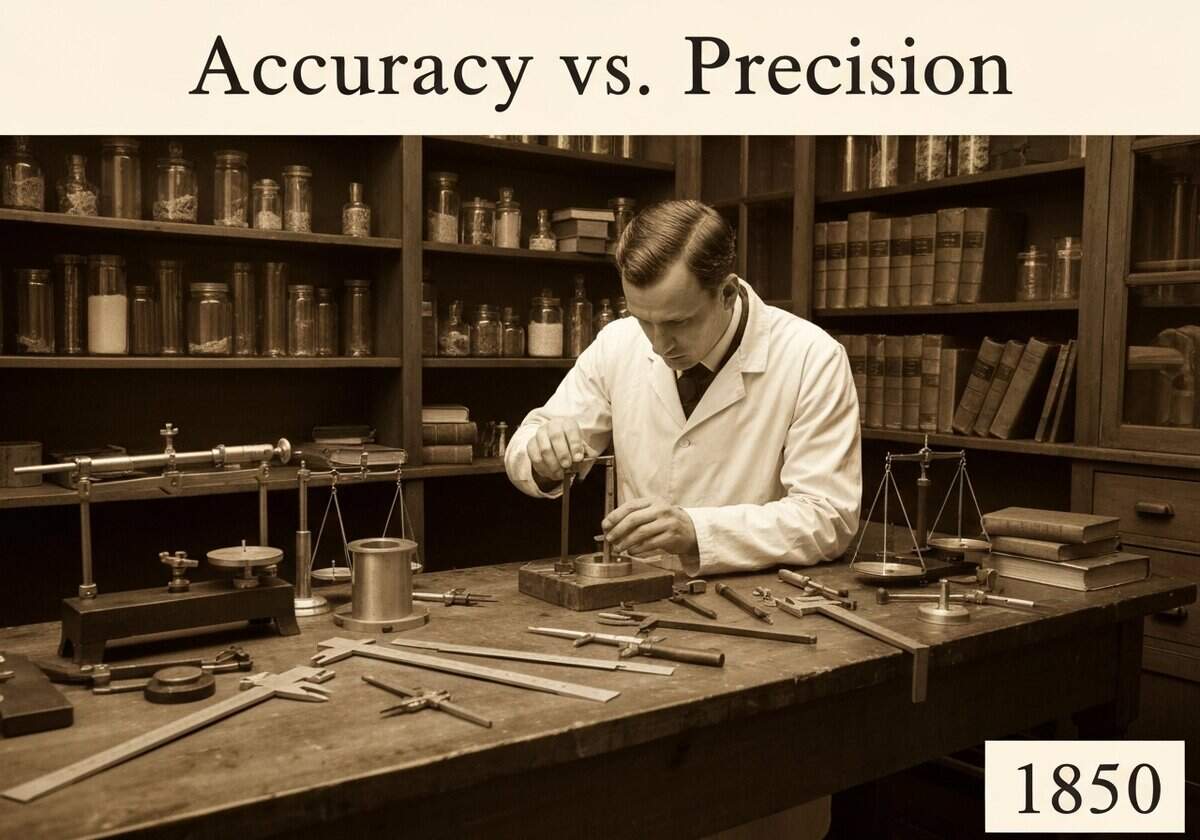
1850
أدوات قياس دقيقة في مختبر يعود تاريخه إلى خمسينيات القرن التاسع عشر لإجراء التجارب العلمية.

(صورة توضيحية فقط)

تشير الدقة إلى مدى قرب القيمة المقاسة من قيمة معيارية أو قيمة حقيقية معروفة. أما الضبط فيشير إلى مدى تقارب قياسين أو أكثر. قد يكون نظام القياس دقيقًا ولكنه غير دقيق، أو دقيقًا ولكنه غير مضبوط، أو كليهما، أو لا هذا ولا ذاك. هذان المفهومان مستقلان عن بعضهما في نظرية القياس.


The distinction between accuracy and precision is a cornerstone of measurement science (metrology). Accuracy describes the degree of conformity to a true value, which is often an accepted reference standard. It is primarily affected by systematic errors, also known as bias. A systematic error causes measurements to be consistently wrong in the same direction. For example, a miscalibrated scale that always reads 5 grams higher than the true weight has a systematic error and is therefore inaccurate, even if it gives the exact same reading every time (making it precise).

Precision, on the other hand, describes the reproducibility or repeatability of measurements. It is affected by random errors, which are unpredictable fluctuations in the readings of a measurement apparatus. These errors can be caused by factors like electronic noise in an instrument, slight variations in experimental conditions, or observer inconsistencies. A high-precision instrument will produce very similar results when measuring the same quantity multiple times under the same conditions, regardless of whether those results are close to the true value. The common analogy used to illustrate this is a target. Accuracy is how close the shots are to the bullseye, while precision is how tightly grouped the shots are. It’s possible to have a tight cluster of shots (high precision) far from the bullseye (low accuracy).

UNESCO Nomenclature: 1209
– Statistics

يكتب

نظام مجرد

خلل

أساسيات

الاستخدام

استخدام واسع النطاق

مقدمات

  • تطوير المنهج العلمي
  • Carl Friedrich Gauss’s work on the theory of errors and the method of least squares
  • Early developments in metrology and standardization of units
  • Philosophical distinctions between truth and consistency

التطبيقات

  • scientific experimentation
  • industrial quality control
  • التصميم الهندسي والتصنيع
  • التشخيص الطبي
  • computer simulations

براءات الاختراع:

NA

أفكار ابتكارية محتملة

  • self-calibrating sensor networks for environmental monitoring
  • ai-driven diagnostic tools that differentiate between systematic and random errors in التصوير الطبي
  • automated quality control systems in 3d printing that adjust for both accuracy and precision drifts in real-time
  • personalized financial models that distinguish between prediction bias (accuracy) and volatility (precision)
  • advanced gps systems that provide separate confidence intervals for location accuracy and precision
  • quantum metrology techniques for ultra-precise yet unbiased measurements
  • حلقة مغلقة feedback systems in robotics that learn and correct for both positioning accuracy and precision errors
  • drug dosage algorithms that account for both the accuracy of the delivery system and the precision of patient response
Related to: accuracy, precision, measurement, systematic error, random error, bias, repeatability, reproducibility.

السياق التاريخي

الدقة مقابل الضبط

1822
1828
1848
1850
1854
1884
1896
1822
1827
1829
1850
1854
1854
1895
1899

(إذا كان التاريخ غير معروف أو غير ذي صلة، على سبيل المثال "ميكانيكا الموائع"، يتم توفير تقدير تقريبي لظهوره الملحوظ)

أحدث الإضافات

أهم المنشورات والمقالات

أفضل الأدوات الأصلية

السنة العاشرة عيد

الصور والتنزيلات بالحجم الكامل متاحة فقط، ومجانية تمامًا، للأعضاء المسجلين.