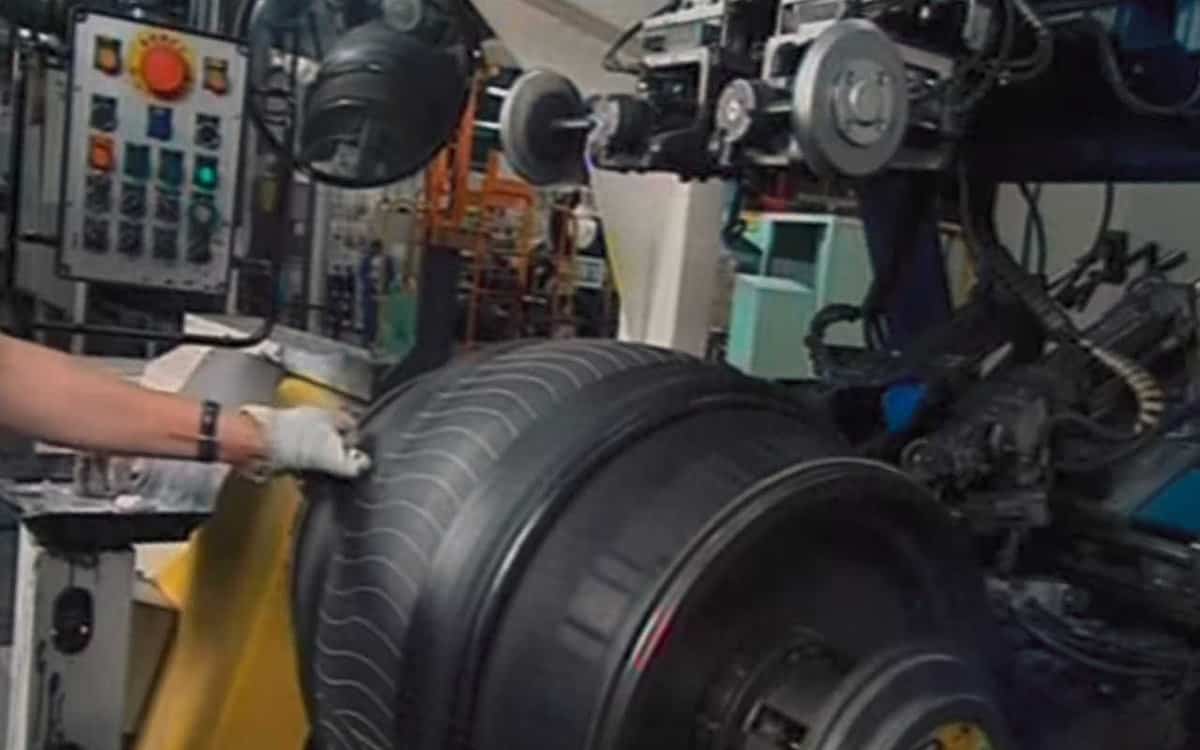
All the processes, from the raw material to the green tire finally molded and cured. Not many products involve so many different processes and materials in volumes of millions per year.
The technologies involved:
- elastomer, natural rubber & curing
- complex mold technics
- leak-tight and pressure
- metal reinforcing
All that with very high volume production (5 tires per car, summer + winter tires, +1 car per family …) for sure one of the most produced products worldwide after food production.
The logic here is all the way from the rubber tree to the final finished tire.
Let’s first harvest the rubber
A very good design principle of tires:
To be compared with a 1930 production
Improvements have been
- in the materials
- the assembly of layers
- in the automation replacing handwork
But obviously a continuous improvement rather than a radical breakthrough innovation design concept except suppressing the inner tube
Missing: what about إعادة التدوير? Please complete or comment below.
قراءات وتقنيات تكميلية
- Rubber compounding and formulation: blending, vulcanization, and material testing.
- Material science and polymers: polymer synthesis, reinforcement with fillers, and nano-material integration.
- Quality control in manufacturing: التحكم في العمليات الإحصائية, defect detection, and non-destructive testing.
- Sustainable and eco-friendly practices: recycling of tire materials, use of bio-based materials, and دورة الحياة assessment.
- إدارة سلسلة التوريد: في الوقت المناسب inventory, demand forecasting, and logistics optimization.
- Performance testing and evaluation: tread wear analysis, traction testing, and temperature resistance assessments.
External Links on Tires and Automotive Components Manufacturing
المعايير الدولية
(حرك الرابط لرؤية وصفنا للمحتوى)
مسرد المصطلحات المستخدمة
Just-In-Time (JIT): استراتيجية إنتاج تقلل من تكاليف المخزون عن طريق جدولة وصول المواد والمكونات بدقة عند الحاجة إليها في عملية التصنيع، مما يقلل من الهدر ويعزز الكفاءة.
Life Cycle Assessment (LCA): تحليل منهجي للتأثيرات البيئية المرتبطة بجميع مراحل حياة المنتج، من استخراج المواد الخام إلى الإنتاج والاستخدام والتخلص منها، بهدف تحديد فرص التحسين وإبلاغ عملية صنع القرار.
Non-Destructive Testing (NDT): طريقة تستخدم لتقييم خصائص المواد أو سلامتها أو بنيتها دون التسبب في ضرر، باستخدام تقنيات مثل الموجات فوق الصوتية والتصوير الإشعاعي والجسيمات المغناطيسية واختبار اختراق الصبغة للكشف عن العيوب أو الانقطاعات.
Statistical Process Control (SPC): طريقة لمراقبة الجودة تستخدم تقنيات إحصائية لمراقبة عملية ما والتحكم فيها، والتأكد من أنها تعمل بكامل إمكاناتها من خلال تحديد الاختلافات والحفاظ على الناتج المتسق ضمن حدود محددة.