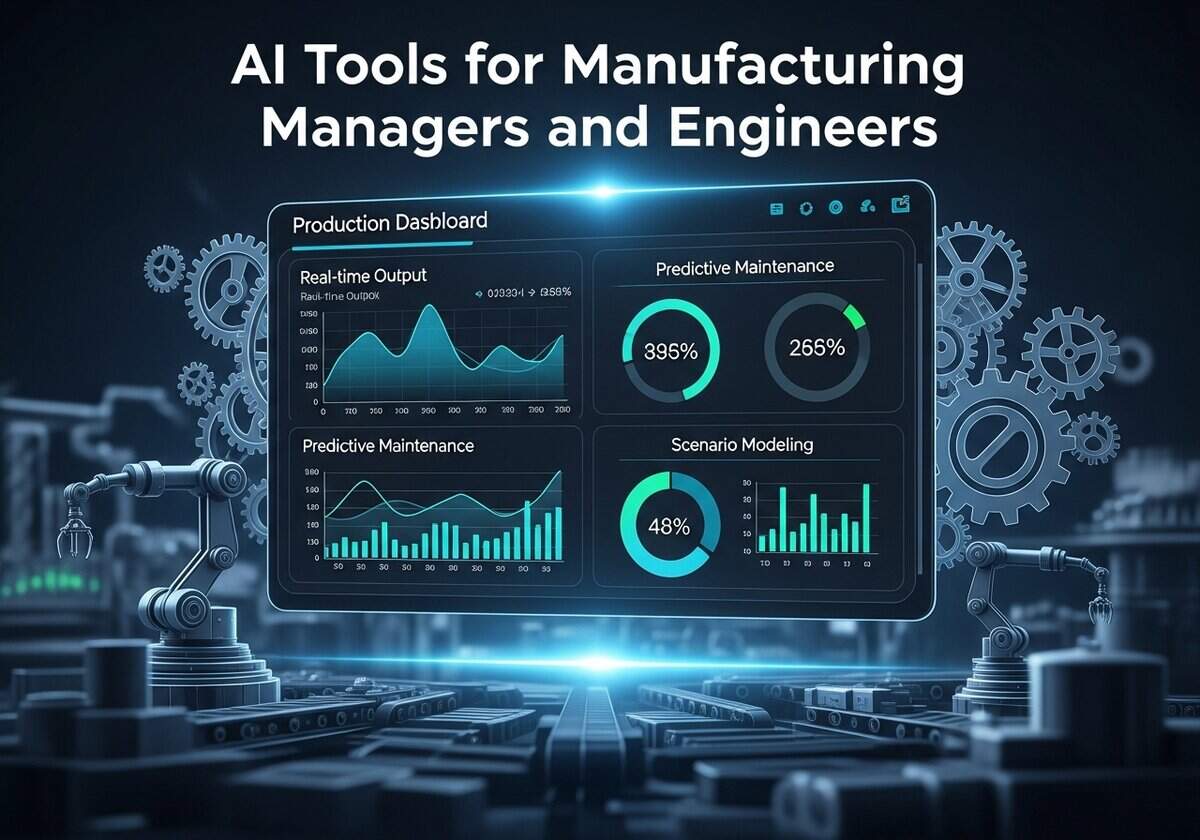

Modern manufacturing operations demand immediate, data-driven responses to shop floor variability and supply chain fluctuations. The following AI prompts function as specialized engineering tools, designed to execute complex calculations and scenario modeling that are prohibitive to perform manually or with standard software. By processing specific operational inputs—such as raw production data, machine maintenance logs, or detailed process parameters—they generate directly usable outputs like optimized production schedules, root cause analysis reports for equipment failures, and cost-impact simulations for proposed process changes, enabling managers and engineers to make informed decisions grounded in quantitative analysis.
This 25+ prompts list provides a comprehensive toolkit addressing the full spectrum of manufacturing responsibilities: these are categorized into critical domains, including Production Planning and Scheduling for dynamic rescheduling and optimization; Process and Efficiency Optimization for line balancing and value stream mapping; and Maintenance and Equipment Management for predictive scheduling and root cause analysis. Further categories cover Cost and Resource Management for detailed cost estimation and make-or-buy decisions, Reporting and Documentation for automated SOP and FMEA generation, and Supply Chain and Logistics Integration for risk assessment and logistics optimization, ensuring a holistic approach to factory and operational control.
Production Planning and Scheduling
Dynamic Production Rescheduling for Supply Chain Disruptions
Analyzes a production schedule, bill of materials, and a disruption alert (e.g., delayed shipment of a critical component). It then generates a revised production plan that minimizes delays and costs by suggesting alternative suppliers, modified production sequences, or adjusted inventory usage.
Recommended temperature: 0.7 Recommended thinking complexity: high
User's inputs: {current_production_schedule}, {bill_of_materials}, {disruption_alert}, {alternative_suppliers}, {inventory_levels}
Multi-Objective Production Batch Size Optimization Determines the optimal batch size for a list of products by considering multiple conflicting objectives such as minimizing inventory holding costs, reducing setup times, and maximizing production throughput. It processes production data, cost parameters, and constraints to recommend batch sizes for each product. Recommended temperature: 0.7 Recommended thinking complexity: high User's inputs: {product_list}, {production_data}, {cost_parameters}, {constraints}
Predictive Bottleneck Identification in a Production Line Simulates a production process based on cycle times for each station, transfer times, and planned maintenance schedules. It identifies potential future bottlenecks and suggests proactive adjustments to machine allocation, operator assignments, or buffer sizes to maintain a smooth production flow. Recommended temperature: 0.7 Recommended thinking complexity: high User's inputs: {cycle_times}, {transfer_times}, {maintenance_schedules}
Optimized Shift Roster Generation Based on Skill Matrix Creates an optimal weekly shift schedule for a manufacturing cell by taking into account employee availability, skill levels for various tasks, and production demand. The output ensures that each shift has the required skill mix to meet production targets while adhering to labor regulations and employee preferences. Recommended temperature: 0.7 Recommended thinking complexity: high User's inputs: {employee_availability}, {skill_matrix}, {production_demand}, {labor_regulations}, {employee_preferences}
Raw Material Demand Forecasting and Order Consolidation Analyzes the master production schedule and bill of materials for multiple products to forecast the demand for raw materials over a specified period. It then consolidates these requirements and suggests an optimized purchasing plan that considers supplier lead times and bulk-order discounts. Recommended temperature: 0.7 Recommended thinking complexity: high User's inputs: {mps_data}, {bom_data}, {supplier_lead_times}, {bulk_order_discounts}
Process and Efficiency Optimization
These prompts can efficiently be complemented by the Lean 6 Sigma dedicated prompts found in this article:

Assembly Line Balancing and Workstation Redesign Analyzes a sequence of assembly tasks with their respective durations and precedence constraints. It then proposes a balanced distribution of these tasks across workstations to minimize idle time and maximize line efficiency, providing the new task allocation for each station. Recommended temperature: 0.5 Recommended thinking complexity: high User's inputs: {task_list_with_durations}, {precedence_constraints}, {number_of_workstations}
Energy Consumption Anomaly Detection and Optimization Processes time-series data of energy consumption from various machines on the factory floor. It identifies anomalies that may indicate equipment malfunction or inefficient operation and suggests specific actions to reduce energy waste. Recommended temperature: 0.7 Recommended thinking complexity: high User's inputs: {energy_consumption_data}, {machine_identifiers}, {historical_baseline_data}
Value Stream Mapping Analysis and Future State Design Analyzes a current state value stream map to identify non-value-added activities and generates a future state map in Mermaid format, along with a prioritized list of kaizen events. Recommended temperature: 0.7 Recommended thinking complexity: high User's inputs: {current_state_data}
SMED Analysis and Improvement Plan Analyzes a detailed breakdown of changeover activities and their durations, classifying them as internal or external setup tasks. It then generates a step-by-step action plan to convert internal setup time to external and reduce the overall changeover time. Recommended temperature: 0.7 Recommended thinking complexity: high User's inputs: {changeover_activities}, {current_changeover_time}
Optimal Facility Layout Generation for Material Flow Generates a 2D factory layout in Mermaid or SVG format based on a list of departments or work centers, their spatial requirements, and a from-to chart detailing the frequency of material movement between them. The goal is to minimize material handling distances and improve overall process flow. Recommended temperature: 0.7 Recommended thinking complexity: high User's inputs: {list_of_departments}, {spatial_requirements}, {from_to_chart}
The rest of this article is reserved for members
To limit scraping bots (currently 40,000 hits per day!),
we had to restrict access to full articles and tools to registered members only.
to access all the rest.