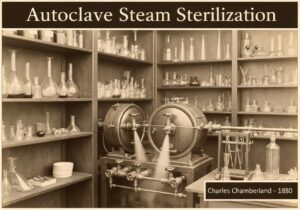
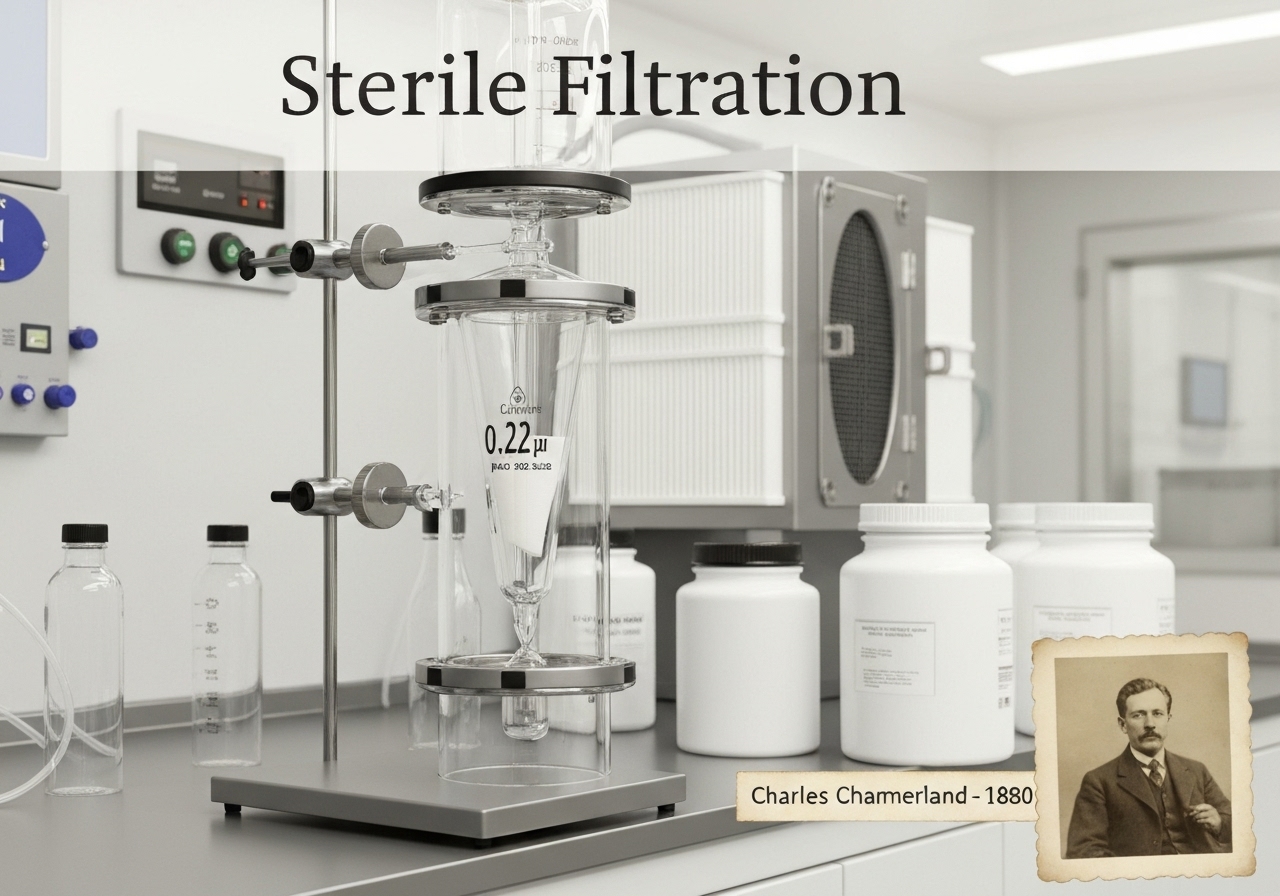
The history of filtration for microbial removal dates back to the late 19th century. In 1884, Charles Chamberland, an associate of Louis Pasteur, developed the Chamberland filter made of unglazed porcelain. This device was instrumental in early virology; it was used by Dmitri Ivanovsky in 1892 and Martinus Beijerinck in 1898 to demonstrate that the agent causing tobacco mosaic disease was smaller than any known bacterium, as it could pass through the filter. They called this new class of infectious agent a ‘filterable virus.’ These early filters were effective but slow and brittle. The technology evolved significantly throughout the 20th century with the development of modern membrane filters made from materials like cellulose esters, nylon, and polysulfone. These new materials allowed for the creation of filters with highly controlled pore sizes, greater durability, and higher flow rates, making sterile filtration a reliable and scalable process for the pharmaceutical, biotechnology, and food and beverage industries.