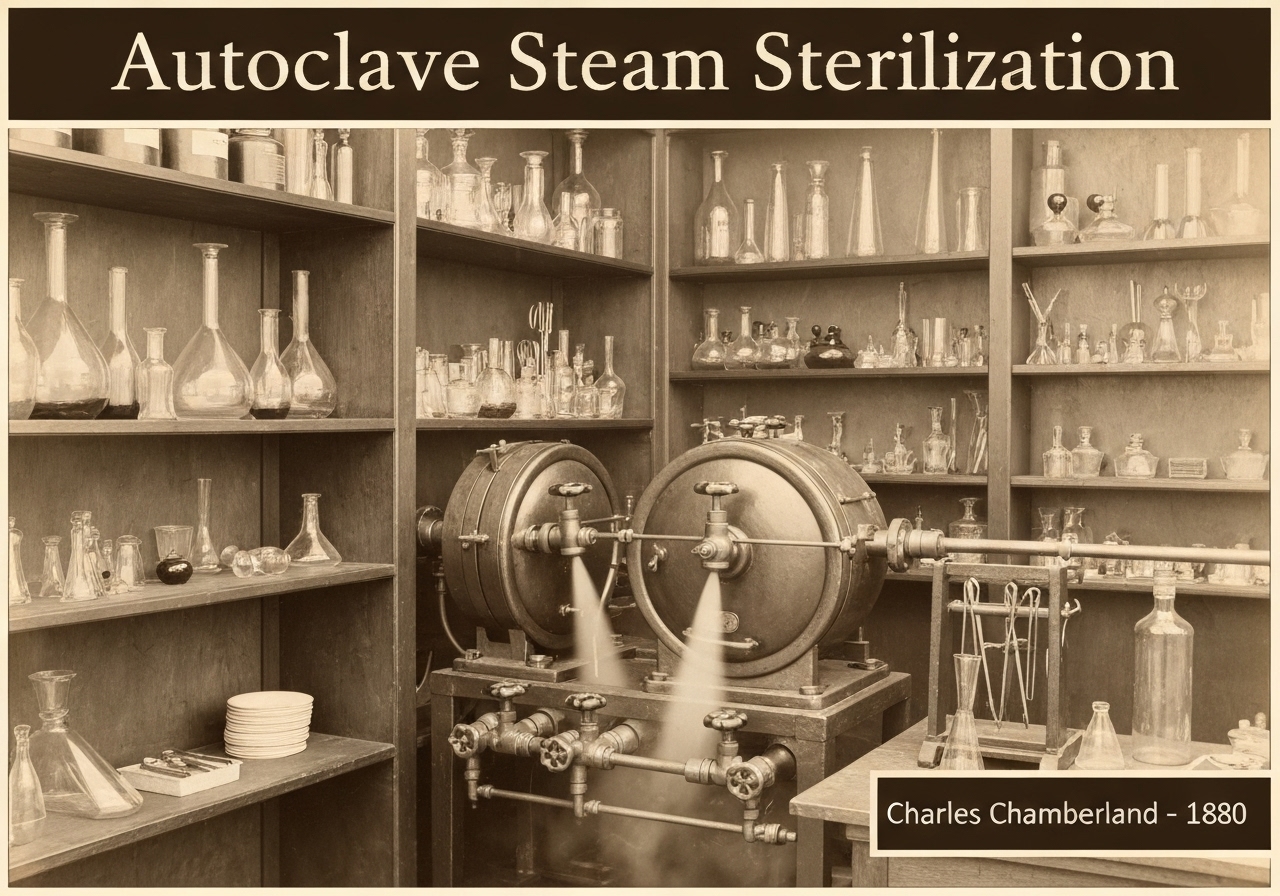
A 方法 使用高温高压饱和蒸汽对设备和用品进行消毒。典型的消毒循环条件为:温度 121 °C (250 °F),压力比大气压高 100 kPa (15 psi)。 压力 持续 15 分钟。这种高温高湿的条件能有效使蛋白质和酶变性,杀死所有微生物,包括顽强的细菌孢子。
The autoclave’s effectiveness stems from the principles of thermodynamics and microbiology. Unlike dry heat, which kills microorganisms through slow oxidation, moist heat from saturated steam is far more efficient. The steam transfers heat energy rapidly and upon contact with a cooler surface, it condenses, releasing its latent heat of vaporization. This process causes a rapid and irreversible coagulation and denaturation of essential proteins, enzymes, and nucleic acids within the microbial cells, leading to their death. The increased pressure inside the autoclave serves a critical purpose: it raises the boiling point of water. At standard atmospheric pressure, water boils at 100 °C, a temperature insufficient to reliably kill bacterial endospores, which are highly resistant dormant structures. By increasing the pressure to approximately 15 psi (100 kPa) above atmospheric pressure, the boiling point is elevated to 121 °C. This higher temperature, combined with the penetrating power of steam, ensures the destruction of even the most resilient spores, such as those from Geobacillus stearothermophilus, which is often used as a biological indicator to validate autoclave performance. The typical 15-minute cycle time at 121 °C is a standard derived from thermal death time studies, providing a significant safety margin to achieve a high sterility assurance level (SAL). The process is not suitable for heat-sensitive materials like plastics or delicate electronics, which would be damaged by the high temperatures and pressure.