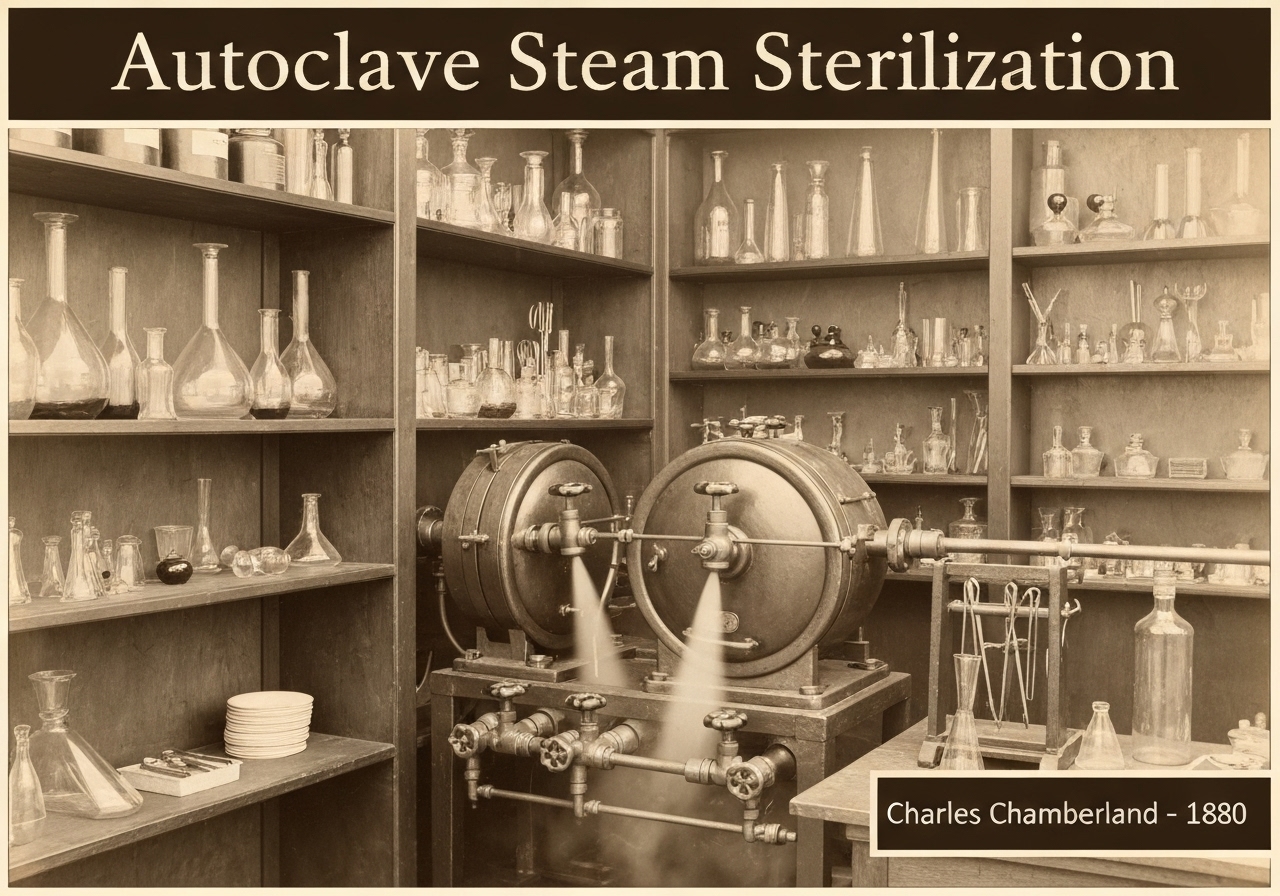
あ 方法 高圧飽和蒸気を高温で使用して、機器や備品を滅菌する。典型的なサイクルは、大気圧より100 kPa (15 psi)高い圧力で121 °C (250 °F)である。 プレッシャー 15分間放置してください。この熱と湿気の組み合わせは、タンパク質と酵素を効果的に変性させ、耐性のある細菌胞子を含むすべての微生物を死滅させます。
(画像はイメージです)
あ 方法 高圧飽和蒸気を高温で使用して、機器や備品を滅菌する。典型的なサイクルは、大気圧より100 kPa (15 psi)高い圧力で121 °C (250 °F)である。 プレッシャー 15分間放置してください。この熱と湿気の組み合わせは、タンパク質と酵素を効果的に変性させ、耐性のある細菌胞子を含むすべての微生物を死滅させます。
The autoclave’s effectiveness stems from the principles of thermodynamics and microbiology. Unlike dry heat, which kills microorganisms through slow oxidation, moist heat from saturated steam is far more efficient. The steam transfers heat energy rapidly and upon contact with a cooler surface, it condenses, releasing its latent heat of vaporization. This process causes a rapid and irreversible coagulation and denaturation of essential proteins, enzymes, and nucleic acids within the microbial cells, leading to their death. The increased pressure inside the autoclave serves a critical purpose: it raises the boiling point of water. At standard atmospheric pressure, water boils at 100 °C, a temperature insufficient to reliably kill bacterial endospores, which are highly resistant dormant structures. By increasing the pressure to approximately 15 psi (100 kPa) above atmospheric pressure, the boiling point is elevated to 121 °C. This higher temperature, combined with the penetrating power of steam, ensures the destruction of even the most resilient spores, such as those from Geobacillus stearothermophilus, which is often used as a biological indicator to validate autoclave performance. The typical 15-minute cycle time at 121 °C is a standard derived from thermal death time studies, providing a significant safety margin to achieve a high sterility assurance level (SAL). The process is not suitable for heat-sensitive materials like plastics or delicate electronics, which would be damaged by the high temperatures and pressure.
歴史的に見ると、オートクレーブは1679年にドニ・パパンが発明した圧力鍋である「蒸気消化器」の直系の子孫である。しかし、微生物学への応用は、ルイ・パスツールの協力者であったシャルル・シャンバーランによって1879年に開拓された。パスツールの研究室で働いていたシャンバーランは、急成長する細菌学の分野を支え、病原菌説を検証するために、培養培地や器具を確実に滅菌する方法が必要であることを認識していた。彼の発明は、あらゆる形態の微生物を死滅させるための最初の強力なツールとなり、実験生物学、医学、外科に革命をもたらした。これにより、滅菌培養培地の調製が可能になり、純粋な細菌培養の分離と研究が可能になった。これは、ロベルト・コッホによって確立された現代微生物学の礎石である。オートクレーブが臨床現場に導入されたことで、手術部位感染が劇的に減少し、複雑な手術がより安全になり、世界中の病院にとって不可欠なツールとなった。
ボットによるトラフィック(現在1日あたり4万件以上)を排除するため、このコンテンツはコミュニティメンバー限定となっています。
> ログイン < または > 登録 < (100%無料)でこれにアクセスできます。他のすべての制限付きコンテンツとツールも同様です。
オートクレーブ蒸気滅菌
(日付が不明または関連性がない場合、例えば「流体力学」などでは、その注目すべき出現時期の概算値が提示されます。)

フルサイズの画像とダウンロードは、登録会員のみが100%無料で利用できます。
> ログイン <