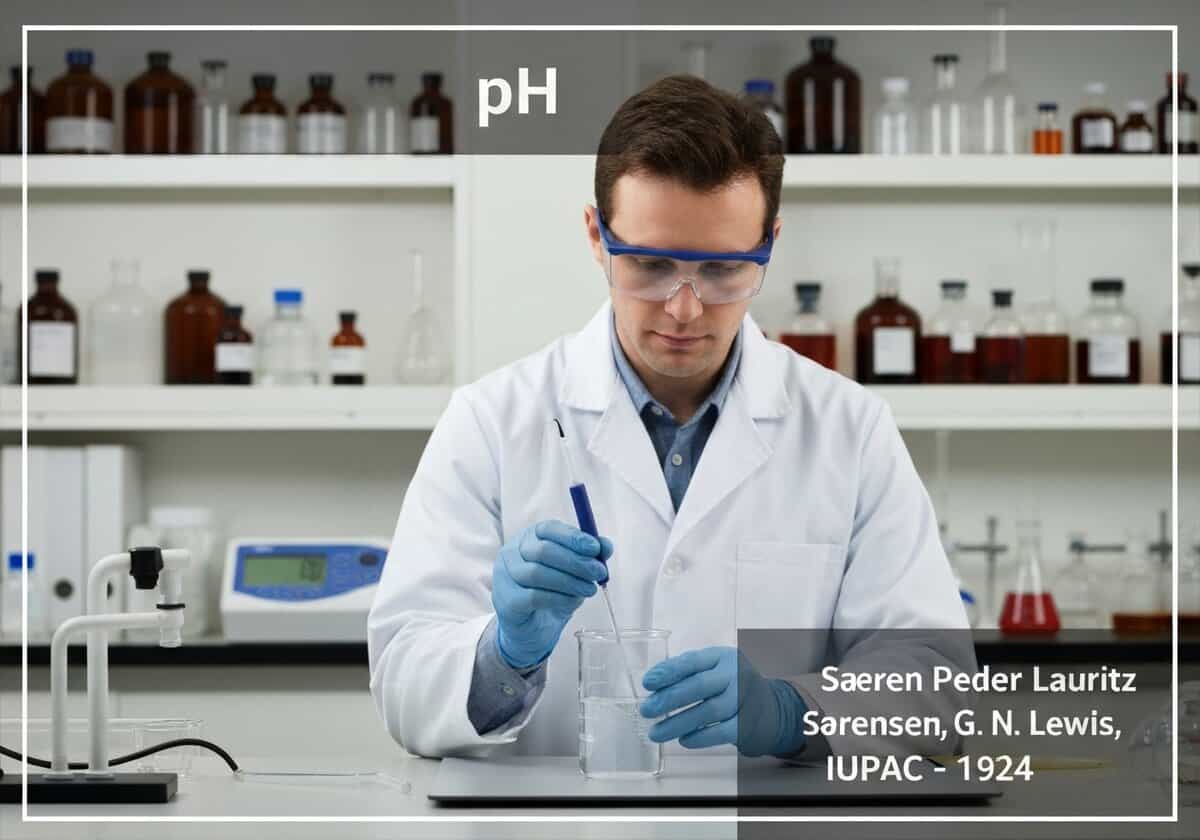
The modern definition of pH using 氢 ion activity ([latex]a_{H^+}[/latex]) is a refinement of Sørensen’s original 1909 proposal, which used hydrogen ion concentration. The activity is related to concentration ([latex]c[/latex]) by the activity coefficient ([latex]\gamma_{H^+}[/latex]): [latex]a_{H^+} = \gamma_{H^+} \cdot c/c^0[/latex], where [latex]c^0[/latex] is the standard concentration (1 mol/L). In dilute solutions, [latex]\gamma_{H^+}[/latex] approaches 1, and activity approximates concentration. However, in more concentrated solutions, ionic interactions reduce the effective concentration, making the activity-based definition more accurate.