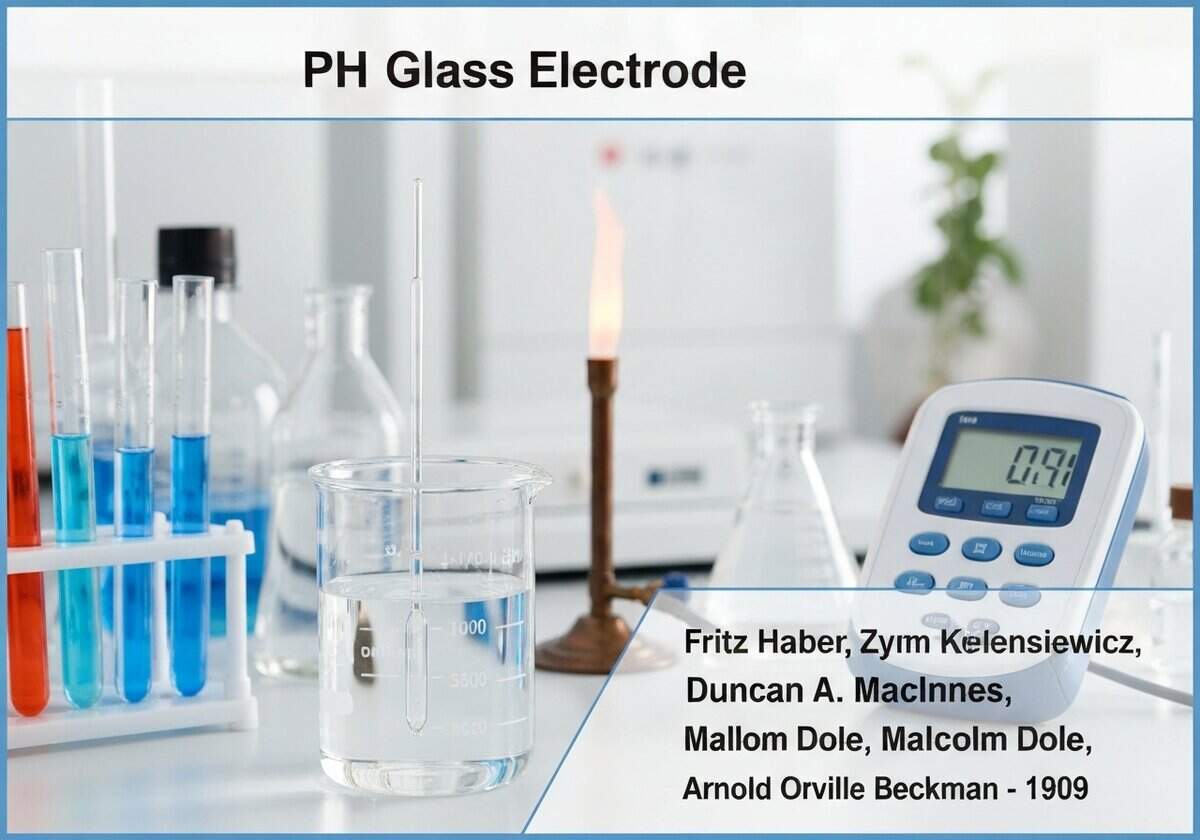
pH 计测量两个电极之间的电压,并将其转换成 pH 值。核心部件是玻璃电极,它有一个对氢离子活性敏感的薄玻璃球。玻璃电极与稳定的参比电极之间的电位差 E 与 pH 值成线性正比,这符合奈氏方程的一种形式:[latex]E = K + \frac{2.303RT}{F}pH[/latex].
The glass electrode functions as an ion-selective electrode. Its tip is a thin membrane of a special glass (typically a silicate glass doped with alkali metal ions) that has been hydrated. This hydration creates a gel layer on both the inner and outer surfaces. An ion-exchange equilibrium is established between the alkali metal ions in the glass and the 氢 ions in the solution. This process creates a boundary potential across the membrane that is dependent on the difference in hydrogen ion activity between the internal solution (which has a fixed pH) and the external sample solution.