Product Design, Manufacturing & Innovation Resources
بيت » قطب زجاجي لقياس الرقم الهيدروجيني

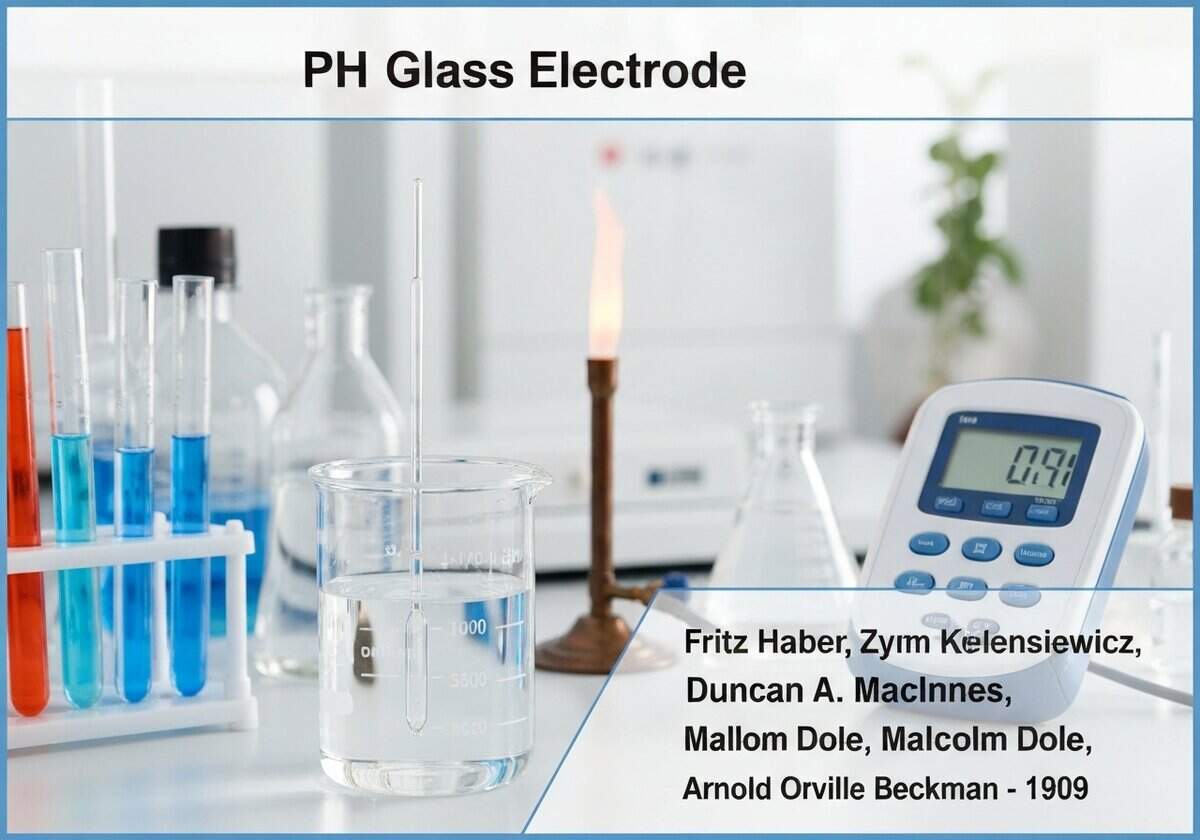
قطب زجاجي لقياس الرقم الهيدروجيني

1909
  • Fritz Haber
  • Zygmunt Klemensiewicz
  • Duncan A. MacInnes
  • Malcolm Dole
  • Arnold Orville Beckman
قطب زجاجي لقياس الأس الهيدروجيني يستخدم في الكيمياء التحليلية لقياس تركيز أيون الهيدروجين.

(صورة توضيحية فقط)

A pH meter measures the voltage between two electrodes and converts it to a pH value. The core component is the glass electrode, which has a thin glass bulb sensitive to hydrogen ion activity. The potential difference, E, between the glass electrode and a stable reference electrode is linearly proportional to the pH according to a form of the Nernst equation: [latex]E = K + \frac{2.303RT}{F}pH[/latex].

The glass electrode functions as an ion-selective electrode. Its tip is a thin membrane of a special glass (typically a silicate glass doped with alkali metal ions) that has been hydrated. This hydration creates a gel layer on both the inner and outer surfaces. An ion-exchange equilibrium is established between the alkali metal ions in the glass and the hydrogen ions in the solution. This process creates a boundary potential across the membrane that is dependent on the difference in hydrogen ion activity between the internal solution (which has a fixed pH) and the external sample solution.

This potential is measured against a reference electrode, such as a silver/silver chloride (Ag/AgCl) or calomel electrode, which maintains a constant potential. The complete device, often a single combination probe, is calibrated using buffer solutions of known pH. The high internal resistance of the glass electrode requires a high-impedance voltmeter (the pH meter itself) to accurately measure the small potential difference without drawing significant current, which would alter the system’s equilibrium.

UNESCO Nomenclature: 2201
– Analytical chemistry

يكتب

Physical Device

خلل

Revolutionary

الاستخدام

استخدام واسع النطاق

مقدمات

  • Nernst equation (1889)
  • اكتشاف الخلايا الجلفانية بواسطة فولتا
  • فهم ظاهرة التبادل الأيوني
  • تطوير أقطاب مرجعية مستقرة (على سبيل المثال، قطب الكالوميل)

التطبيقات

  • التحليل الكيميائي المخبري
  • صناعي التحكم في العملية
  • الرصد البيئي
  • التشخيص الطبي
  • علم الغذاء
  • تربية الأحياء المائية

براءات الاختراع:

  • US2058761

أفكار ابتكارية محتملة

  • أقطاب قياس درجة الحموضة الدقيقة للقياسات داخل الخلايا
  • أجهزة استشعار الرقم الهيدروجيني غير الزجاجية ذات الحالة الصلبة باستخدام ترانزستورات تأثير المجال الحساسة للأيونات (ISFET)
  • شرائط اختبار درجة الحموضة للاستخدام مرة واحدة مع إلكترونيات متكاملة
  • أجهزة استشعار الرقم الهيدروجيني بالألياف البصرية (الأوبتودس) للاستشعار عن بعد
  • أجهزة استشعار الرقم الهيدروجيني القابلة للزرع للمراقبة الفسيولوجية المستمرة
  • مجسات درجة الحموضة عالية الحرارة/الضغط العالي للاستكشاف الجيولوجي والاستكشاف في أعماق البحار
  • أجهزة استشعار درجة الحموضة للتدفق لمراقبة العمليات الصناعية المستمرة
  • أجهزة استشعار جودة المياه متعددة المعلمات تجمع بين أجهزة استشعار الرقم الهيدروجيني والتوصيل والأكسجين المذاب
  • أجهزة استشعار درجة الحموضة اللاسلكية المدعومة بتقنية إنترنت الأشياء لشبكات الزراعة الذكية
  • عبوات ذكية تستشعر درجة الحموضة وتشير إلى تلف الطعام
Related to: pH meter, glass electrode, reference electrode, Nernst equation, potentiometry, electrochemistry, analytical instrument, calibration, buffer solution, voltage.

السياق التاريخي

قطب زجاجي لقياس درجة الحموضة

1902
1904
1907
1909
1910
1912
1915
1902
1902
1907
1909
1910
1911-04-08
1913
1915

(إذا كان التاريخ غير معروف أو غير ذي صلة، على سبيل المثال "ميكانيكا الموائع"، يتم توفير تقدير تقريبي لظهوره الملحوظ)

أحدث الإضافات

أهم المنشورات والمقالات

أفضل الأدوات الأصلية

السنة العاشرة عيد

الصور والتنزيلات بالحجم الكامل متاحة فقط، ومجانية تمامًا، للأعضاء المسجلين.