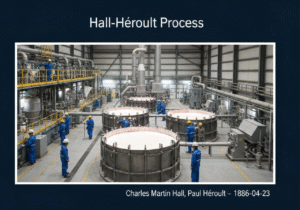
The chloralkali process is one of the largest-scale applications of 电解, fundamental to the modern chemical industry. The overall reaction is [latex]2NaCl + 2H_2O \rightarrow 2NaOH + Cl_2 + H_2[/latex]. The process takes place in an electrolytic cell with a brine solution as the electrolyte. At the anode, chloride ions are oxidized to form chlorine gas: [latex]2Cl^- \rightarrow Cl_2 + 2e^-[/latex]. At the cathode, water is reduced to form 氢 gas and hydroxide ions: [latex]2H_2O + 2e^- \rightarrow H_2 + 2OH^-[/latex].
A critical aspect of the process is keeping the products, chlorine and sodium hydroxide, separate, as they would otherwise react to form sodium hypochlorite and chlorate. Historically, this was achieved using mercury cells or diaphragm cells, but these have been largely phased out due to environmental concerns (mercury 污染) and lower efficiency. The modern standard is the membrane cell. This cell uses a cation-exchange membrane (typically made of a perfluorinated polymer like Nafion) that separates the anode and cathode compartments. The membrane is permeable to positive ions like Na⁺ but impermeable to negative ions like Cl⁻ and OH⁻. Sodium ions migrate across the membrane from the anode compartment to the cathode compartment, where they combine with the hydroxide ions produced at the cathode to form high-purity sodium hydroxide.