Address: pl. Uniwersytecki 1, 50-137 Wrocław, Dolnośląskie, Poland
Computer Science, Biotechnology, Chemistry
With a history dating back to 1702, UWr is a comprehensive public university in Wrocław, offering a wide range of programs, including strong faculties for mathematics, computer science, physics, chemistry, and biotechnology.
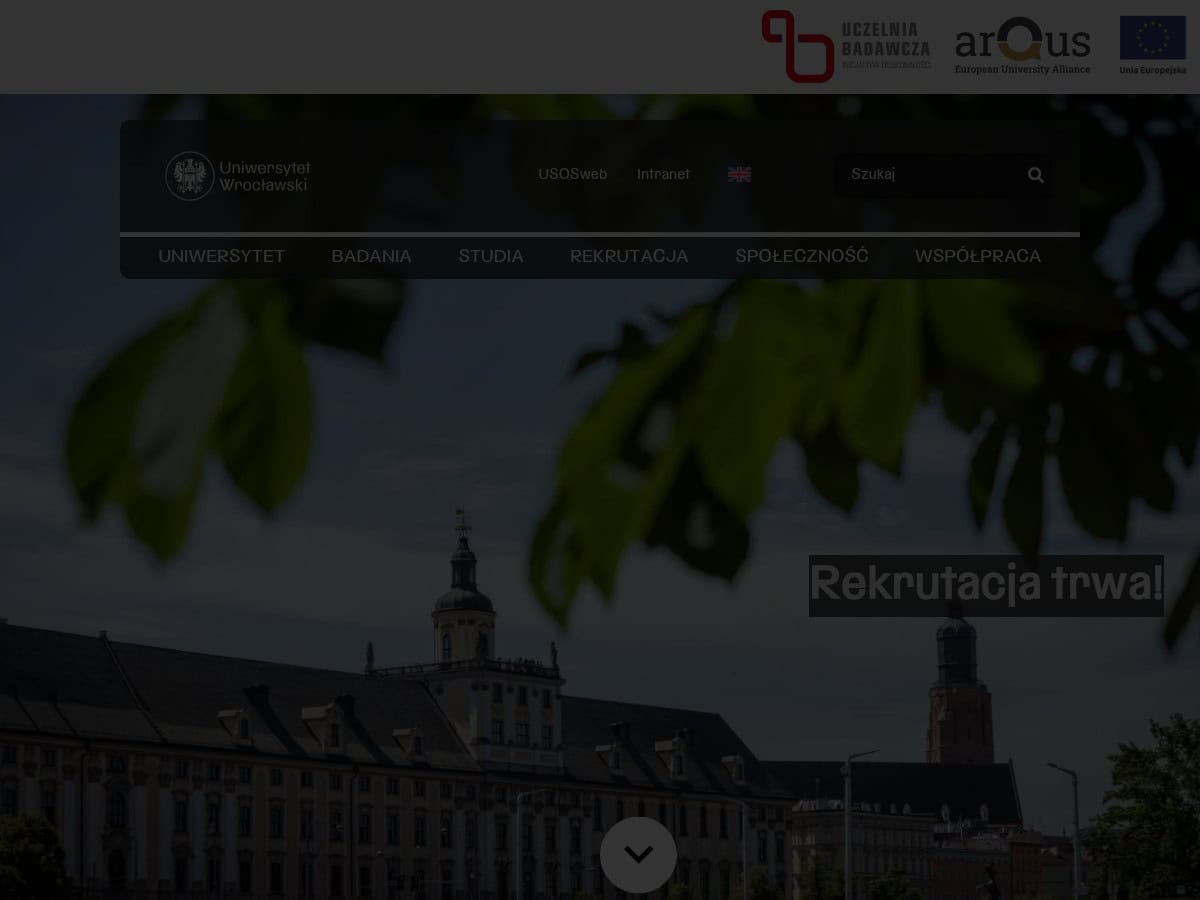
The University of Wrocław, UWr, traces its history to 1702, when Emperor Leopold I founded the Jesuit Leopoldina Academy in what was then Breslau. It became a state university in 1811 through a merger with the Protestant Viadrina university from Frankfurt on the Oder, and it took its Polish form in 1945, after the city became part of Poland. It has about 25,000 students and 3,000 staff. The main building on Plac Uniwersytecki is a long Baroque palace on the Oder riverbank.
The Aula Leopoldina is the most famous room, a Baroque hall with ceiling paintings and gilded statues used for ceremonies and concerts. The Mathematical Tower, the oldest part of the building, houses an astronomical observatory, and visitors can climb to a viewing terrace. The university is spread across several sites in the city, including the Botanical Garden and new science buildings, and it maintains a close link with the cultural life of Wrocław.
Many scientists were connected with Breslau before 1945, and nine winners of Nobel Prizes are usually counted among its alumni and staff. Among them were the physicists Max Born and Otto Stern, who both studied here. After the war, Polish scholars from Lviv, among them the mathematician Hugo Steinhaus, rebuilt the university and kept the Lviv tradition of mathematics alive in Wrocław. The Ossolineum, a national library and museum, was also moved to Wrocław.
The university has ten faculties, including law, history, philology, social sciences, chemistry, mathematics and computer science, physics and astronomy, biology and pedagogy. Public universities in Poland teach full-time studies in Polish without tuition for Polish citizens, while programmes in English and studies for foreign students are normally paid, and fees vary by programme. Check the current tariff. Polish applicants use the national online recruitment system, and international students apply through the university’s portal.
Wrocław is an affordable and lively city with a large student population and many bridges, islands and squares. Dormitories are cheap but limited in number.
Domains taught:
AI and Machine Learning, Astroscience, Bioengineering, Bioinformatics, Chemistry, Computer Vision, Data Analytics, Ecology and Sustainability, Fluid Dynamics, Life Sciences, Manufacturing, Materials, Mathematics, Mechanical Engineering, Microbiology and Genetics, Nanotechnologies, Optics, Physics, Process Control, Signal Processing, Software Engineering, Statistics, Structural Engineering, Telecommunications, Thermodynamics
Diplomas*:
Bachelor, Doctor, Master
Status:
Public
Partnerships:
Member of Arqus European University Alliance. International research collaborations.
Research:
Theoretical physics & Astrophysics, Organic chemistry & Materials science, Bioinformatics & Molecular biology, AI & Data science.
Famous Alumnis:
9 Nobel laureates associated (e.g., Max Born, Fritz Haber, Otto Stern from German period)
International recognition**:
Number of staff***:
3000
Current students***:
25000
Foreign students***:
N/A%
Cumulative former students***:
N/A
Pros
Historic university with a strong tradition in sciences, located in a vibrant city with a growing tech sector.
Cons
Engineering faculties are less extensive compared to Wrocław University of Science and Technology.
Best For
Historic comprehensive university with strong programs in computer science, biotechnology, and chemistry.
Jagiellonian University follows much the same lines as this university, with astroscience, bioinformatics and nanotechnologies as common ground, and it is also a public institution, and teaches at the same levels, namely bachelor's, master's and doctoral.
Both schools build their programmes around astroscience, bioinformatics and nanotechnologies, and University of Gdańsk is the one to compare first within the country, since it runs the same bachelor's, master's and doctoral programmes, and covers marine science as well.
For students who like the astroscience, bioinformatics and nanotechnologies focus of this institution but want another option nearby, University of Warsaw fits well: it runs the same bachelor's, master's and doctoral programmes, and covers geotechnics as well.
Nicolaus Copernicus University in Toruń offers a comparable education in astroscience, bioinformatics and nanotechnologies: it runs the same bachelor's, master's and doctoral programmes, and is slightly smaller, at about 20,000 students against roughly 25,000 here.
University of Łódź is the closest domestic counterpart for astroscience, bioinformatics and nanotechnologies; it is also a public institution, and teaches at the same levels, namely bachelor's, master's and doctoral.
Most Similar Schools Abroad
Universität Leipzig in Germany shares the astroscience, bioinformatics and nanotechnologies orientation of this university, and it runs the same bachelor's, master's and doctoral programmes, and covers geotechnics as well.
For a study option in Germany with a comparable spread of astroscience, bioinformatics and nanotechnologies, Julius-Maximilians-Universität Würzburg is the reference point: it runs the same bachelor's, master's and doctoral programmes, and has almost the same size, at about 27,000 students.
Lanzhou University offers an international parallel to this university, with astroscience, bioinformatics and nanotechnologies as common ground; it covers geotechnics and electrical and electronics as well, and is slightly larger, at about 30,000 students against roughly 25,000 here.
Universität Zürich in Switzerland is the nearest foreign match on astroscience, bioinformatics and nanotechnologies; it is slightly larger, at about 28,000 students against roughly 25,000 here, and is also a public institution.
Nankai University, in China, takes a similar route through astroscience, bioinformatics and nanotechnologies; it is also a public institution, and teaches at the same levels, namely bachelor's, master's and doctoral.
*our own picks (our criteria: a mix between domains, diploma delivered, reputation and size), but obviously too many criteria for an apple-to-apple ranking.
FAQ
Where is the University of Wrocław?
The main building is at pl. Uniwersytecki 1 in Wrocław, Poland, on the Oder riverbank.
When was it founded?
In 1702, as the Jesuit Leopoldina Academy. It became a state university in 1811 and took its Polish form in 1945.
How large is it?
About 25,000 students and 3,000 staff.
What is the Aula Leopoldina?
A Baroque hall with ceiling paintings and gilded statues, used for ceremonies and concerts.
What is the Mathematical Tower?
The oldest part of the main building, with an astronomical observatory and a viewing terrace.
Which Nobel laureates are connected to it?
Max Born and Otto Stern, among others, studied at Breslau.
Who rebuilt the university after 1945?
Polish scholars from Lviv, among them the mathematician Hugo Steinhaus.
What does it cost?
Full-time studies in Polish are free for Polish citizens, while programmes in English and studies for foreign students are normally paid. Check the current tariff.
How do you apply?
Polish applicants use the national online recruitment system. International students apply through the university's portal.
Is Wrocław affordable?
Yes. It is an affordable and lively city with a large student population.
Artificial Intelligence (AI), Astrophysics, Chemistry, Machine Learning, Sustainable Development
*: without any judgment of the quality, readers are strongly encouraged to check the official status of the exact diploma envisioned as many universities have a mix of recognized diplomas, not recognized, “co-delivered,” “equivalent to”, “some pathways” (…), can change over time, and can be named differently from one country to another.
**: international reputation: is based on some criteria that do not mean much in some domains or specialties (number of researchers, of scientific publications, on budget ….). Our approximate 1-4 scale:
known locally
known locally and internationally
is listed in some of the world university’s classifications
is listed among the 20 firsts in some of world university’s classifications
***: estimated numbers, based on online sources and/or feedbacks. The numbers can vary greatly depending on school organisation (ex.: school is part of a group, it employs internal staff or external consultants or has public staff without employing them …). Refer to all the links provided to have accurate and updated numbers.
Innovation.world is not affiliated with this school/university. We recommend to contact them directly on their website for any special request.
To complete or correct any information here or share your opinion, please comment below or > send us a direct message <.