Molecular Biology Central Dogma
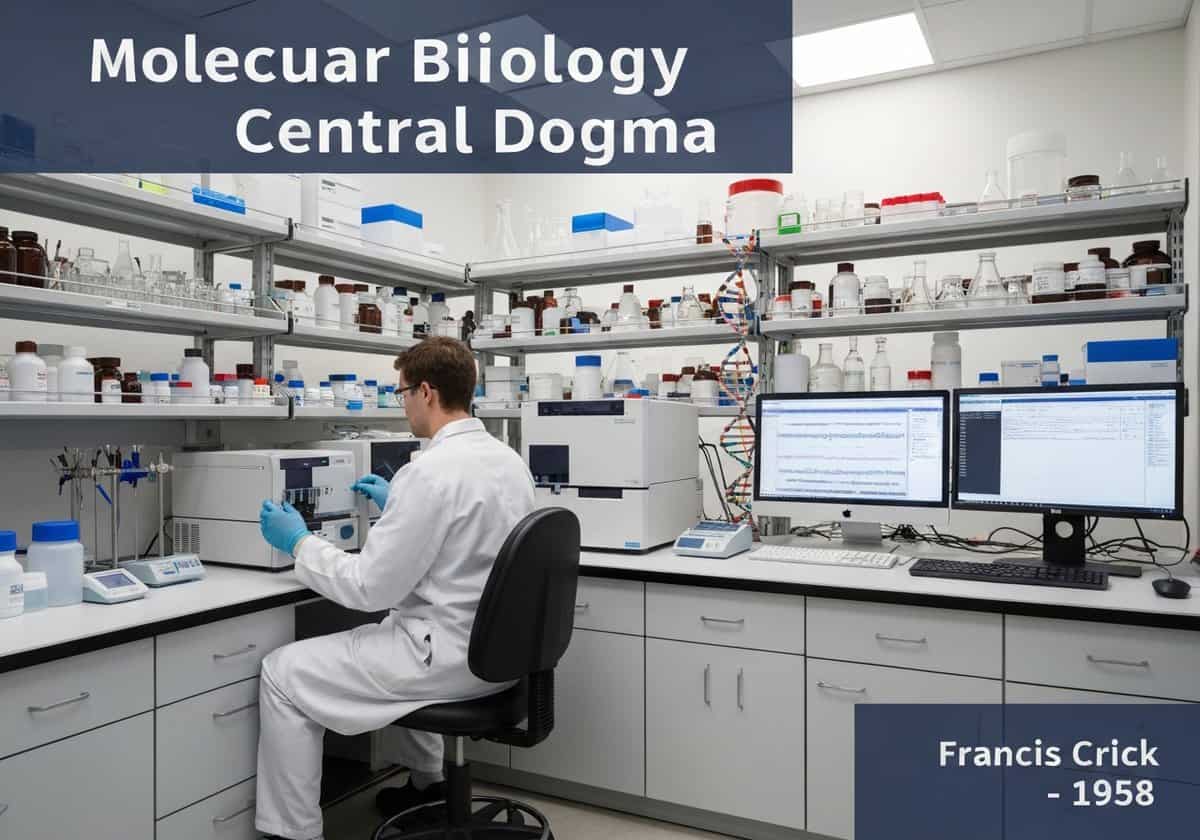
The molecular biology central dogma describes the flow of genetic information within a biological system. It states that information flows from DNA to RNA to protein. DNA can be replicated to make more DNA, and DNA can be transcribed into RNA, which is then translated into a protein. This process is generally unidirectional, providing the basic framework for gene expression.
The Central Dogma of Molecular Biology, as first articulated by Francis Crick, provides the foundational framework for understanding how genetic information is processed in living organisms. It outlines a one-way flow of information from storage (DNA) to a messenger (RNA) to a final product (protein). This process is divided into three key stages. The first is replication, where the DNA molecule is duplicated by the enzyme DNA polymerase, ensuring that genetic information is faithfully passed on during cell division. The second stage is transcription, where a specific segment of DNA, a gene, is copied into a messenger RNA (mRNA) molecule by the enzyme RNA polymerase. This mRNA molecule acts as a transient copy of the gene’s instructions. The final stage is translation, where the genetic code on the mRNA molecule is read by ribosomes. The ribosome moves along the mRNA, and with the help of transfer RNA (tRNA) molecules that carry specific amino acids, it assembles a polypeptide chain. The sequence of nucleotides on the mRNA dictates the sequence of amino acids in the protein, which then folds into a functional three-dimensional structure.
While the original dogma proposed a strictly unidirectional flow, subsequent discoveries revealed important exceptions. The discovery of reverse transcriptase in retroviruses, such as HIV, by Howard Temin and David Baltimore, showed that information could flow backward from RNA to DNA. This enzyme synthesizes DNA from an RNA template, which can then be integrated into the host genome. Other exceptions include RNA replication, seen in some viruses where RNA is replicated directly into more RNA, and the existence of non-coding RNAs that have functional roles without being translated into proteins. Despite these variations, the core principle that DNA carries the primary genetic blueprint, which is transcribed and then translated to produce functional proteins, remains the central organizing principle of molecular biology.
UNESCO Nomenclature: 2406
– Molecular Biology
Precursors
- discovery of DNA structure by Watson and Crick
- Avery–MacLeod–McCarty experiment showing DNA as the genetic material
- understanding of proteins as functional molecules
- discovery of messenger RNA (mRNA)
- George Gamow’s proposal of a genetic code
Applications
- understanding gene expression
- genetic engineering
- development of antiviral drugs targeting replication or transcription
- diagnostics for genetic diseases
- synthetic biology
- development of mRNA vaccines
Potential Innovations Ideas
Due to scrapping bot traffic, currently more than 40k per day, this content is reserved to community members.
> Login < or > Register < (100% free) to access this, so as all other restricted content and tools.
Related to: central dogma, Francis Crick, DNA, RNA, protein, transcription, translation, replication, gene expression, genetic information.