Product Design, Manufacturing & Innovation Resources
Home » Museo Nacional de Ciencias Naturales (MNCN-CSIC)

Museo Nacional de Ciencias Naturales (MNCN-CSIC)

Museo Nacional de Ciencias Naturales (MNCN-CSIC)
Address: Calle José Gutiérrez Abascal, 2, 28006 Madrid, Madrid, Spain
Biodiversity and Evolutionary Biology, Paleobiology, Vulcanology

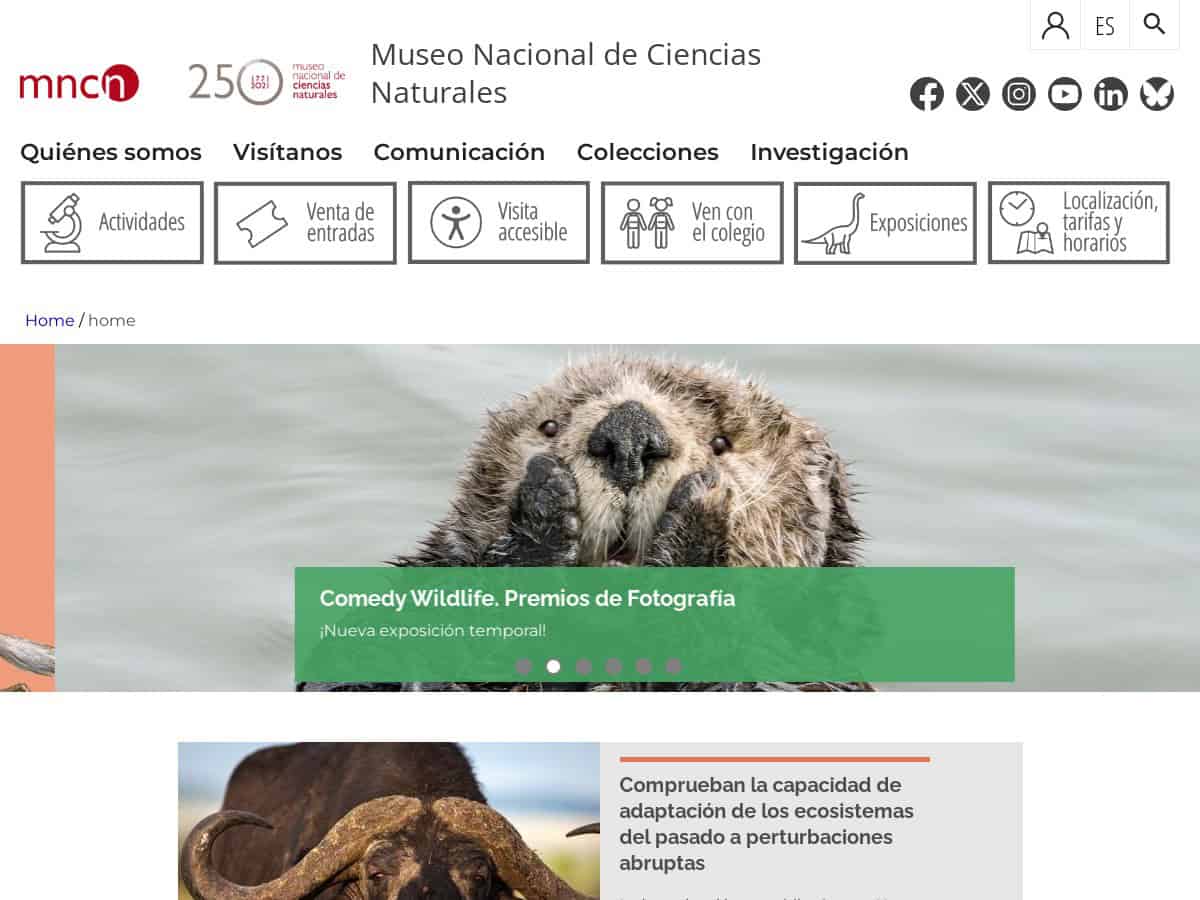
The National Museum of Natural Sciences (MNCN-CSIC) in Madrid is a CSIC research institute focused on research in natural sciences, biodiversity, and paleontology, while also managing important natural history collections and public exhibitions.

Domains taught:

Diplomas*:

Status:

Partnerships:

CSIC institute. Collaborates with universities for postgraduate training, natural history museums worldwide, and conservation programs.

Research:

Research in areas like systematics, phylogeny, biogeography, ecology, animal behavior, paleontology, climate change impacts on biodiversity, and geology.

Famous Alumnis:

N/A

International recognition**:

Number of staff***:

300

Current students***:

100

Foreign students***:

10%

Cumulative former students***:

300

Pros

Major natural history museum and research institute with significant collections. Offers research opportunities in evolutionary biology, ecology, and paleontology.

Cons

Focus is on organismal and earth sciences.

Best For

Postgraduate students and researchers in evolutionary biology, ecology, paleontology, or biodiversity studies.

Most Similar Schools Locally

  • A good alternative in the same country is Real Jardín Botánico, which likewise covers microbiology and genetics and ecology and sustainability; it covers agriculture and bioinformatics as well, and is smaller, enrolling about 50 students against roughly 100 here.
  • In terms of fields, Instituto Geológico y Minero de España is the nearest neighbour, with marine science, geotechnics and ecology and sustainability again at the core; it is also a public institution, and runs the same master's, doctoral and diploma programmes.
  • For students who like the marine science, microbiology and genetics and ecology and sustainability focus of this school but want another option nearby, Instituto Español de Oceanografía fits well: it is larger, enrolling about 150 students against roughly 100 here, and is also a public institution.
  • Instituto Nacional de Investigación y Tecnología Agraria y Alimentaria offers a comparable education in microbiology and genetics and ecology and sustainability: it covers agriculture and food science as well, and has almost the same size, at about 100 students.
  • Both schools build their programmes around marine science, geotechnics and ecology and sustainability, and Facultade de Ciencias do Mar is the one to compare first within the country, since it is far larger, with about 600 students against roughly 100 here, and is also a public institution.

Most Similar Schools Abroad

  • Eidgenössische Forschungsanstalt für Wald, Schnee und Landschaft, in Switzerland, takes a similar route through marine science, geotechnics and ecology and sustainability; it has almost the same size, at about 100 students, and is also a public institution.
  • In France, Muséum National d'Histoire Naturelle teaches much the same core subjects, marine science, geotechnics and microbiology and genetics, and it is also a public institution and does not run the diploma programmes found here.
  • For a study option in the Netherlands with a comparable spread of marine science, geotechnics and ecology and sustainability, IHE Delft Institute for Water Education is the reference point: it is larger, enrolling about 200 students against roughly 100 here, and also offers certificate programmes.
  • Agroscope in Switzerland shares the microbiology and genetics and ecology and sustainability orientation of this school, and it covers agriculture and food science as well, and has almost the same size, at about 100 students.
  • Beyond national borders, University of Bergen stands out as a comparable school for marine science, geotechnics and ecology and sustainability; it is also a public institution and also offers bachelor's programmes.

*our own picks (our criteria: a mix between domains, diploma delivered, reputation and size), but obviously too many criteria for an apple-to-apple ranking.

*: without any judgment of the quality, readers are strongly encouraged to check the official status of the exact diploma envisioned as many universities have a mix of recognized diplomas, not recognized, “co-delivered,” “equivalent to”,  “some pathways” (…), can change over time, and can be named differently from one country to another.


**: international reputation: is based on some criteria that do not mean much in some domains or specialties (number of researchers, of scientific publications, on budget ….). Our approximate 1-4 scale: 

  1. known locally
  2. known locally and internationally
  3. is listed in some of the world university’s classifications
  4. is listed among the 20 firsts in some of world university’s classifications

***: estimated numbers, based on online sources and/or feedbacks. The numbers can vary greatly depending on school organisation (ex.: school is part of a group, it employs internal staff or external consultants or has public staff without employing them …). Refer to all the links provided to have accurate and updated numbers.

Innovation.world is not affiliated with this school/university.
We recommend to contact them directly on their website for any special request.


To complete or correct any information here or share your opinion, please comment below or > send us a direct message <.

10th year anniversary

Full size images and downloads are only available, 100% free, for registered members.

> Login <















