Você sabia que quase 40% dos millennials têm tatuagens? O Pew Research Center revelou isso. As tatuagens têm significado há séculos. Agora, as tatuagens tecnológicas estão dando um novo significado a elas. Elas misturam arte com tecnologia. Tatuagens inteligentes se conectam a dispositivos, enquanto a tinta bioeletrônica promete revolucionar o mercado.
Os dispositivos estão ficando cada vez menores. Por isso, adicionar sensores e chips às tatuagens é uma grande inovação. Essas tatuagens não são apenas para fins estéticos. Elas monitoram a saúde, coletam dados e se conectam com a tecnologia. Imagine uma tatuagem que monitora sua saúde ou se conecta ao seu celular.
Nanotecnologia and 3D printing are changing tattoos. Nanotech makes ink safer and longer-lasting. 3D printing creates precise, custom tattoos. This tech brings more detailed and personal tattoos to life.
A Evolução da Arte Corporal e da Tecnologia
A arte corporal percorreu um longo caminho. Passou de antigos marcadores culturais a expressões modernas de individualidade e inovações tecnológicas. Esta jornada mostra o crescimento da arte e a profunda integração da tecnologia na arte corporal.
Uma Breve História das Tatuagens
As tatuagens existem desde os tempos antigos. Elas eram usadas para expressar espiritualidade, cultura e como símbolos pessoais. Em muitas sociedades antigas, as tatuagens representavam ritos de passagem, pertencimento a uma tribo e benefícios para a saúde. Com o passar do tempo, a arte da tatuagem se transformou, refletindo as mudanças na sociedade e os avanços tecnológicos.
A ascensão das tatuagens biomecânicas
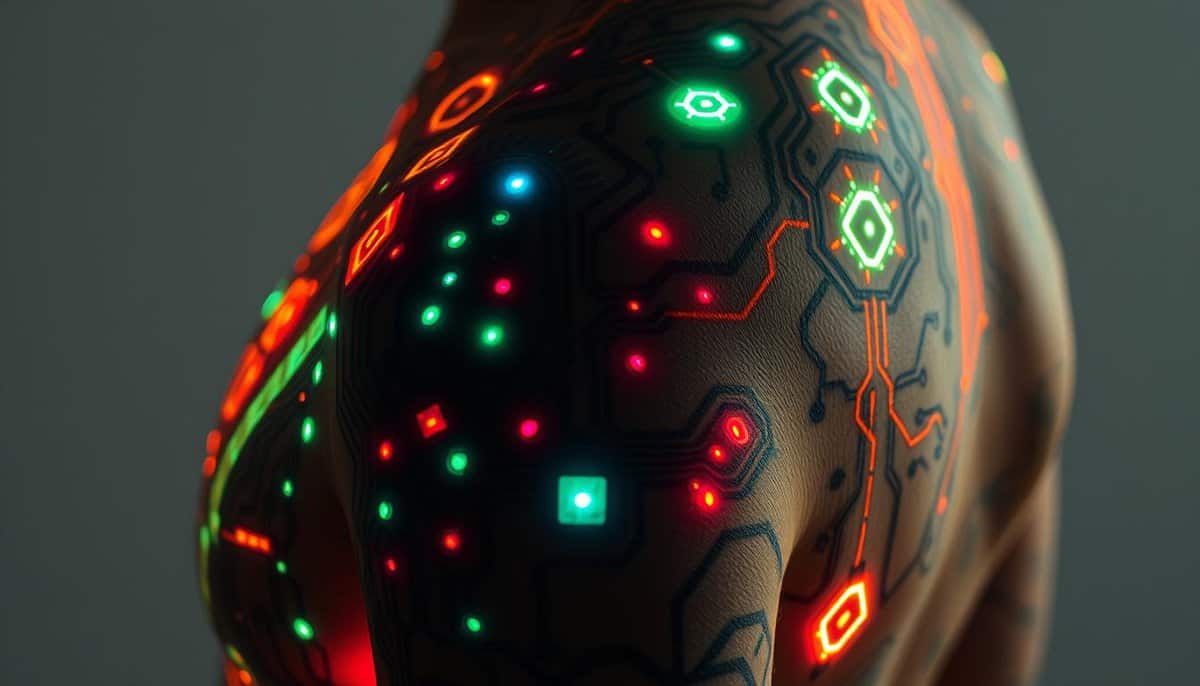
As tatuagens biomecânicas combinam elementos orgânicos e mecânicos. Elas criam... illusion de peças de máquinas misturadas com pele humana. Esse estilo marca um grande passo na arte da tatuagem, unindo a arte tradicional a temas tecnológicos. Ele não só muda a forma como vemos as tatuagens, como também abre portas para tintas inteligentes e tecnologias digitais para a pele.
Smart ink isn’t just for looks. Scientists at Harvard e MIT made biosensitive inks. These inks change color with body fluid changes, showing blood chemistry shifts. It shows how smart ink can change both the art and use of tattoos. It makes biomechanical tattoos able to monitor health in real time.
New ideas like this are changing the tattoo scene. There’s a push with scientists and artists working together. The e-tattoo from the University of Texas at Austin combines tech with traditional tattoos. It’s light, powered by a small battery, and lasts over 40 hours. It fits into daily life easily while sending health data wirelessly.
Tatuagens tecnológicas vestíveis: unindo arte e funcionalidade.
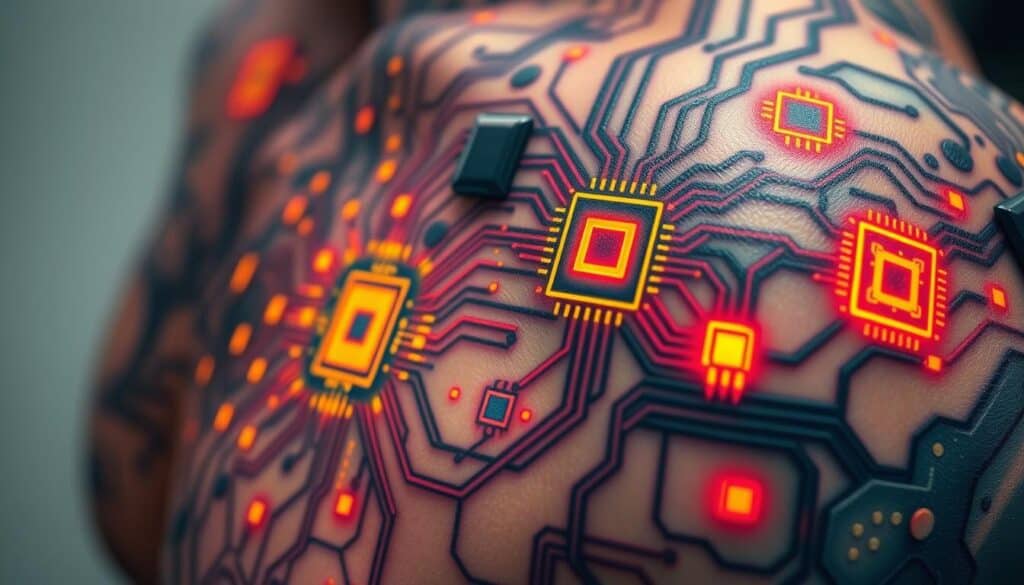
Tatuagens tecnológicas vestíveis representam o ápice da fusão entre arte e tecnologia. Essas tatuagens combinam estilo com inteligência tecnológica.
Integração com dispositivos vestíveis
As tatuagens inteligentes funcionam bem com dispositivos como smartwatches e rastreadores de atividades físicas. Elas tornam o uso desses aparelhos mais natural. Por exemplo, as tatuagens capacitivas da Microsoft Research permitem controlar dispositivos por toque e duram meses em superfícies que não sejam de pele.
Aplicações na área da saúde
In healthcare, these tattoos are changing the game. They track vital signs, offering instant data to doctors and patients. Because they’re thin and flexible, they make monitoring easy to handle every day.
Aprimoramentos de Realidade Aumentada
Realidade aumentada A realidade aumentada (RA) levará essas tatuagens a um novo patamar. Elas poderão exibir efeitos incríveis que se adaptam ao ambiente ou aos seus movimentos. Essa combinação de RA e tatuagens abre novas possibilidades para a expressão pessoal e o uso da tecnologia.
Smart Ink Innovations and Digital Skin Technology
Smart ink and digital skin technology are changing the game. They’re blending beauty with tech in wearable tattoos. For example, digital skin tech makes tattoos that change color with changes in temperature or light.
Big names like Google and Maçã are pouring money into this tech. Projects like Dermal Abyss can check your body for sodium and glucose. Another cool project, DuoSkin, lets tattoos act as touchpads for devices. iSkin lets people design interactive tattoo patterns on their skin.
Digital skin tech is loved for its versatilidade. It’s not just cool tech; it’s also a breakthrough in healthcare. Over 370 million wearable devices are expected to be sold, proving how big this $25 billion market is. Smart tattoo pigments can even help track UV exposure to prevent skin cancer, according to Dr. Carson Bruns.
Creating smart tattoos is a team effort. Scientists and designers work together to make pigments that check health markers and talk to gadgets. Dr. Daniel Kraft points out their huge potential in health, thanks to their personal touch and non-invasive style.
| Smart Tattoo Project | Developing Institutions | Main Functionality |
|---|---|---|
| Dermal Abyss | Harvard and MIT | Detects sodium and glucose levels |
| DuoSkin | Microsoft and MIT | Touchpad for smart devices |
| iSkin | Max Plank Institute for Informatics and Saarland University | Custom patterns and mobile device control |
| Solar Freckle Tattoo | Dr. Carson Bruns | Monitors radiation and UV light exposure |
| Magic Ink | Dr. Carson Bruns and a celebrity tattoo artist | Commercializing smart tattoo pigments |
The Future of Skin-Thin Devices
Wearable technology is rapidly advancing. It’s merging bioelectronics ink with nanotechnology. This makes our skin an interactive surface. Breakthroughs in tattoo ink nanotechnology are making these devices safer and more colorful. They also last longer. Additionally, 3D printing is bringing tattoos to life with amazing precision. Designs that once were only dreams are now possible.
Nanotechnology in Tattoo Ink
Nanotechnology is changing how tattoo inks are made and applied. This science improves the inks’ safety and visual appeal. It makes the inks safer and colors brighter and more durable. Plus, electronic tattoos only 30 micrometers thick are enhancing medical tests, like EEGs. These e-tattoos can monitor brain waves, setting up in 20 minutes. This is a big improvement over the usual one to two hours.
3D Printing in Tattoos
3D printing is taking tattooing to a new level. It allows for detailed designs and precision that was impossible before. This technology also enables tattoos that monitor health. These tattoos collect important data for healthcare. 3D printed e-tattoos are used in fitness, gaming, and the military. They monitor heart rate and blood pressure, providing valuable information.
The future of devices that are as thin as skin is very bright. This is thanks to the merging of tattoo art and bioelectronics. We are entering a new period of innovation in both personal and medical technology. These smart tattoos are more than just body art. They are a pioneering mix of art, science, and technology you can wear.