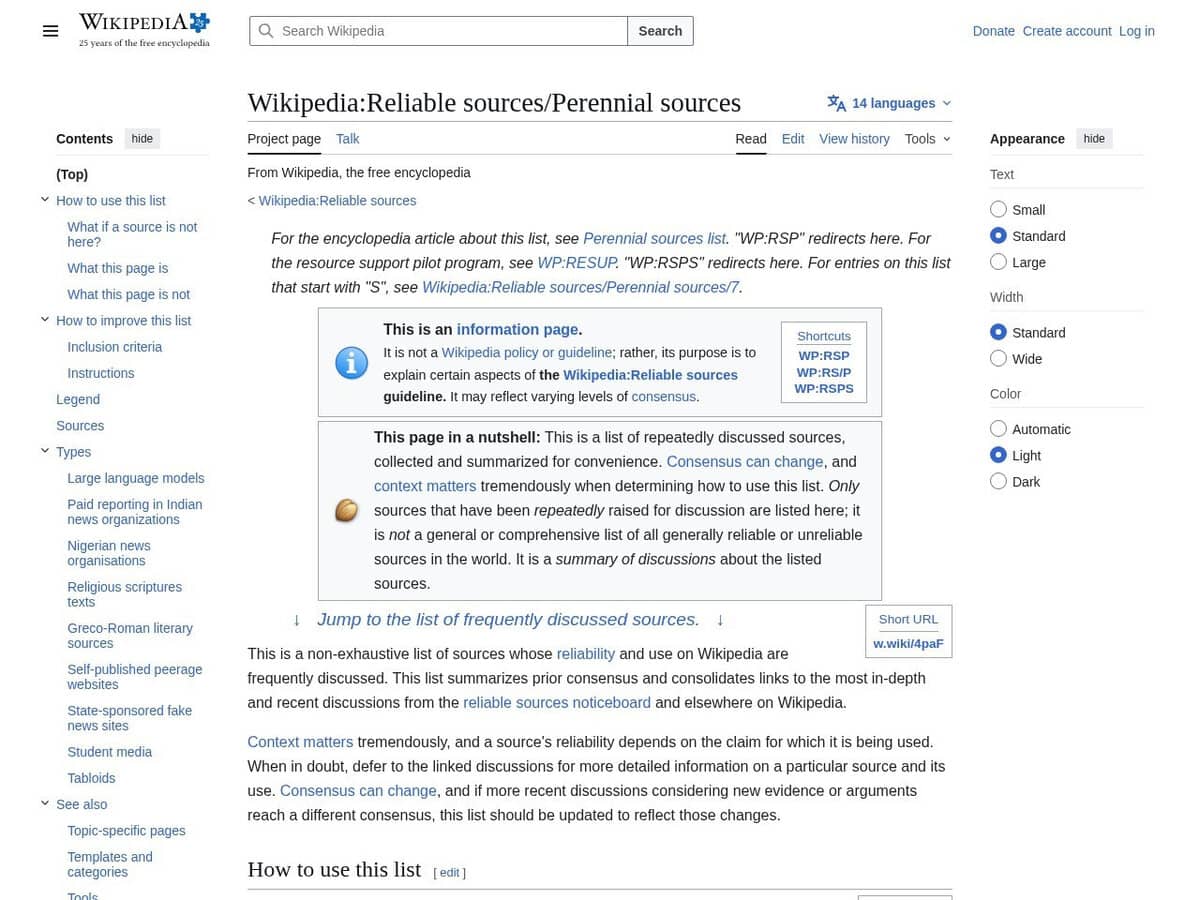
The Wikipedia Perennial Sources page is a dynamic index that documents community consensus on the reliability of frequently cited news organizations, academic journals, and digital platforms. It classifies sources into specific tiers—such as generally reliable, no consensus, or deprecated—based on documented evaluations of their editorial standards, fact-checking history, and potential for bias. Each entry provides a transparent audit trail by linking to formal Requests for Comment (RfCs), offering a meta-analysis of media credibility that is continuously updated to reflect changes in a publication’s ownership, editorial shifts, or the integration of AI-generated content.
Tip: by very far not complete compared to the whole internet, but if your site target is on this list, be sure it has been discussed extensively.
Quality assurance and innovation professionals can apply this resource as a secondary validation layer when vetting non-peer-reviewed technical intelligence and industry news. By cross-referencing external reports against these consensus-based ratings, engineers and researchers can identify publications with a history of systemic inaccuracy or promotional bias before integrating their data into technical documentation or feasibility studies. This systematic approach to source verification is particularly valuable in manufacturing for filtering out unreliable market intelligence and ensuring that strategic decisions are grounded in information from outlets with established reputations for accuracy.











