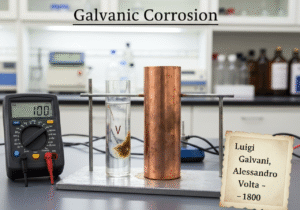
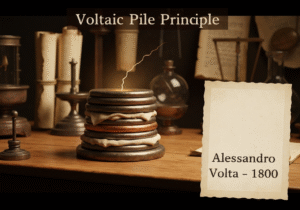
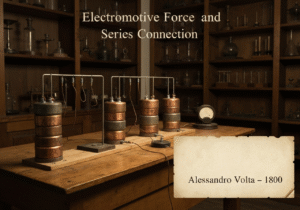
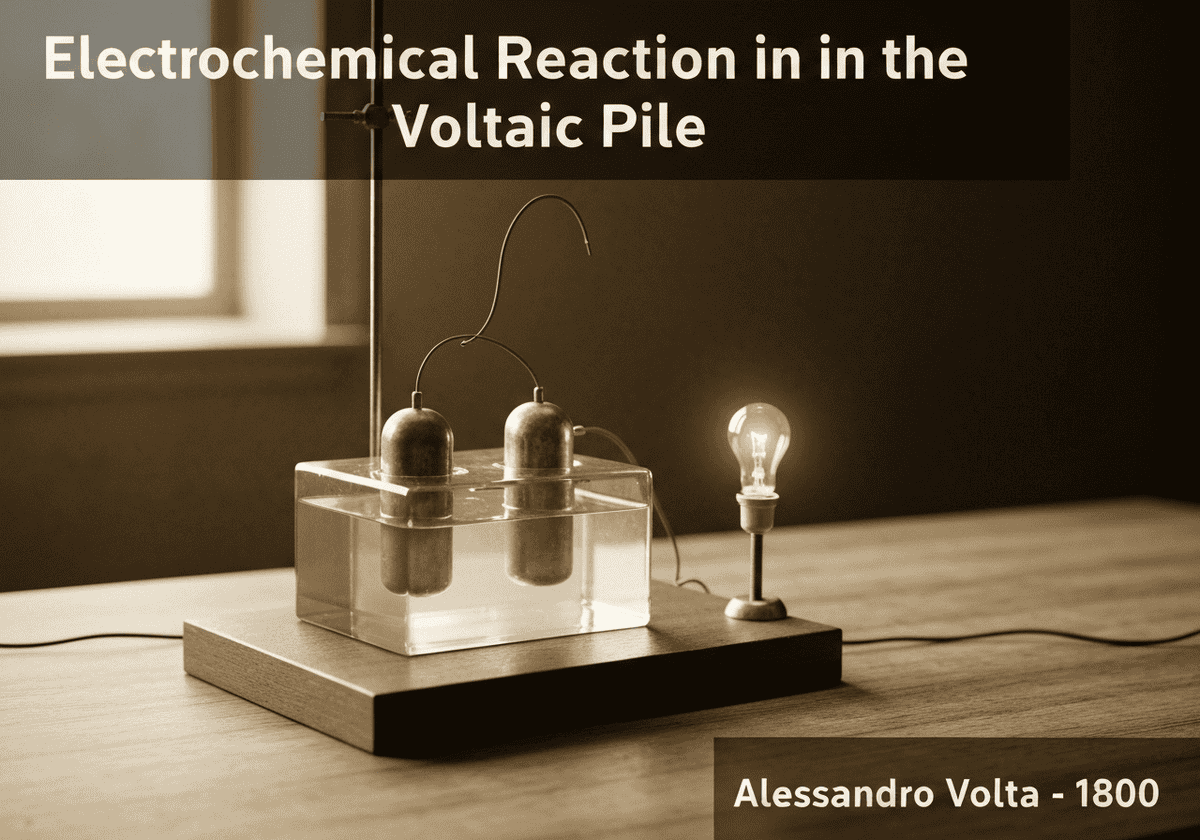
전류는 볼타 전지 수소는 산화환원 반응에 의해 생성됩니다. 아연 양극에서 아연 금속이 산화되어 원자당 두 개의 전자를 방출합니다([latex]Zn rightarrow Zn^{2+} + 2e^{-}[/latex]). 이 전자들은 외부 회로를 통해 구리 음극으로 이동합니다. 구리 음극에서 수용액 전해질의 수소 이온이 환원되어 수소 기체가 생성됩니다([latex]2H^{+} + 2e^{-} rightarrow H_2[/latex]).


(설명을 위한 생성된 이미지입니다)
전류는 볼타 전지 수소는 산화환원 반응에 의해 생성됩니다. 아연 양극에서 아연 금속이 산화되어 원자당 두 개의 전자를 방출합니다([latex]Zn rightarrow Zn^{2+} + 2e^{-}[/latex]). 이 전자들은 외부 회로를 통해 구리 음극으로 이동합니다. 구리 음극에서 수용액 전해질의 수소 이온이 환원되어 수소 기체가 생성됩니다([latex]2H^{+} + 2e^{-} rightarrow H_2[/latex]).
The operation of the 볼타 전지 is governed by the principles of electrochemistry. Each metal has a different electrode potential, or tendency to lose electrons. Zinc is more reactive than copper, meaning it has a more negative electrode potential and is more easily oxidized. This difference in potential is what drives the flow of electrons from the zinc (anode) to the copper (cathode) through an external wire. The electrolyte’s role is crucial; it contains ions that can move between the electrodes to balance the charge, completing the electrical circuit. In a simple brine (NaCl) or acid (H2SO4) electrolyte, water molecules provide the hydrogen ions (H+) for the reaction at the cathode.
The overall reaction for a pile using a sulfuric acid electrolyte is [latex]Zn + 2H^{+} \rightarrow Zn^{2+} + H_2[/latex]. The copper itself does not chemically react; it serves as a noble, conductive surface for the reduction of hydrogen ions. The potential of a single zinc-copper cell is approximately 0.76 volts, though this can vary with the electrolyte concentration and temperature. This fundamental mechanism of converting stored chemical energy into electrical energy is the basis for all modern batteries, albeit with different materials and more sophisticated designs to improve efficiency and 장수.
볼타 전지에서의 전기화학 반응
(날짜를 알 수 없거나 관련이 없는 경우, 예를 들어 "유체역학"의 경우, 주목할 만한 등장 시기를 대략적으로 추정하여 제공합니다.)

고화질 이미지 및 다운로드는 등록된 회원에게만 100% 무료로 제공됩니다.
> 로그인 <