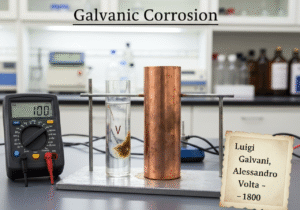
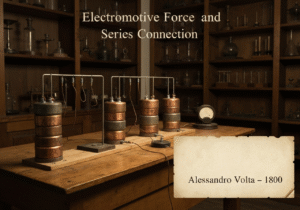
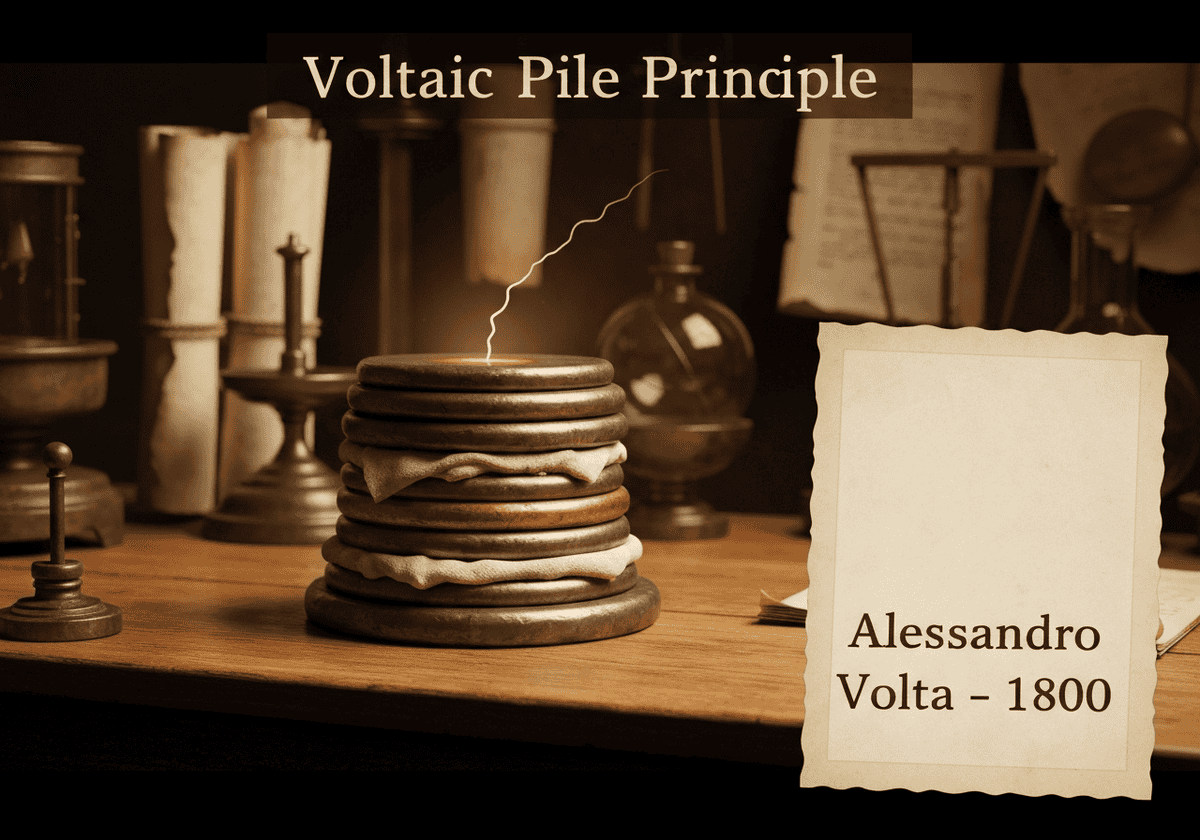
최초의 전기 배터리인 이 장치는 염수에 적신 천으로 분리된 서로 다른 금속 원판(예: 아연과 구리) 쌍을 쌓아 직류를 생성합니다. 각 쌍은 갈바니 전지를 형성하며, 이를 직렬로 연결하면 전체 전압이 증가합니다. 이 장치는 화학 에너지를 전기 에너지로 연속적으로 변환하는 최초의 사례를 보여주었으며, 현대 전기화학의 발전에 중요한 발판을 마련했습니다.
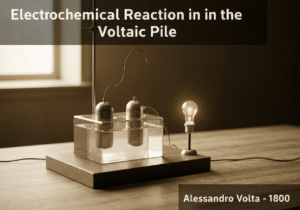
The Voltaic pile operates on the fundamental principle of the electrochemical series. When two different metals, like zinc and copper, are connected by an electrolyte (in this case, brine-soaked paper), an electrochemical reaction occurs. Zinc, being more reactive, readily oxidizes, losing electrons and forming zinc ions that dissolve into the electrolyte. These electrons travel through the external metallic path to the copper disc. At the copper surface, a reduction reaction occurs; typically, 수소 ions from the water in the electrolyte accept the electrons to form hydrogen gas. This flow of electrons constitutes an electric current.
전해액으로 분리된 각각의 아연-구리 쌍은 약 0.76볼트의 작은 전압을 생성하는 하나의 '전지'입니다. 볼타의 설계의 핵심은 이러한 전지들을 직렬로 쌓는 것이었습니다. 구리, 아연, 소금물에 적신 천, 구리, 아연 등 전지들을 하나씩 쌓아 올리면 각 전지의 전압이 합쳐집니다. 20개의 전지를 쌓으면 약 15볼트의 전압을 생성할 수 있었습니다. 이것은 라이덴 병에서 발생하는 정전기 방전과는 달리 안정적이고 지속적인 전류를 제공하는 최초의 장치였습니다.
However, the Voltaic pile had significant limitations. The hydrogen gas produced at the copper electrode would form a layer of bubbles, insulating the electrode from the electrolyte. This phenomenon, known as polarization, quickly increased the internal resistance and caused the voltage to drop. Additionally, the electrolyte would leak and evaporate, and local short-circuits could occur, limiting its practical 수명.