Product Design, Manufacturing & Innovation Resources
بيت » التفاعل الكهروكيميائي في الكومة الفولتية

التفاعل الكهروكيميائي في الكومة الفولتية

1800
  • Alessandro Volta
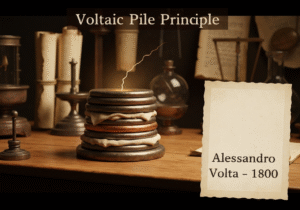
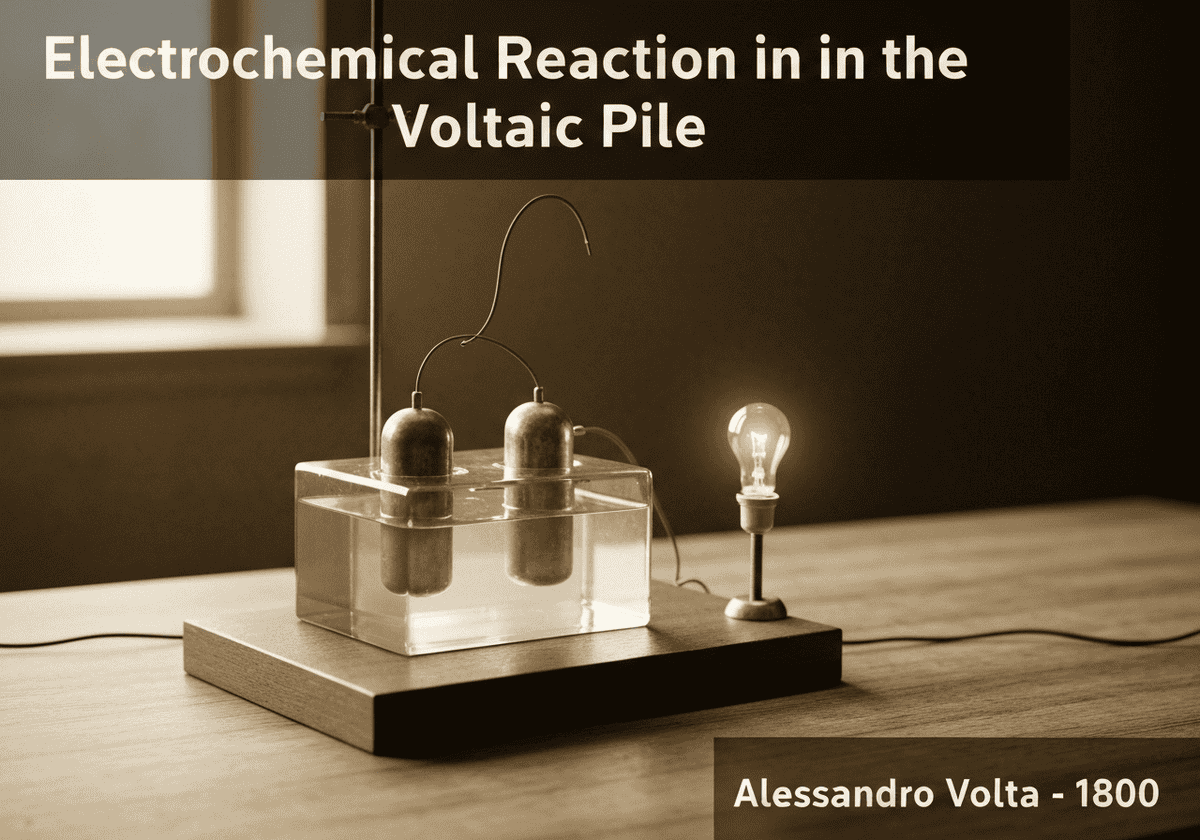
Voltaic pile demonstrating electrochemical reaction with zinc and copper electrodes.

(صورة توضيحية فقط)

The electric current in a Voltaic pile is produced by a redox reaction. At the zinc anode, zinc metal is oxidized, releasing two electrons per atom ([latex]Zn \rightarrow Zn^{2+} + 2e^{-}[/latex]). These electrons travel through the external circuit to the copper cathode. There, hydrogen ions from the aqueous electrolyte are reduced, forming hydrogen gas ([latex]2H^{+} + 2e^{-} \rightarrow H_2[/latex]).


The operation of the Voltaic pile is governed by the principles of electrochemistry. Each metal has a different electrode potential, or tendency to lose electrons. Zinc is more reactive than copper, meaning it has a more negative electrode potential and is more easily oxidized. This difference in potential is what drives the flow of electrons from the zinc (anode) to the copper (cathode) through an external wire. The electrolyte’s role is crucial; it contains ions that can move between the electrodes to balance the charge, completing the electrical circuit. In a simple brine (NaCl) or acid (H2SO4) electrolyte, water molecules provide the hydrogen ions (H+) for the reaction at the cathode.

The overall reaction for a pile using a sulfuric acid electrolyte is [latex]Zn + 2H^{+} \rightarrow Zn^{2+} + H_2[/latex]. The copper itself does not chemically react; it serves as a noble, conductive surface for the reduction of hydrogen ions. The potential of a single zinc-copper cell is approximately 0.76 volts, though this can vary with the electrolyte concentration and temperature. This fundamental mechanism of converting stored chemical energy into electrical energy is the basis for all modern batteries, albeit with different materials and more sophisticated designs to improve efficiency and طول العمر.

UNESCO Nomenclature: 2203
– Electrochemistry

يكتب

Chemical Process

خلل

أساسيات

الاستخدام

استخدام واسع النطاق

مقدمات

  • Antoine Lavoisier’s work on the role of oxygen in combustion and oxidation
  • مفهوم العناصر الكيميائية وسلسلة تفاعلاتها
  • فهم المركبات الأيونية وسلوكها في المحاليل المائية
  • Henry Cavendish’s identification of hydrogen gas

التطبيقات

براءات الاختراع:

NA

أفكار ابتكارية محتملة

  • bio-batteries using الميكروبات oxidation of organic waste
  • الخلايا الكهروضوئية الكيميائية التي تستخدم الضوء لتحريك تفاعلات الأكسدة والاختزال
  • بطاريات ذاتية الشفاء مع إلكتروليتات تعمل على إصلاح الدوائر القصيرة الداخلية
  • تفاعلات الأكسدة والاختزال المستهدفة لتحييد الملوثات البيئية المحددة
  • batteries using المعدن السائل electrodes for grid-scale storage
  • تفاعلات محفزة بالإنزيمات لتشغيل أجهزة الاستشعار الحيوية المصغرة
  • البطاريات القابلة لإعادة الشحن والتي تعتمد على عناصر وفيرة مثل الصوديوم أو الألومنيوم
  • الأنظمة الكهروكيميائية لالتقاط ثاني أكسيد الكربون وتحويله مباشرة
Related to: redox reaction, anode, cathode, oxidation, reduction, electrolyte, electrode potential, electrochemistry.

السياق التاريخي

التفاعل الكهروكيميائي في الكومة الفولتية

1788
1800
1800
1800
1800
1801
1802
1785
1788
1800
1800
1800
1800
1802
1802

(إذا كان التاريخ غير معروف أو غير ذي صلة، على سبيل المثال "ميكانيكا الموائع"، يتم توفير تقدير تقريبي لظهوره الملحوظ)

أحدث الإضافات

أهم المنشورات والمقالات

أفضل الأدوات الأصلية

السنة العاشرة عيد

الصور والتنزيلات بالحجم الكامل متاحة فقط، ومجانية تمامًا، للأعضاء المسجلين.